What Does Wisdom Tooth Extraction Include at Clínica DrDiente?
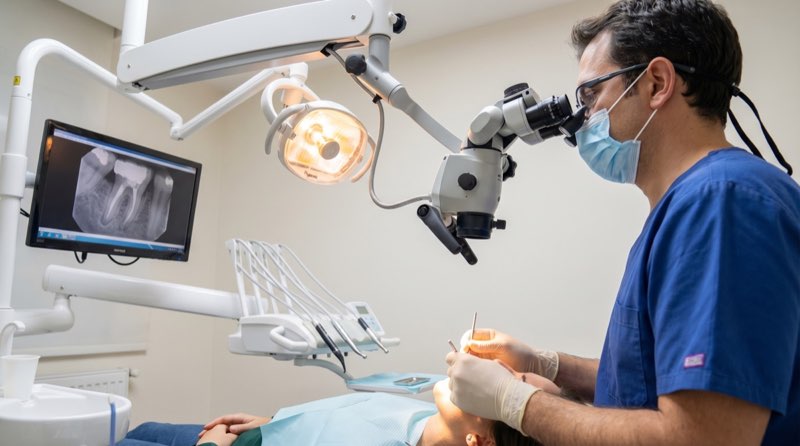
At Clínica DrDiente, wisdom tooth extraction starts with something that should be non-negotiable anywhere you go: a proper radiographic evaluation before anyone quotes you a price. At our locations in Roma Norte and Polanco, CDMX, Dr. Carlos Ariza reviews your panoramic X-ray — and when indicated, a 3D cone beam tomography — to understand exactly what your molar's position requires. Only then do we plan the procedure and discuss cost.
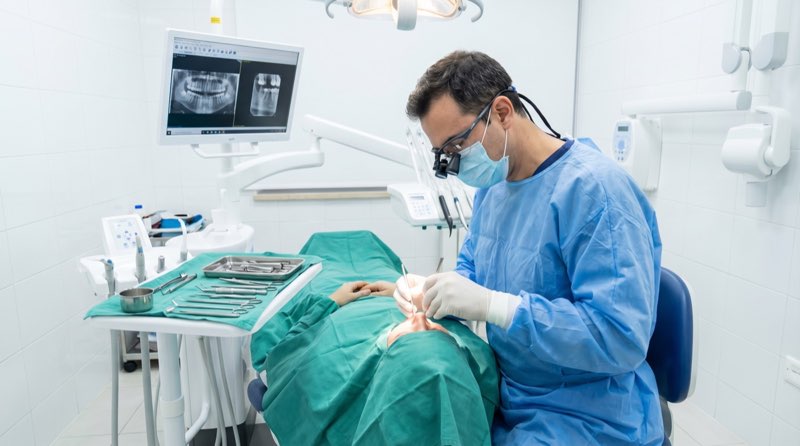
What the service includes depends on your case. A fully erupted third molar: local anesthesia, luxation, and removal in 15–30 minutes. An impacted molar buried in bone: a minor surgical approach — a small incision, sectioning the tooth when needed, removing interfering bone tissue, and placing sutures. Both are outpatient procedures. You go home the same day. No hospital stay, no general anesthesia required in the vast majority of cases.
How Much Does Wisdom Tooth Extraction Cost in CDMX? — Real 2026 Prices
The short answer is: it depends on the molar's position, depth, and how much bone is involved. That is not a dodge — it is clinical reality. Here are honest price ranges for CDMX in 2026:
- Simple extraction (fully erupted molar): $800 – $2,000 MXN
- Basic surgical extraction (semi-impacted): $2,500 – $4,500 MXN
- Complex surgical extraction (fully impacted in bone): $4,500 – $9,000 MXN
- Evaluation + panoramic X-ray: $300 – $800 MXN
At DrDiente, you can book an initial assessment, and we offer flexible payment plans so that cost does not become a reason to delay a necessary procedure. If a 3D tomography is warranted — usually when the molar sits close to the inferior alveolar nerve — that adds roughly $800–$1,500 MXN, and I will tell you upfront whether we actually need it.
Lower-cost alternatives exist in CDMX. IMSS and ISSSTE derechohabientes can access extractions at no cost, though wait times typically run weeks to months. The UNAM dental school offers supervised student procedures for $500–$1,500 MXN. Both are legitimate options depending on your timeline and comfort level with the setting.
There is something most dentists skip at the first consultation — and it directly affects both your total cost and how fast you recover. It has to do with a specific risk factor that changes the post-operative equation entirely. I will get to it in the FAQ section, because it is worth knowing before you schedule anywhere.
How Do I Know If I'm the Right Candidate?
Around 85% of people will need their wisdom teeth removed at some point in their life, according to the American Dental Association. In Mexico, studies estimate that 60–70% of patients have partial or total impaction — the molar simply does not have enough space to fully erupt. So the real question is usually not "do I need it?" but "when is the right time?"
The clearest signs that extraction should not wait:
- Recurring pain, swelling, or infection at the back of your jaw (pericoronitis)
- Decay forming on the wisdom tooth or on the adjacent second molar
- A cyst or enlarged follicle visible on X-ray (larger than 3 mm)
- Pressure on your front teeth — if you are already considering invisible aligners, impacted wisdom teeth are almost always addressed first
Is it normal that the pain comes and goes? Yes. Pericoronitis is cyclical — the tissue partially covering the molar flares up, settles down, flares again. Each episode tends to be worse than the last. In my experience, waiting rarely simplifies the surgery. The molar does not improve its position on its own.
I have had patients come in convinced their wisdom tooth was fine because it had been quiet for over a year — only for the X-ray to reveal a follicular cyst that had been growing silently the entire time. Imaging is not optional. It is the diagnosis.
Before I walk you through the process, there is one mistake that sends more patients back to the clinic in pain than anything else. It happens in the first 24 hours after surgery — and almost no one warns them about it ahead of time.
Step-by-Step Process at DrDiente
In simple terms, here is what happens when you come to Clínica DrDiente:
Step 1 — Digital evaluation. Panoramic X-ray at minimum. For complex cases, a 3D cone beam tomography maps the molar's exact position relative to the inferior alveolar nerve, adjacent roots, and bone density. This is what makes precise surgical planning possible — not guesswork.
Step 2 — Clear treatment plan. I walk you through your molar's classification (position, depth, available space), what the surgery will involve, realistic recovery expectations, and the exact cost. No surprises the day of the procedure.
Step 3 — The procedure. Local anesthesia is standard. Simple cases take 15–30 minutes. Surgical cases with bone removal and tooth sectioning take 45–90 minutes depending on complexity. For patients with significant dental anxiety, oral conscious sedation is an option we can discuss before scheduling. You are comfortable throughout.
Step 4 — Post-operative support. You leave with written care instructions, prescriptions when indicated, and a scheduled follow-up for suture removal and to confirm proper healing. If something concerns you between appointments, you can reach us directly.
Now — about that mistake I mentioned. It is deceptively simple, and it turns a routine recovery into a painful complication that requires additional clinic visits.
Questions I Always Get Before Scheduling
Does wisdom tooth extraction hurt?
The procedure itself, no. Modern local anesthesia handles this very effectively. What patients feel is pressure — the sensation of movement — not pain. Post-operatively, discomfort peaks around 6–12 hours after surgery and is well controlled with ibuprofen 400–600 mg every 8 hours. Most patients describe it as uncomfortable, not unbearable. Routine antibiotics are not standard practice — current evidence only supports them for immunocompromised patients or cases with signs of spreading infection.
What is that mistake you mentioned about the first 24 hours?
The most common one: using a straw, spitting hard, or doing strenuous exercise in the first 24 hours after surgery. All three create suction or pressure that can dislodge the blood clot forming in the socket — the clot that protects the healing bone underneath. If it gets displaced, you develop dry socket (alveolitis): intense, throbbing pain starting 2–4 days post-surgery that is difficult to control with standard painkillers alone, and requires clinic visits and additional treatment. The fix is genuinely simple: no straws, no spitting, no gym for 24 hours. Cold compresses 20 minutes on/off in the first 6 hours, and soft cold foods for the first 48.
I smoke. Does that change anything?
Yes — and this is the risk factor I flagged earlier. To be honest, smoking is the single biggest modifiable variable that complicates wisdom tooth recovery. Dry socket affects 1–5% of all patients, but up to 20% of smokers. My protocol: no tobacco for at least 72 hours before and after surgery, minimum. Commit to that window and your risk drops significantly. If you cannot commit to it, we talk about timing and the full picture before proceeding — I would rather have that conversation upfront than see you come back in pain.
Is it worth extracting if the tooth does not hurt right now?
The key is what the imaging shows, not only what you feel. In my experience, a molar classified as high-risk on X-ray is almost always easier and less expensive to remove electively than during an acute infection. Pain is not the only criterion for intervention — and waiting for it rarely puts you in a better position for surgery.
Why Do Patients from All Over CDMX Choose DrDiente?
The truth is, I see many patients who arrive after a frustrating experience elsewhere — quotes given without imaging, procedures done without a proper diagnosis, complications that were never mentioned as possibilities. What I offer at Clínica DrDiente is 15 years of surgical experience, advanced 3D diagnostic technology, and the transparency to tell you exactly what your case requires — even when that sometimes means telling you surgery can wait a few months.
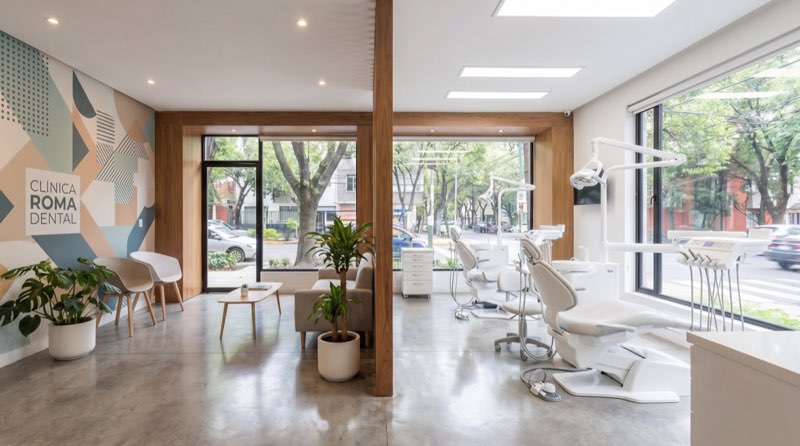
Our locations in Roma Norte and Polanco are fully equipped for oral surgery with sterile protocol and digital planning. For patients traveling from other states or from abroad, our turismo dental CDMX program coordinates the entire process so your visit is efficient and worthwhile. For patients who need tooth replacement after extraction, we also handle dental implants — planning both steps together from the start when indicated. Every case is documented with before-and-after imaging you take home.
See real oral surgery cases at DrDiente
I want my evaluation

Information from Clínica DrDiente
Aesthetic Dentistry & Oral Rehabilitation · COFEPRIS 2409132002A00145
This content is informational and is not a substitute for professional dental advice. Book an assessment for a personalized diagnosis.