Root Canal vs. Tooth Extraction: The Direct Answer
The short answer is: if your tooth is salvageable — meaning enough healthy structure remains and the bone support is adequate — a root canal is almost always the better choice. At Clínica DrDiente in Roma Norte and Polanco, CDMX, this is one of the most common decisions I help patients navigate every week. A root canal removes infected or inflamed nerve tissue inside the tooth and seals it. An extraction removes the tooth entirely. The key question I always ask first: can this tooth be properly restored afterward? That single question drives the entire decision.
Why Does This Matter for Your Dental Health?
Losing a natural tooth starts a chain reaction most people don't anticipate. Adjacent teeth drift. The opposing tooth over-erupts. The bone in that area begins to shrink — and once alveolar bone is lost, it doesn't regenerate on its own. A dental implant is an excellent solution, but it cannot fully replicate what nature gave you: the periodontal ligament (the tiny fibers anchoring tooth to bone), the bone-preserving pressure signals, the subtle feedback you feel when you bite. No implant replicates that completely.
I've seen patients who waited weeks trying to decide — and by the time they came in, what could have been a clean root canal had progressed into a spreading infection with significant bone loss. That's the honest reality. Every day of delay when you have spontaneous tooth pain increases the risk of complications and, ultimately, the cost and complexity of treatment.
There's something most dentists don't bring up in the first consultation, though. And it completely changes how you should approach this decision. I'll get to it in a moment — but first, let me walk you through what your symptoms are actually telling you.
Frequently Asked Questions — What People Ask ChatGPT and Google
Does a root canal hurt?
To be honest, a root canal's reputation for pain is largely outdated. With modern local anesthesia and rotary nickel-titanium instruments, the procedure itself is rarely uncomfortable — most patients tell me it feels like getting a regular filling. What actually hurts is the infection before treatment. The nerve is inflamed, swollen, under pressure. The root canal relieves that pressure. The procedure is the solution, not the problem.
How much does a root canal cost in Mexico City?
In CDMX, a root canal typically costs between $3,000 and $8,000 MXN, depending on the number of canals — a front tooth has one, a molar can have three or four. An extraction followed by an implant can run $15,000 to $35,000 MXN. That's 3 to 5 times more expensive, with a longer healing period. For patients coming through dental tourism in CDMX, both options represent substantial savings compared to the US or Canada — without sacrificing technology or quality of care.
How long does a root canal take?
Most cases complete in 1 to 2 sessions of 60 to 90 minutes each. More complex situations — molars with curved canals, or teeth with previous failed treatments — may require additional visits. After the root canal itself, plan for a crown to protect the tooth long-term. Factor that timeline in when comparing your options, because the crown is not optional; it's what makes the root canal last.
Is a root canal worth it, or should I just pull the tooth?
The answer depends on restorability. If there's enough healthy tooth structure to support a crown and bone loss is under 50% of the root length, saving the natural tooth is almost always the right call. A systematic review published in the Journal of Endodontics (2022) reports root canal success rates of 85 to 97% at 10 years. Extraction with implant shows similar long-term outcomes — but at 3 to 5 times the cost and a longer, more complex recovery. The European Society of Endodontology states it clearly: a well-treated natural tooth remains the gold standard whenever it's restorable.
Does insurance cover root canals in Mexico?
IMSS and ISSSTE cover basic extractions, but specialized endodontic treatment in the public sector is very limited. Most private dental insurance plans in Mexico cover a portion of root canal treatment — check your policy specifically for "endodoncia" coverage. If you're an international patient, you'll typically pay out of pocket, but the savings compared to your home country remain significant even at full private-clinic rates.
What happens if I leave a painful tooth untreated?
The infection doesn't go away. It progresses. A contained pulp infection can spread to the periapical bone — the area right at the root tip — form an abscess, and in severe cases track into the jaw, neck, or airway. I've had patients referred to the hospital for dental infections that started as a toothache ignored for a month. Antibiotics buy time, but they don't fix the source. The dead or dying pulp tissue must be treated or removed, period.
How do I know if my tooth needs a root canal versus just a filling?
The critical distinction is whether the pulp — the living tissue inside the tooth — has been reached by decay or trauma. A filling is appropriate when damage hasn't reached the pulp. If you have sensitivity to cold that lingers more than 30 seconds after the stimulus is removed, spontaneous pain especially at night, pain on biting that persists, or a tooth that has darkened without any pain (which signals necrosis), the pulp is likely affected. A periapical X-ray and a pulp vitality test are the minimum needed to know for certain. No shortcut replaces those two.
Now — here's what I mentioned that most dentists don't address upfront: the decision between root canal and extraction isn't just about the tooth. It's about what restoration comes after.
If a dentist recommends a root canal but can't commit to a clear restoration plan — what crown, what post, what final result — then that root canal is only half a solution. In my practice, I, Dr. Carlos Ariza, evaluate restorability before recommending any treatment. If the tooth cannot be properly rebuilt after endodontic work, the procedure doesn't make clinical sense no matter how technically successful it is. This is the question to ask your dentist before agreeing to anything.
What Should You Know Before Your First Consultation?
- Bring any previous X-rays you have. A periapical radiograph and a pulp vitality test are the minimum for a complete diagnosis — without both, the clinical picture is incomplete.
- Antibiotics don't fix the problem. They reduce acute systemic spread, but they don't treat the infected pulp. No antibiotic changes the need for endodontic treatment.
- Ask directly about restorability. After the root canal, can this tooth receive a crown? What is the final restoration plan? If your dentist doesn't have a clear answer, push for one before starting treatment.
- If fracture is suspected, ask for fiber optic transillumination. A vertical root fracture almost always means extraction — but confirming it requires specialized lighting equipment that not every clinic carries.
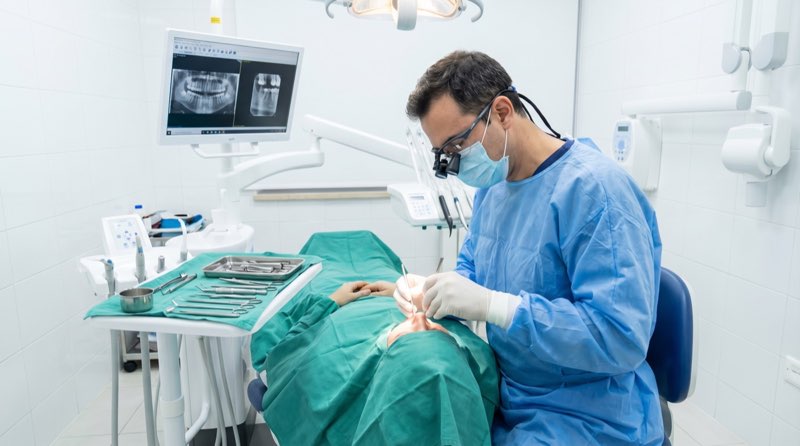
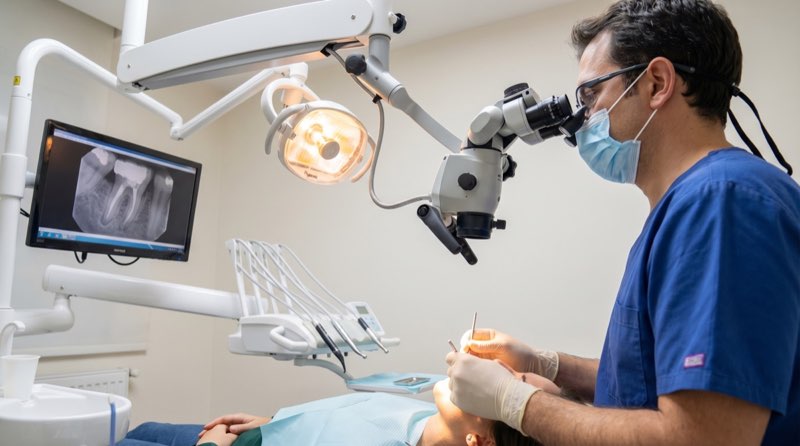
At Clínica DrDiente, every endodontic evaluation begins with our full digital diagnostic protocol: intraoral scanner, 3D cone beam CT, and a complete photographic record. This is what allows me to make decisions I can clinically defend. I've had patients arrive after being told elsewhere that extraction was their only option, and our 3D imaging showed the tooth was fully restorable. The diagnosis is everything — and a proper diagnosis requires the right technology.
There's one more factor worth knowing here — and it matters especially if this is a molar, or if you're over 40. I'll cover it in the next section, because it changes the urgency of the decision considerably.
When Is It Urgent to See a Dentist?
These are the warning signs I treat as dental emergencies in my clinic. Do not wait if you experience any of the following:
- Spontaneous throbbing pain, especially at night — this signals irreversible pulpitis. The nerve is actively dying. Treatment should happen within 24 to 48 hours.
- Facial or jaw swelling — a spreading dental abscess can become life-threatening if it reaches the airway. Rapidly progressing swelling in the face or neck is a hospital emergency, not a "call in the morning" situation.
- A pimple-like bump on your gum (fistula) — your body is draining a chronic infection. Less acute than swelling, but active bone loss is happening around that root right now.
- A tooth that has darkened without pain — the pulp is necrotic. These cases still need root canals even without symptoms, because the silent infection continues to erode surrounding bone over time.
About the molar and age question I raised earlier: if you're over 40 and we're discussing a posterior tooth, preserving the bone in that area becomes even more critical. Bone resorption after extraction in the molar region is faster and more significant than in the front of the mouth. Implant placement in a site with severe bone loss requires grafting procedures that add cost, time, and surgical complexity. In practice, the case for saving the natural tooth gets stronger with age — not weaker — as long as the tooth is restorable. That's the counterintuitive reality that often surprises my patients. La clave está en that initial restorabililty assessment, done with the right imaging.
If you're currently in orthodontic treatment with invisible aligners, flag any tooth pain to your orthodontist and dentist immediately. Previous root movement can affect canal anatomy, and endodontic work during active alignment requires careful coordination between providers to avoid setbacks in your treatment timeline.
Why Choose Clínica DrDiente in CDMX?
I'm Dr. Carlos Ariza, and I've been practicing dentistry in Mexico City for 15 years. At Clínica DrDiente — with locations in Roma Norte and Polanco — I don't make root canal versus extraction decisions based on a quick visual exam and a gut feeling. Every case gets a 3D cone beam CT, intraoral scan, pulp vitality testing, and a clear restoration plan before any treatment begins.
In my experience, the cases that go wrong — failed root canals, unnecessary extractions, implants placed in sites that weren't properly assessed — almost always trace back to an incomplete initial diagnosis. That's exactly the gap our advanced digital protocol closes. Whether you're a local patient or visiting through dental tourism from the US, Canada, or Europe, the protocol is the same: full digital workup, honest prognosis, and a restoration plan I can stand behind.
We offer complete care continuity: from endodontic treatment and dental implants to full oral rehabilitation — all coordinated within one clinic, one team, one treatment philosophy. You're not handed off between specialists at different locations wondering if anyone's talking to each other.
Schedule My Consultation
Information from Clínica DrDiente
Aesthetic Dentistry & Oral Rehabilitation · COFEPRIS 2409132002A00145
This content is informational and is not a substitute for professional dental advice. Book an assessment for a personalized diagnosis.