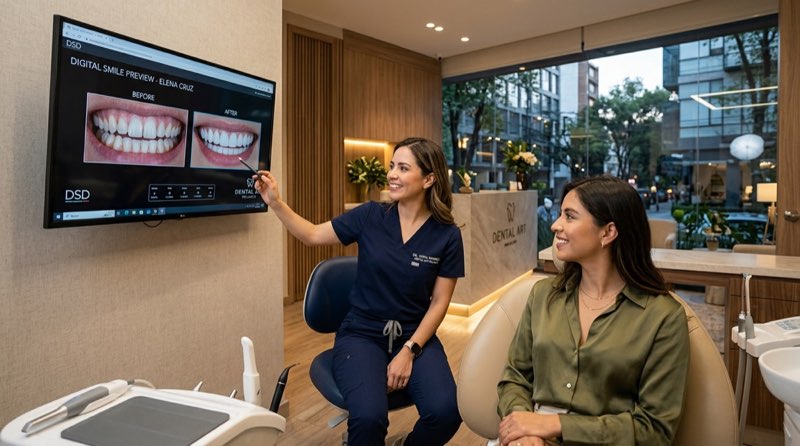

Before a full oral rehabilitation, the plan should begin with diagnosis, not with choosing crowns or implants. At Clínica DrDiente Polanco, we explain what each study can reveal and why the right sequence matters. This educational guide is for people considering treatment in Polanco, CDMX; it does not replace an in-person dental assessment.
Dr. Carlos Ariza’s perspective on studies before full oral rehabilitation
A complete rehabilitation can involve rebuilding damaged teeth, replacing missing teeth, improving bite function, or restoring a smile after years of wear. The short answer is: there is no single test that works for everyone. The studies depend on the condition of your gums, teeth, bite, medical history, and the type of treatment being considered.
In simple terms, planning a rehabilitation without records is like remodeling a home without checking the foundation or plumbing. A tooth may look acceptable above the gumline while having decay, a root problem, or bone loss underneath. That is why a visual examination alone is not enough when several teeth need treatment.
At Clínica DrDiente, the discussion may include smile design, implants, and invisible orthodontics when appropriate, but none should be treated as an automatic answer. The goal is to understand why the mouth changed in the first place. Decay, gum disease, tooth grinding, reflux, fractures, failing restorations, and missing teeth can all affect the plan.
There is something many patients do not hear in a first consultation: restoring teeth without controlling the cause can repeat the same problem later. I will explain how gum health and bite analysis shape that decision.
What most dentists do not tell you about rehabilitation records
The first study is often a careful conversation. Your dental team should review medical conditions, medications, allergies, smoking, reflux, diabetes, osteoporosis medications, grinding habits, facial pain, and your expectations. This is not paperwork for its own sake. These details can affect healing, material choices, surgery, and long-term maintenance.
A clinical examination commonly includes teeth, gums, tongue, bite, jaw movement, existing restorations, cavities, cracks, mobility, and visible lesions. Mexican clinical standards require an initial clinical record with medical history, vital signs, an odontogram, and periodontal records. You can review the official reference in NOM-013-SSA2-2015.
For gum evaluation, a periodontal chart measures the space between gum and tooth, bleeding, recession, plaque, and bone-support concerns. Is it normal for gums to bleed during brushing? No. Bleeding is a sign to investigate, not something to ignore. In a Mexican adult sample, bleeding and calculus were common findings; those national data are not specific to Polanco, but they show why gum assessment belongs at the start of rehabilitation planning.
The key is to treat active disease first. If gums are inflamed, if there is active decay, or if the bite is unstable, cosmetic work should wait. Healthy gums should look coral pink rather than swollen or bleeding. Placing restorations too close to inflamed gum tissue can behave like a painful hangnail: the tissue stays irritated, can bleed, and may progressively lose support.
What happens if a patient wants veneers immediately? Veneers are not appropriate over untreated cavities, unhealthy gums, or an uncorrected malocclusion. Teeth should not look square or artificial like Adams chewing gum; natural teeth have curves, subtle texture, and individual character. A healthy foundation comes before appearance.
Our clinical experience: representative scenarios
The following examples are hypothetical educational scenarios, not real Clínica DrDiente patient cases or testimonials. They show why two people asking for “a full rehabilitation” may need very different records.
A hypothetical 34-year-old with worn front teeth and frequent headaches may need photographs, an intraoral scan, bite records, periodontal measurements, and targeted radiographs before deciding whether restorative treatment, a protective night guard, or orthodontic alignment is appropriate. More later: age alone does not determine the plan; the pattern and cause of wear do.
A hypothetical patient with several missing back teeth may need panoramic imaging and, if implants or complex surgery are being evaluated, a limited-field CBCT scan. CBCT is a three-dimensional X-ray that helps measure bone and locate nearby anatomical structures. It should not be ordered automatically for every person. A 2024 review found that low-dose protocols can provide useful measurements for implant planning, though image quality may be lower in some settings. See the 2024 review.
A third hypothetical scenario is a person with old crowns, sensitivity, and gum bleeding. The plan may start with periodontal care, cavity control, and tests of tooth vitality before any definitive crowns are considered. Saving a viable tooth with conservative care is often worth discussing alongside extraction and implants. Extracting every tooth for implants is not the default option.
Digital planning can also create a diagnostic mock-up: a temporary preview that helps assess speech, chewing, appearance, and bite changes before irreversible treatment. This is particularly useful when increasing the vertical dimension, meaning the space between upper and lower jaws when teeth meet. No single answer fits everybody.
You can see the clinic’s published visual material through the DrDiente real cases gallery, while remembering that your own diagnosis may differ from another person’s result.
Questions I receive frequently about full oral rehabilitation studies
How do I know if I need full oral rehabilitation?
You may need an evaluation if you have multiple broken, worn, missing, sensitive, or heavily restored teeth; trouble chewing; bite changes; frequent fractures; or persistent concerns about function and appearance. The answer depends on what is causing those signs. A full rehabilitation is not defined by the number of teeth alone.
How long do the studies take?
It depends on the findings. A clinical examination, photographs, intraoral scan, and basic records may be obtained in an initial diagnostic phase. Additional imaging, gum treatment, medical coordination, or a mock-up can add time. For honesty’s sake, a rushed plan is rarely a better plan when several teeth and the bite are involved.
Does the scan or X-ray hurt?
No. Intraoral scanning is a digital way to record teeth without traditional impression material, and dental X-rays are non-invasive. Some people find holding an X-ray sensor briefly uncomfortable, but it should not be painful. A CBCT scan is only considered when its additional information is justified.
Is it worth getting a CBCT scan before implants?
Sometimes, yes. It can show bone volume and nearby structures in three dimensions, which may help when planning implants, grafting, complex surgery, or investigating bone concerns. The answer depends on the case; it is not a routine test for every rehabilitation.
What if I have diabetes, reflux, or take osteoporosis medication?
Tell the dental team before planning begins. These details may change the timing, safety measures, or need for communication with your physician. There is no universal laboratory panel for oral rehabilitation. Tests such as glucose or HbA1c are considered only when medical history and a treating physician indicate they are needed.
Where can I be evaluated for oral rehabilitation in Polanco?
You can request an assessment at Clínica DrDiente Polanco, located at Av. Presidente Masaryk 83, Polanco V Secc., Miguel Hidalgo, CDMX. Ask for a written diagnosis, prognosis for each tooth, proposed phases, alternatives, expected maintenance, and copies of relevant records and consent documents.
Now, the exception promised earlier: a patient with a stable-looking bite may still need targeted evaluation if there is jaw pain, clicking, limited opening, headaches, or a change in how teeth meet. Joint imaging is not automatic, but a focused assessment can be appropriate when symptoms are present.
What technology do we use at DrDiente for oral rehabilitation?
Digital diagnosis can make complex information easier to compare and explain. At Clínica DrDiente Polanco, planning may include an intraoral scan, a photographic protocol, digital bite records, and three-dimensional tomography when clinically indicated. These records help visualize teeth, gums, bone, and facial proportions before treatment decisions are made.
For restorative planning, a digital mock-up can help patients understand proposed changes before permanent work begins. If a smile design or veneer plan is suitable only after disease control and bite assessment, tooth preparation should remain conservative and personalized. The documented approach describes minimally invasive preparation calibrated at 0.3 to 0.5 mm when preparation is indicated; not every tooth requires the same amount of modification.
Technology is useful only when it answers a clinical question. A clear diagnosis, good hygiene, stable gums, and follow-up matter just as much as a scan. For people visiting from outside Mexico, dental tourism CDMX should still include time for records, treatment planning, and maintenance—not only the procedure itself.
If your rehabilitation may include dental implants, the team should explain whether three-dimensional imaging is needed and what alternative approaches exist. If the priority is alignment before restorations, invisible aligners may be part of the conversation. The right path depends on diagnosis, not on a preset package.
Schedule with the DrDiente team
If you want a second opinion or are ready to begin treatment, schedule an assessment in Polanco. Bring prior X-rays, medical information, and a list of medications if available. The visit is an opportunity to ask what each study is for, what can wait, and what should be stabilized first. All open questions should be resolved before treatment begins.
Information from Clínica DrDiente
Aesthetic Dentistry & Oral Rehabilitation · COFEPRIS 2409132002A00145
This content is informational and is not a substitute for professional dental advice. Book an assessment for a personalized diagnosis.