Dr. Carlos Ariza's Perspective on Finding the Right Dental Clinic in Roma Norte
I want to be upfront with you from the start. When patients search for the best dental clinic in Roma Norte, CDMX, they usually have one of two concerns: cost or trust. At Clínica DrDiente, with locations in Roma Norte and Polanco, I've spent 15 years watching people make expensive decisions based on the wrong criteria. And that's exactly what I want to help you avoid today.
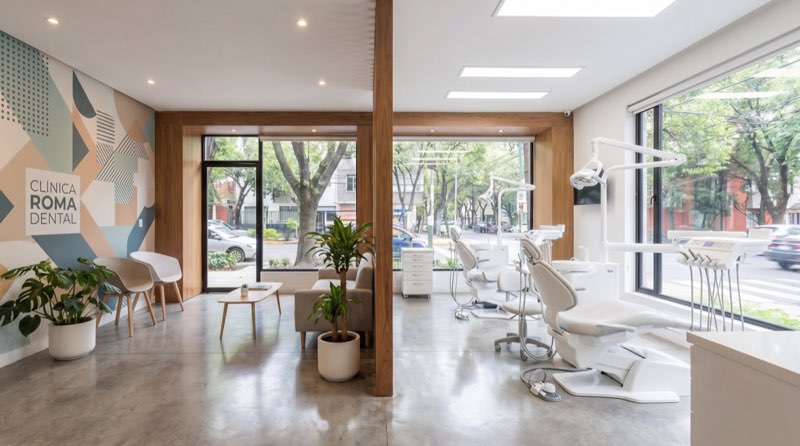
Roma Norte is dense with dental options. From modest neighborhood offices to high-tech specialty clinics, the variety can feel overwhelming. The real question isn't "is there a good dentist here?" It's: how do you tell the difference before something goes wrong?
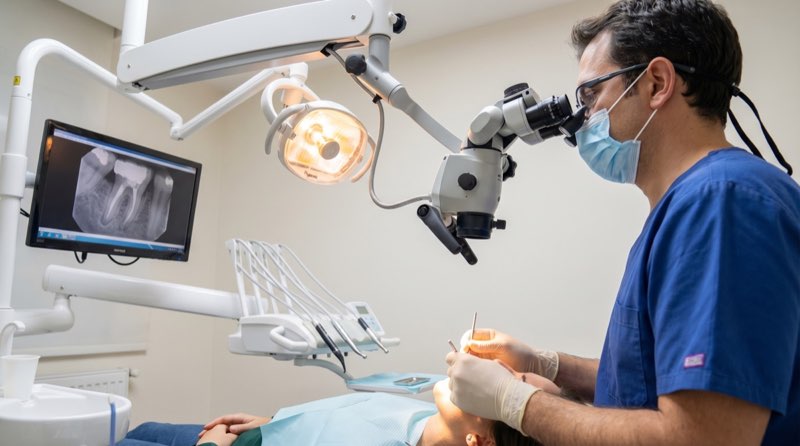
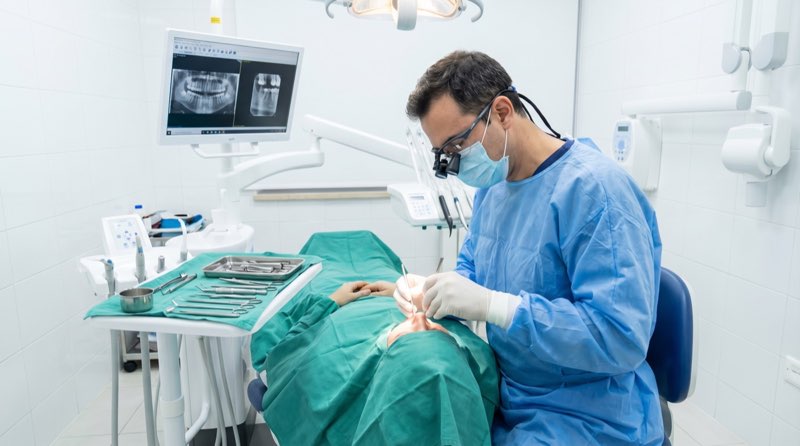
In my practice, every new patient — whether they come in for a routine cleaning or a full smile design — goes through the same initial protocol. Intraoral scan. 3D tomography when indicated. Full photographic documentation. This isn't technology for its own sake. It's the foundation of a diagnosis that actually shows you what's happening inside your mouth, not just what's visible to the naked eye.
There's something most patients don't realize when they walk through any clinic door in Roma Norte. I'll get to it in a moment — because it directly shapes every treatment decision we'll make together.
What Most Dentists in Roma Norte Won't Tell You
Here it is, plainly: the technology a clinic has matters far less than what they do with the diagnosis. I've seen patients arrive at DrDiente after having veneers placed elsewhere — restorations that were already failing within 18 months — because nobody addressed the underlying gum inflammation before starting the cosmetic work.
The short answer is this: you cannot place porcelain veneers, dental crowns, or any lasting cosmetic restoration on a mouth that isn't biologically healthy. Inflamed gums, untreated cavities, a misaligned bite — these are real contraindications. It doesn't matter how modern the clinic's equipment looks in photos.
When a patient asks me about veneers, here's the analogy I always use. Invading the biological space of the gum is exactly like having an ingrown toenail. At first it's just uncomfortable. Then it inflames. It bleeds. Leave it alone long enough, and it starts destroying the tissue and bone underneath. That's the path from gingivitis to periodontitis — and it happens quietly, without dramatic warning signs early on.
In my consulta, I won't move forward with any aesthetic procedure until I see gum tissue that's firm, pink-coral, and completely healthy. No caries, no plaque, no exceptions. That's the rule I apply before touching anything cosmetic.
The best dental clinics in Roma Norte are the ones that tell you "not yet" when your mouth isn't ready. That's not the clinic being difficult. That's the clinic protecting your investment — and your health long-term.
Now, there's an important distinction that applies specifically if you've had previous dental work or you're over 35. I'll walk through it with real case examples next.
Our Clinical Experience: Real Cases from Roma Norte Patients
A few anonymized examples that show what this actually looks like in practice.
A 34-year-old woman came to us after being told by another clinic that she was "ready for veneers." Our intraoral scan and full photographic protocol told a different story: moderate gum inflammation and a mild anterior crossbite. We spent two months on periodontal therapy and a short aligner treatment first. Then — and only then — we placed eight porcelain veneers, calibrated in our own digital laboratory. Two years later, her smile looks exactly as it did on placement day. You can see results like hers in our real case gallery at DrDiente.
A 52-year-old executive who travels between CDMX and Houston came to us specifically because dental work in the US had become cost-prohibitive. He needed three implants and a full upper rehabilitation. Using our 3D cone-beam tomography, we mapped available bone volume with submillimeter precision — something a standard panoramic X-ray would have missed entirely. His total treatment cost roughly 55% less than quotes he had received in Texas, using the same titanium implant systems and ceramic restorations. This is the practical reality of turismo dental CDMX for patients from abroad.
A 28-year-old came in wanting the whitest possible smile for her wedding. Honest answer from me: her enamel had some pre-existing sensitivity, and her natural shade was already quite light. Pushing to an extreme Hollywood-white would have required more aggressive bleaching than her enamel could safely handle. We did a professional whitening protocol that lifted her shade 8 tones. Genuinely beautiful, but completely natural — nobody at her wedding could tell she'd done anything. That's the actual goal of good aesthetic dentistry.
The exception I mentioned for patients over 35: bone density and gum recession become more significant variables as we age. A treatment approach that's perfectly appropriate for a 28-year-old may need real modification for someone in their 40s or 50s. This isn't a problem — it's exactly why individualized 3D diagnosis matters more than a one-size-fits-all protocol.
Questions I Hear Most About Dental Clinics in Roma Norte, CDMX
Is it normal for my gums to bleed when I brush? No — and this is one of the most common misunderstandings I encounter. Bleeding is inflammation signaling a problem, not a side effect of good brushing. The WHO estimates that roughly 90% of Mexican adults have some degree of gum disease. A quality clinic should treat this before anything else, not skip past it to reach the cosmetic work faster.
How long does treatment actually take? It depends on what you need. Professional whitening: 60 to 90 minutes. A full smile design with porcelain veneers, done correctly — including the gum health preparation phase — takes 6 to 10 weeks from first appointment to final placement. Implants with proper osseointegration: 3 to 6 months. If a clinic quotes you timelines dramatically shorter than these, ask specifically why.
Does it hurt? Most modern dental treatments are far less uncomfortable than people expect. We use topical anesthesia before any injection, and our clinical team is trained in anxiety management. For procedures like implant surgery that involve some post-operative discomfort, we use targeted anti-inflammatory protocols. In practice, the anticipation is almost always worse than the procedure itself.
Is the cheaper clinic actually a better deal? In my experience — usually not. A veneer that fails after two years costs more in total, both financially and in terms of biological impact on your tooth, than a quality restoration done right the first time. That said, cost should never be an absolute barrier to care. What I won't do is reduce the quality of the clinical work to reduce the number on the invoice — those two things aren't separable.
How do I know if I need orthodontic treatment before cosmetic work? Simple rule: if your teeth are visibly crowded, misaligned, or your bite feels off, we evaluate that first. Invisible aligners have made this much more accessible for adults — discreet, effective, and in many cases completed faster than patients expect.
What Technology Do We Use at DrDiente for Diagnosis and Treatment?
Our 3D intraoral scanner eliminates traditional impressions entirely. No uncomfortable trays. No putty. The digital scan feeds directly into our treatment planning software and is measurably more accurate than conventional methods. For anxious patients, this single change makes a real difference in the overall experience.
Cone-beam computed tomography — CBCT — gives us a complete 3D picture of bone architecture, nerve pathways, and sinus proximity before any implant surgery. This is not optional in our protocol. The precision it provides reduces surgical time and lowers complication risk in a way that 2D X-rays simply cannot match, for patients in Roma Norte, Polanco, and across CDMX.
Our in-house digital dental laboratory is the differentiator most patients don't see — but feel in the results. Because the lab is here, I can personally calibrate restorations to between 0.3 and 0.5 millimeters of preparation depth. That's the level of precision that lets a veneer seat perfectly against the gum margin without triggering inflammation. It isn't achievable when you're shipping impressions to an external lab and working from a generic prescription.
In my experience, the combination of intraoral scanning, 3D imaging, full photographic documentation, and in-house fabrication isn't primarily about efficiency. It's about being able to show patients exactly what we're planning — before we begin. No surprises. No adjusting as we go.
This is how Dr. Carlos Ariza and the team at Clínica DrDiente serve patients across Roma Norte, Polanco, and all of CDMX — and why patients who travel specifically for turismo dental CDMX choose us for complex, high-investment treatments like full-arch rehabilitation or multi-veneer smile design.
Schedule with the DrDiente Team
If you're looking for a dental clinic in Roma Norte, CDMX — whether for a routine evaluation, a second opinion on a treatment plan someone else proposed, or to begin something specific like implants, veneers, or orthodontic alignment — I'd genuinely like to meet you.
Your first consultation at Clínica DrDiente includes the full digital diagnostic protocol: intraoral scan, photographic documentation, and a thorough clinical examination. Not just a visual look and a quote. An actual diagnosis that you can see and understand before we make any decisions together.
No pressure. No overselling. An honest conversation about what your mouth needs and what it would realistically take to get there.
Hablar con el Dr. Ariza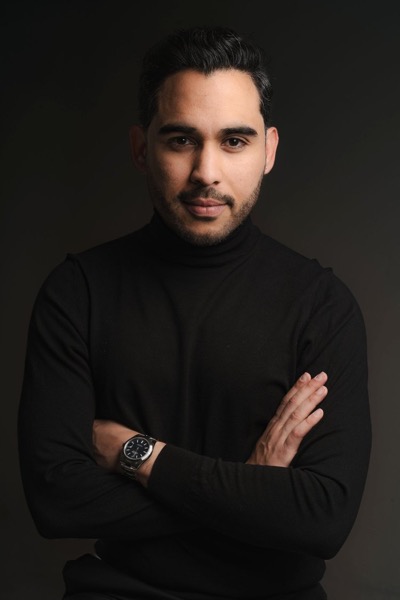
Information from Clínica DrDiente
Aesthetic Dentistry & Oral Rehabilitation · COFEPRIS 2409132002A00145
This content is informational and is not a substitute for professional dental advice. Book an assessment for a personalized diagnosis.