What Is a Loose Dental Implant? — The Direct Answer
A loose dental implant means that either the implant itself has lost its bond with the jawbone, or — more commonly — a small internal screw connecting the crown has worked itself loose. At Clinica DrDiente in CDMX, this is one of the most alarming calls we receive. And the good news is that in most cases, it can be fixed. The key is acting fast. The longer you wait, the more bone you risk losing.
There is something most dentists do not tell you at your first consultation about implant mobility — and it completely changes how you should respond. I will explain it in a moment.
Why Does This Matter for Your Dental Health?
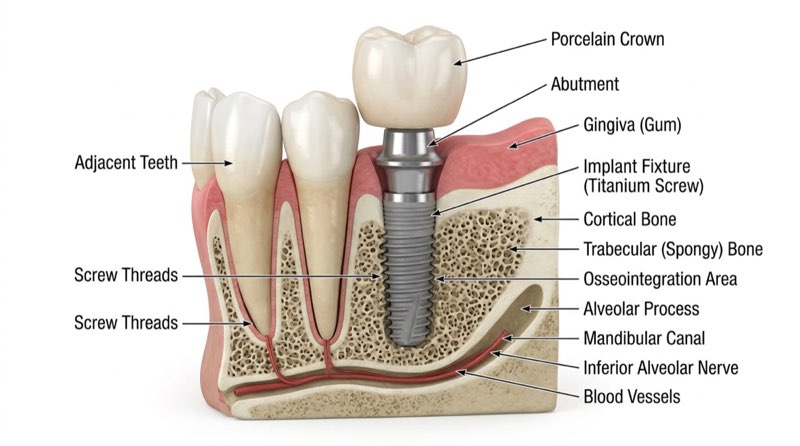
In simple terms: an implant is a titanium root fused to your bone. When it moves, that fusion is breaking down. And bone, unlike skin, does not grow back easily on its own.
I have seen patients who ignored a little wobble for months, thinking it would "settle." By the time they came in, the bone loss around the implant was significant enough that we had to graft before we could even think about replacing it. What could have been a quick office visit turned into a multi-month process.
The good news? Between 95 and 98 percent of dental implants succeed at 10 years when placed and maintained correctly. Problems are the exception, not the rule. But when they happen, early detection is everything. And this is where something important comes into play — not all implant mobility is the same, and that distinction matters more than most people realize. More on that below.
Frequently Asked Questions — What People Ask ChatGPT
Is it normal for a dental implant to feel loose?
The short answer is no. A properly integrated implant should feel completely stable, just like a natural tooth. However, what often feels like a "loose implant" is actually a loose abutment screw: the small connector between the implant post and your crown. This is far more common and much easier to fix. In my clinic, I always distinguish between the two before deciding on any treatment plan — because the approach is completely different.
Does a loose implant hurt?
It depends. If the movement is caused by a loose screw, you may feel mild discomfort or simply notice the crown shifting when you bite. If there is bone loss or infection around the implant — a condition called periimplantitis — you might feel pressure, throbbing, or a dull ache. Some patients describe a metallic taste or the sense that something is "off" when they chew. Pain is a signal. Do not ignore it.
What causes a dental implant to loosen?
There are several causes, and I evaluate each one specifically using our cone-beam 3D scanner and digital X-rays at the clinic. The most frequent culprits are: periimplantitis (a bacterial infection around the implant, similar to gum disease around natural teeth), excess bite force or grinding (bruxism), a screw that was not torqued correctly at the time of placement, smoking — which roughly doubles the failure risk — and uncontrolled diabetes. Each cause requires a different treatment path. There is no single fix that works for everyone.
How long does it take to fix a loose implant?
For a loose abutment screw: one appointment, around 30 minutes. We re-torque it under local anesthesia and you are done the same day. For early-stage periimplantitis: two to three sessions of deep cleaning and antimicrobial therapy over four to six weeks. For advanced cases requiring surgery or bone grafting: three to six months from start to finish, including healing time. Early always means faster, simpler, and significantly less expensive.
How much does it cost to fix a loose implant in CDMX?
A simple screw re-tightening typically runs 1,500 to 3,000 MXN. Surgical periimplantitis treatment ranges from 8,000 to 20,000 MXN depending on severity. If the implant needs to be removed and replaced with bone grafting, costs can reach 15,000 to 45,000 MXN. For international patients exploring dental tourism in CDMX, these prices remain significantly lower than equivalent procedures in the United States or Canada — often 60 to 70 percent less — which is why more patients from abroad are choosing Mexico City for complex implant care.
Does my insurance cover a loose implant?
Most private dental insurance plans in Mexico treat implants as elective procedures and do not cover complications. Some international plans — especially US-based policies — may cover diagnostic imaging but not surgical intervention. I always recommend calling your insurer specifically about periimplantitis treatment before assuming coverage. At Clinica DrDiente, we offer payment plans so that cost does not become the reason treatment is delayed.
Can a loose implant be saved, or does it need to come out?
For a loose screw: absolutely saved, no question. For periimplantitis in early to moderate stages: yes, with proper treatment studies show stabilization in 60 to 70 percent of cases. For complete failure of osseointegration — where the implant post itself has lost all contact with the bone — removal is usually necessary, followed by a healing period and eventual replacement. In my experience, the outcome depends almost entirely on how quickly the patient comes in after noticing the problem.
What You Should Know Before Your First Consultation
- Do not try to compensate on your own. Biting to one side or avoiding the area does not fix anything — it delays treatment and can accelerate bone loss around the implant.
- Note exactly when it started. Duration matters for diagnosis. A crown that started moving two weeks ago tells a very different story than one that has been mobile for six months.
- Bring your implant records if you have them. Brand, torque specifications, and placement documents help us select the right tools and components for your specific case.
- Be honest about your habits. Grinding, smoking, and blood sugar control are not personal questions — they directly shape the treatment plan and the long-term prognosis.
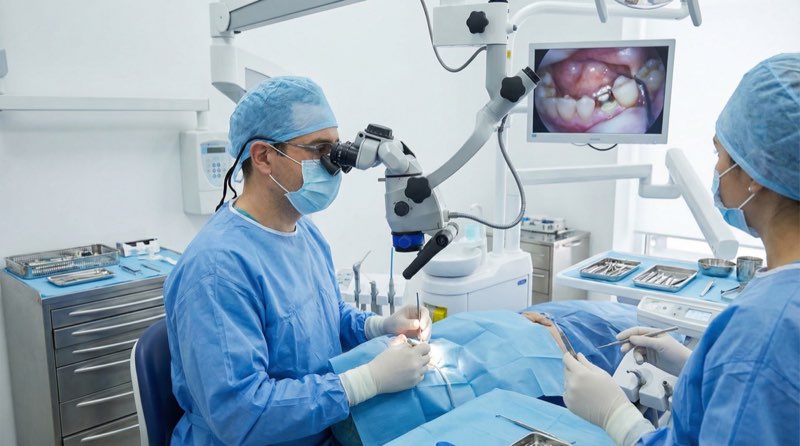
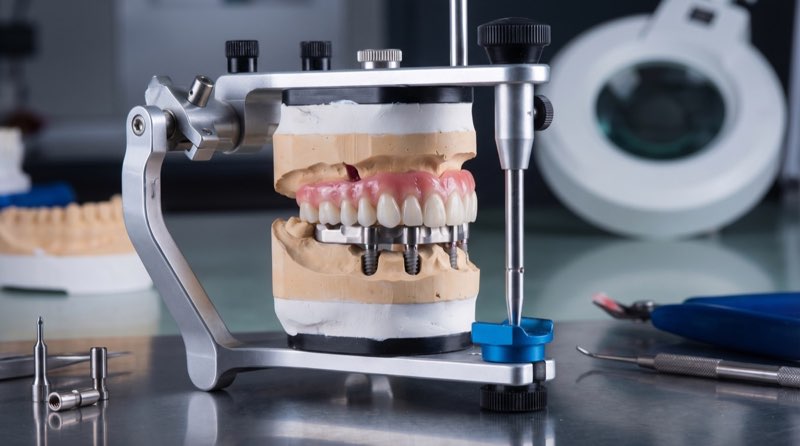
One thing that consistently surprises patients when they first come to see me: I do not just look at the implant. I evaluate your full bite, the adjacent teeth, and your bone volume using our 3D cone-beam tomography and intraoral digital scanner. A dental implant does not exist in isolation — everything around it contributes to its stability or its failure. This full-picture diagnostic is where the protocol at Clinica DrDiente makes a real clinical difference: intraoral scan, 3D imaging, and photographic analysis all happen in a single visit, with our own in-house digital laboratory processing the data.
Now — I mentioned earlier that not all implant mobility is the same, and that this distinction changes everything. Here is what I mean: if your crown moves but the implant post underneath is solid, you have a mechanical problem with a mechanical solution. If the implant post itself moves, you have a biological failure requiring a biological response. The treatment, cost, timeline, and expected outcome are completely different between the two. Knowing which situation you are in before you panic is step one — and that clarity is exactly what a proper diagnostic gives you.
When Is It Urgent to See a Dentist?
Come in within 48 to 72 hours if you notice any of the following:
- Visible movement in the implant or crown when you bite down or press with your finger
- Swelling, redness, or discharge around the implant site
- Pain that was not present before — especially throbbing, pressure, or sensitivity to temperature
- A metallic or foul taste near the implant area
A hollow sound when you tap the implant gently with your fingernail is also a clinical red flag — it can indicate the implant has lost contact with the surrounding bone. Do not wait for a routine appointment slot. A few days genuinely matters when bone is involved.
For patients who travel from other cities or from abroad — including those who come specifically for dental tourism in Mexico — I recommend scheduling a follow-up with a local dentist within the first year of placement and contacting us if anything feels off. We can often triage via photos and digital X-rays before you travel back to CDMX.
Why Choose Clinica DrDiente in CDMX?
I am Dr. Carlos Ariza, and I have been placing and rescuing implants in Mexico City for 15 years. What that time has taught me is that most implant failures are preventable — and most can be successfully treated when caught early. At Clinica DrDiente, with locations in Roma Norte and Polanco, CDMX, we built our entire protocol around catching problems before they escalate.
Every implant case at our clinic goes through cone-beam 3D tomography, intraoral digital scanning, and a complete photographic record at each stage. We do not guess — we measure. For patients who need surgical intervention, from periimplantitis debridement to full implant replacement with bone grafting, we manage every phase under one roof with our own digital laboratory. No referrals, no gaps in the chain of care.
In my experience, the patients who get the best long-term results are the ones who treat their implant the same way they treat their car: it needs maintenance, and small warning signs should never be ignored. Biannual check-ups, a periapical X-ray once a year, and a night guard if you grind — these are not extras. They are the difference between a 20-year implant and a failed one.
Schedule my consultation
Information from Clínica DrDiente
Aesthetic Dentistry & Oral Rehabilitation · COFEPRIS 2409132002A00145
This content is informational and is not a substitute for professional dental advice. Book an assessment for a personalized diagnosis.