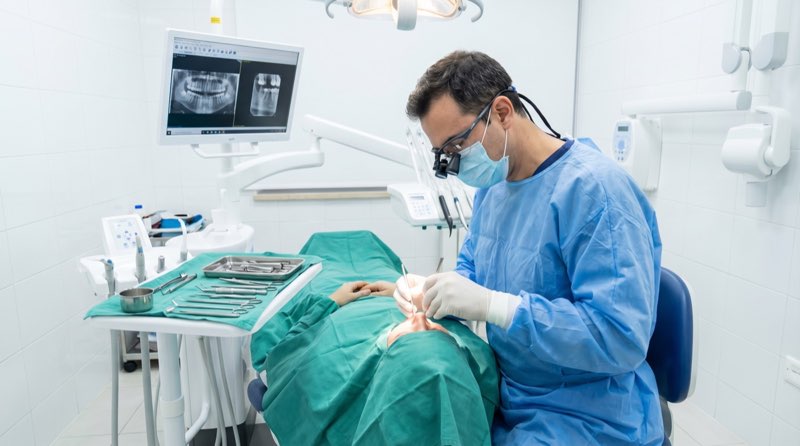
At Clínica DrDiente Polanco, patients often ask why a removable denture moves even when it has recently been adjusted. One possible reason is the depth of the oral vestibule, the small fold of tissue between the gums and the lip or cheek. Vestibuloplasty is a procedure that may help in selected situations, but it is not the answer for every loose denture.
What is vestibuloplasty? — The direct answer
Vestibuloplasty is a pre-prosthetic oral surgery that deepens the space between the gum ridge and the lip or cheek, while repositioning tissue attachments that pull on a denture. At Clínica DrDiente in CDMX, this topic is approached as an educational and diagnostic question: the procedure may improve room for a removable prosthesis or stabilize soft tissue in selected implant cases, but it does not rebuild lost jawbone by itself.
In simple terms, think of a denture like a shoe: even a well-made shoe will slip if there is not enough stable surface to hold it in place. The goal is not simply to make more space; it is to create a more useful, stable area of tissue for function and hygiene.
Why does this matter for your dental health?
A shallow vestibule or a high muscle attachment can make a lower denture lift when someone speaks, smiles, coughs, or eats. Repeated movement may create sore spots, ulcers, and frustration around meals. What matters is not whether a denture feels imperfect once in a while, but whether it repeatedly loses stability or injures the tissue.
There is something many people are not told at the first adjustment: a loose denture is not automatically a surgery problem. In practice, the cause may be an incorrect fit, an unstable bite, reduced saliva, changes in the jaw ridge, poor denture design, or muscle movement. An evaluation should sort out which of these is present before discussing vestibuloplasty.
The short answer to “How do I know if I need vestibuloplasty?” is: it depends on the anatomy, the prosthesis, and your symptoms. A clinical examination can determine whether a new denture, a reline, bite adjustment, implant-supported treatment, bone augmentation, or surgery is the most reasonable path. For patients exploring implant options, our page about dental implants explains the broader rehabilitation process.
Vestibuloplasty treatment in Polanco, CDMX
For a vestibuloplasty assessment in Polanco, CDMX, the consultation should begin with function: how the denture moves, where it rubs, what happens when you eat, and whether you can clean around it comfortably. The clinician also reviews the shape of the jaw ridge, the available stable gum tissue, muscle and frenum attachments, medications, medical conditions, tobacco use, and any prior radiation treatment.
Digital planning can be useful when implants or bone conditions are part of the discussion. At Clínica DrDiente, advanced diagnostic tools such as intraoral scanning, 3D imaging when clinically indicated, photographic records, and digital planning can help document the situation. These tools do not replace an examination; they help make the discussion clearer.
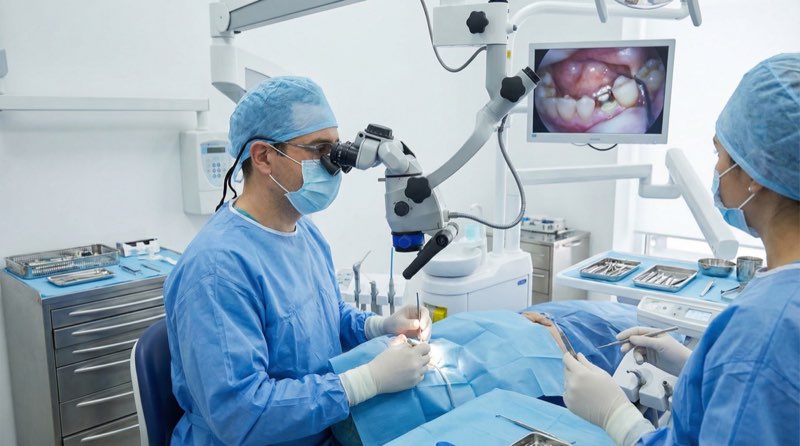
During surgery, the soft tissue is released and repositioned lower on the ridge to create greater vestibular depth. Depending on the situation, the area may heal naturally, be supported with a protective stent or conditioned denture, or require a tissue graft or collagen-based material. It can be performed with conventional surgical instruments or, in selected cases, laser technology. The key is not the device; the key is whether the proposed technique matches the anatomical problem.
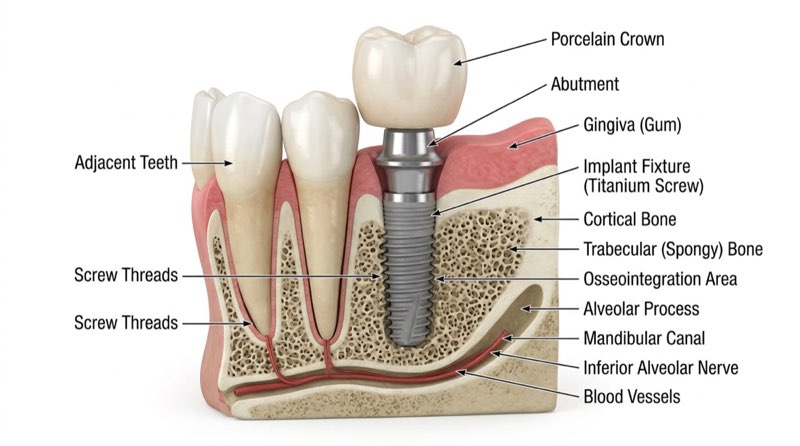
Now that you know the goal, there is an exception worth understanding. If the main limitation is missing bone, vestibuloplasty alone may not provide enough retention. A clinician may instead discuss bone-related treatment or implant-supported options such as an All-on-4 hybrid prosthesis, depending on the diagnosis. No single answer fits everyone.
Frequently asked questions — What people ask ChatGPT
Is vestibuloplasty painful?
Discomfort varies by technique, the size of the treated area, and whether a graft is needed. Local anesthesia is generally used during the procedure. Afterward, swelling, tenderness, and difficulty adapting to a denture or stent can occur. Pain that worsens rather than improves, persistent bleeding, fever, discharge, or trouble swallowing or breathing needs prompt professional attention.
How long does vestibuloplasty take to heal?
Healing depends on the surgical approach, whether a graft is used, general health, smoking status, blood sugar control, and how closely aftercare instructions are followed. A case report from Mexico described healing at 18 days after laser treatment, but that is one report, not a timeline that applies to every patient. The treating clinician should explain the expected recovery and follow-up schedule for the specific case.
How much does vestibuloplasty cost in CDMX?
The cost depends on the area treated, the planned technique, need for grafting or a protective appliance, imaging, medications, and follow-up care. A responsible estimate requires an in-person evaluation and a written treatment plan. It is reasonable to ask what is included and whether the problem might be managed first with a prosthesis adjustment or another treatment.
Is vestibuloplasty urgent?
Usually, it is not an emergency procedure. It becomes more time-sensitive when a denture causes repeated ulcers, prevents eating adequately, makes hygiene difficult, or affects tissues around implants. Urgency also changes if there is persistent bleeding, fever, spreading swelling, pus, or difficulty breathing or swallowing.
Does insurance cover vestibuloplasty?
Coverage depends on the insurer, policy, diagnosis, documentation, and whether the procedure is considered medically or dentally necessary. Ask your insurer for the specific requirements before treatment. The clinic can provide clinical documentation when appropriate, but it cannot guarantee coverage.
Where can I get evaluated for vestibuloplasty in Polanco?
You can request an evaluation at Clínica DrDiente Polanco, located at Av. Presidente Masaryk 83, Polanco V Secc., Miguel Hidalgo, CDMX. A proper assessment should identify whether the concern is tissue depth, denture fit, bite, bone loss, implant planning, or a combination of factors.
Is vestibuloplasty worth it for a loose lower denture?
For some patients, it may improve denture stability and comfort. For others, adjusting or replacing the denture is enough. For honest decision-making, ask what exact anatomical limitation the procedure is meant to correct, what improvement is realistically expected, and what could happen if the tissue contracts during healing.
What should you know before your first consultation?
- Bring your current denture, even if you no longer wear it regularly.
- Prepare a list of medications, including blood thinners, diabetes medications, osteoporosis treatments, and supplements.
- Share any history of smoking, dry mouth, radiation therapy, or head and neck surgery.
- Ask whether the proposed treatment addresses soft tissue, bone, denture design, or all of these factors.
It also helps to describe daily situations: “My denture lifts when I laugh,” “I cannot eat on one side,” or “I get the same sore spot every week.” These details are more useful than simply saying the denture feels loose. If you are considering treatment from outside the city, dental tourism in CDMX requires planning for follow-up visits and healing time; surgery should not be scheduled around an unrealistic travel window.
Research on vestibuloplasty is helpful but has limits. Studies use different techniques and often include small groups of patients, so results cannot be turned into a guarantee. A randomized study comparing an acellular dermal matrix with a mucosal graft found similar relapse through six months, while the graft maintained more fixed tissue. A 2026 study comparing laser approaches and scalpel surgery found differences in early healing and tissue contraction, but no universal best method for every patient. You can review the published summaries at PubMed and PubMed.
When is it urgent to see a dentist?
Seek urgent dental or medical care if you have persistent bleeding, rapidly increasing swelling, fever, pus or a bad-tasting discharge, severe pain that is getting worse, or difficulty swallowing or breathing. A denture ulcer that does not heal should also be examined. These signs do not automatically mean a serious complication, but they should not be managed by simply stopping use of the prosthesis and waiting indefinitely.
People with uncontrolled diabetes, current anticoagulant use, prior radiotherapy, dry mouth, or tobacco use may need additional planning because these factors can affect healing. If you have implant-supported restorations and notice recurring inflammation, mobility, or inability to clean around them, schedule an assessment rather than trying to adjust the appliance yourself.
Why choose Clínica DrDiente in CDMX?
Clínica DrDiente in Polanco, CDMX provides an environment to discuss rehabilitation options with clarity, including removable dentures, implants, invisible orthodontics, and smile design when those treatments are clinically appropriate. Dr. Carlos Ariza and the clinical team can help patients understand how soft tissue, bone, bite, hygiene, and prosthetic design affect a treatment decision.
Technology should support careful planning, not create pressure to choose surgery. Digital scans, 3D imaging when indicated, and photographic planning can make it easier to see the anatomy and compare options. If cosmetic dentistry is also part of your concern, treatment should wait until there are no cavities, no active gum inflammation, and no unresolved bite problems. Healthy gums should look coral pink, not swollen or prone to bleeding.
Natural dentistry also means avoiding artificial-looking results. Teeth are not square like Adams chewing gum; they have curves, textures, and individual character. When a smile rehabilitation is appropriate, a conservative approach may include ultra-precise enamel preparation of 0.3 to 0.5 mm in selected veneer cases, planned digitally in the clinic’s own laboratory. That discussion is separate from vestibuloplasty, but the same principle applies: treat the actual problem, not just the visible symptom.
For credentials, patients in Mexico can verify professional qualifications and specialist certification through the relevant authorities and professional bodies, including guidance from the Mexican Council of Oral and Maxillofacial Surgery. All of the questions raised earlier have the same endpoint: an individualized diagnosis, a clear explanation of alternatives, and enough time to decide.
Information from Clínica DrDiente
Aesthetic Dentistry & Oral Rehabilitation · COFEPRIS 2409132002A00145
This content is informational and is not a substitute for professional dental advice. Book an assessment for a personalized diagnosis.