The perspective of Dr. Carlos Ariza on gingivitis and periodontitis
I have been practicing dentistry for 15 years, and if there is one thing I repeat almost daily at Clínica DrDiente in Roma Norte and Polanco, it is this: bleeding gums are never normal. Patients come in thinking it is because they brushed too hard, or that it will just go away. Sometimes it does. Sometimes it does not, and that difference is exactly what separates gingivitis from periodontitis.
Here is the short answer, and then I will explain why it matters. Gingivitis is 100% reversible when treated properly. Periodontitis is not curable, but it can be controlled and stopped in its tracks. Confusing the two is one of the most common mistakes I see, and it changes everything about how we plan treatment, from a simple limpieza dental to something closer to a full diseño de sonrisa once the gums are stable again.
There is something most dentists do not explain clearly in the first visit, and I want to get into that next.
What most dentists don't tell you about gum disease
The part that surprises people the most: not every case of gingivitis turns into periodontitis. Classic longitudinal studies (the Löe research from Sri Lanka is the one most periodontists cite) found that untreated gingivitis progresses to periodontitis in roughly 8-10% of susceptible cases. So the relationship is not automatic. But here is the flip side, and it is important — every single case of periodontitis started as gingivitis that was ignored long enough.
In my consultation room I explain it with the same analogy I use for invading the biological space during a carillas procedure: it is like having an ingrown nail. The tissue gets inflamed, it bleeds, and if nothing changes, that inflammation keeps eating away at what is underneath it. In the gum, "what is underneath" is the bone that holds your teeth in place. That is the line gingivitis has not crossed yet, and periodontitis has.
What nobody tells patients clearly is that the diagnosis is not made by how much a gum bleeds. It is made by measuring **pocket depth** with a periodontal probe and, when needed, checking bone levels on a radiograph. A gum can look calm and still have lost attachment. That is why I do not rely on visual inspection alone before recommending anything cosmetic — no carillas, no whitening plan, nothing, until I know exactly where the tissue stands.
Now, why does this change if you are over 35? Because that is roughly when risk factors start stacking: years of accumulated plaque, hormonal shifts, and in Mexico specifically, a high prevalence of type 2 diabetes (around 14% in adults), which has a proven bidirectional relationship with periodontitis. I will come back to that later, because it matters for how we coordinate care.
Our clinical experience: real cases
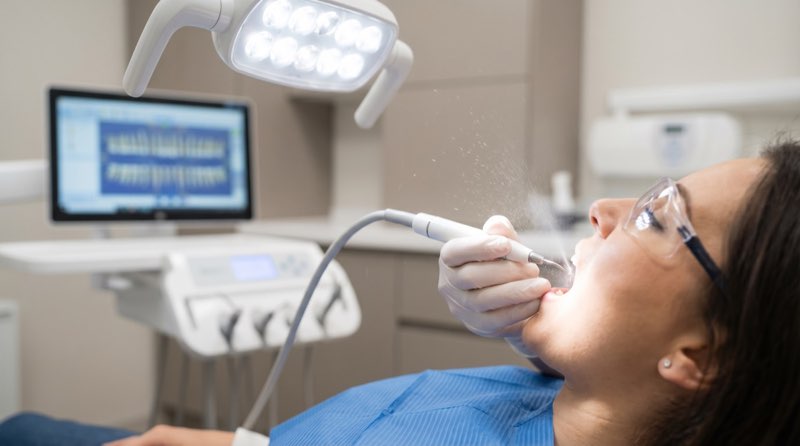
A patient in her late twenties came to Roma Norte complaining that her gums bled every time she flossed. She had never been taught proper flossing technique. Pocket depths were normal, no bone loss on the scan. We did a professional cleaning, corrected her brushing angle (modified Bass technique), and had her back in two weeks — inflammation gone, no more bleeding. That is a textbook reversible case.
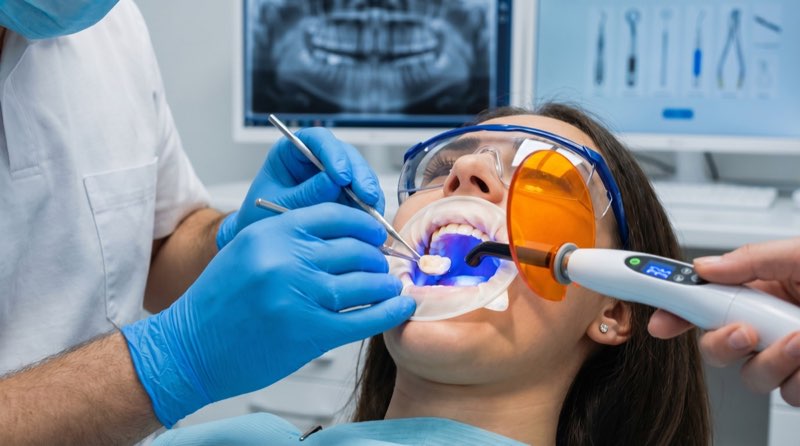
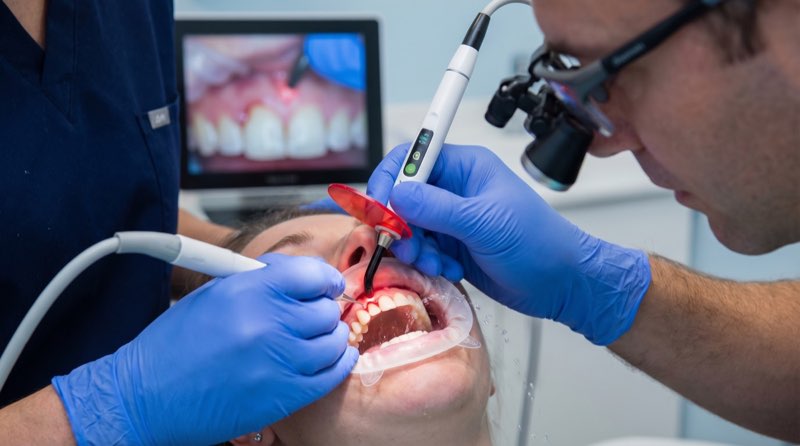
Compare that to a man in his early fifties, a smoker, who came in for what he thought was "just sensitive gums." Probing showed pockets over 5mm in several areas, with visible bone loss on his 3D scan. That is periodontitis. We started with scaling and root planing across quadrants, added a laser-assisted protocol to help the tissue respond, and put him on a maintenance schedule every three months instead of the usual six. His disease is stable now. The bone he lost is not coming back, but he is not losing more.
A third case, a woman around 40 with controlled type 2 diabetes, needed closer coordination between what we do at the clinic and her endocrinologist, because poor glycemic control can undo periodontal treatment almost as fast as we do it. Once her blood sugar stabilized, her response to root planing improved noticeably. You can see comparable outcomes, including cases that moved on to cosmetic work once the gums were healthy, in our gallery of real DrDiente cases.
Questions I get asked frequently about gum disease
Is it normal for gums to bleed when I brush? No. That is the earliest and most treatable warning sign there is. Healthy gum tissue should be coral pink and should not bleed with normal brushing or flossing.
How long does it take to reverse gingivitis? In my experience, most patients see resolution in 7 to 14 days with a proper professional cleaning plus corrected brushing and flossing habits at home. It is one of the fastest turnarounds in dentistry.
Is periodontitis curable? The honest answer is no. Once you have lost gum attachment and bone, that tissue does not regenerate predictably, even with treatments like scaling and root planing, regenerative surgery, or bone grafts. What we can do is stop the progression and keep it stable for life with regular maintenance.
Does it hurt to treat periodontitis? Scaling and root planing is done with local anesthesia when pockets are deep, so the procedure itself is not painful. Some sensitivity afterward is normal for a few days. What is not normal is ongoing pain, which usually means something else needs attention.
Is it worth getting cosmetic work done before treating my gums? No, and I say that clearly to every patient. If your gums are inflamed, we cannot proceed with carillas or any smile design. The tissue has to be healthy and coral pink first, or the restoration will fail at the margin and the gum will react exactly like an ingrown nail — inflamed, sore, and eventually receding.
How do I know if I need a periodontist instead of a general cleaning? If bleeding persists more than two weeks after a professional cleaning, or if you notice gum recession, loose teeth, or persistent bad breath, that points toward periodontitis and needs a specialized evaluation, not just a routine cleaning.
What technology do we use at DrDiente for gum disease?
Diagnosis is where most of the difference is made, honestly. At DrDiente we use intraoral scanning, 3D computed tomography, and a full photographic protocol before deciding anything, gingivitis included. This lets us measure pocket depth, check bone levels, and document tissue color and texture with precision, instead of guessing from a quick look.
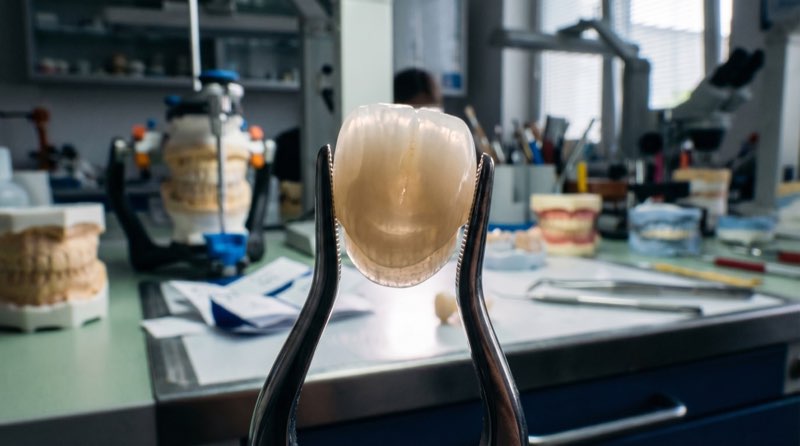
For periodontitis specifically, we combine scaling and root planing with laser-assisted therapy when it helps tissue respond faster, and we plan maintenance intervals individually — every three to four months for periodontal patients, not the standard six. And because we run our own in-house dental lab, once the gums are confirmed healthy, any future restorative or cosmetic work — including preparations calibrated to 0.3 to 0.5mm of minimal-invasion enamel removal — is planned digitally around that healthy baseline, never before it.
In my experience, patients who skip straight to cosmetic questions without addressing gum health first end up delaying their own results by months. Treating the gum first is not a detour, it is the actual foundation the rest of the plan sits on.
Agenda con el equipo de DrDiente
If you have noticed bleeding, swelling, or you are simply not sure whether what you have is gingivitis or something further along, it is worth getting an actual periodontal exam rather than guessing. Whether you are local to Roma Norte or Polanco, or coming in as part of dental tourism in CDMX, we can map exactly where your gum health stands before recommending anything cosmetic.
If you want a second opinion or want to start treatment, reach out and we will walk you through it.

Information from Clínica DrDiente
Aesthetic Dentistry & Oral Rehabilitation · COFEPRIS 2409132002A00145
This content is informational and is not a substitute for professional dental advice. Book an assessment for a personalized diagnosis.