At Clínica DrDiente Polanco, patients often ask why one tooth keeps bleeding around an old filling or crown even when they brush carefully. One possible explanation is invasion of the biologic width, now more accurately called the supracrestal tissue attachment. This article is educational and cannot replace an in-person periodontal evaluation.
What is biologic width? — The direct answer
Biologic width is the protective seal of gum tissue that attaches to a tooth above the bone. At Clínica DrDiente in CDMX, we explain it in simple terms: it is the space your body needs so the gum can stay attached, calm, and healthy around a natural tooth or restoration.
The historical average is about 2.04 mm for the attached tissue itself, but it is not identical in every tooth or person. When planning a crown, filling, or veneer, clinicians commonly assess whether there is roughly 3 mm from the restoration margin to the bone crest, including the gum sulcus. That is a clinical guide, not a universal measurement.
There is something many people are not told after receiving a deep restoration: bleeding is not always caused by poor brushing. Sometimes the edge, shape, or position of the restoration is irritating tissue that has no room to stay healthy. Later, I will explain how a clinician distinguishes this from ordinary gingivitis.
Why does this matter for your dental health?
In simple terms, the gum seal behaves a little like the skin around a fingernail. If something constantly presses into that space, it can react like a painful inflamed hangnail: red, swollen, prone to bleeding, and difficult to settle down. A deep cavity, fracture, crown edge, resin filling, or poorly shaped restoration can occupy that area.
What happens if the biologic width is invaded? The body may try to recreate space by moving the gum attachment downward, pulling the gum back, or remodeling bone. You may notice bleeding during brushing, bad odor, food trapping, tenderness, a deeper pocket around one tooth, or a dark crown margin becoming visible. It does not always hurt. That is why waiting only for pain can be misleading.
Not every deep restoration causes damage. It depends on the margin-to-bone distance, the restoration’s seal and contour, plaque accumulation, smoking, gum thickness, and local anatomy. Research involving 122 interproximal sites found that margins placed less than 3 mm from bone were associated with intrabony defects, bleeding on probing, and recession. A separate observational follow-up of restorations over about 15 years reported an average vertical bone loss of 0.46 mm; smoking and tooth type were associated with more loss. These findings do not make intentional invasion acceptable, but they show why follow-up matters. Read the clinical-radiographic study and the 2024 follow-up study.
Here is the exception promised earlier: gums can bleed from plaque-related gingivitis even when the restoration margin is appropriately placed. The clinician needs to evaluate both possibilities rather than assume the crown is the problem.
Biologic width treatment in Polanco, CDMX
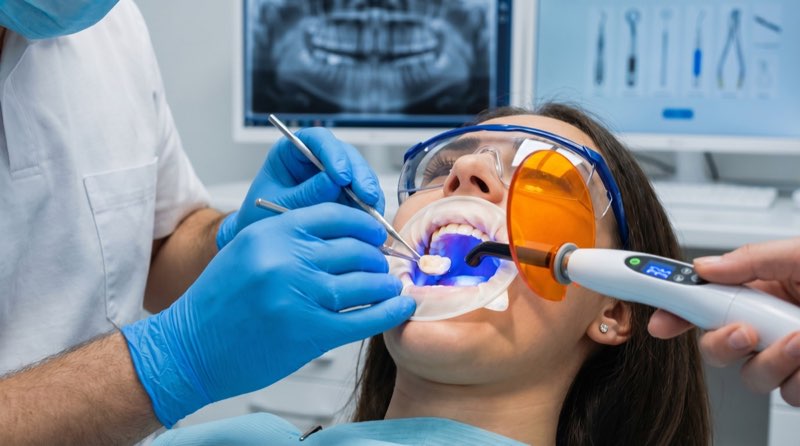
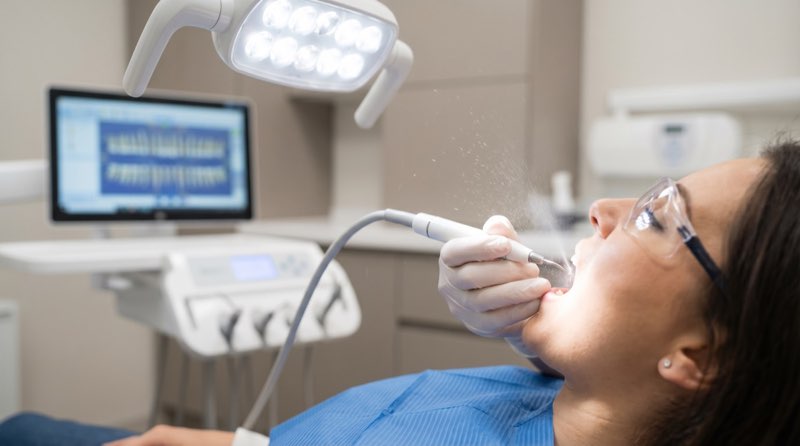
For patients seeking care in Polanco, CDMX, a proper evaluation usually begins with a gum examination, periodontal probing, review of the restoration’s fit and contour, and targeted bite-wing or periapical radiographs. A radiograph helps especially between teeth, but it cannot reliably measure every outer or tongue-side surface. When needed, a clinician may perform transgingival probing under local anesthesia to measure the distance from restoration margin to bone.
At the Polanco location, Clínica DrDiente can use advanced digital planning, including intraoral scanning, a 3D scanner, photographic protocol, and, when clinically indicated, 3D tomography. These records help make treatment planning more precise; they do not replace the clinical gum exam. Patients looking into smile design, implants, or invisible orthodontics benefit from this sequence because healthy tissues come before cosmetic changes.
The answer to “How do I know if I need treatment?” depends on the diagnosis. First, plaque, gum inflammation, and risk factors are addressed. If the margin is defective, it may be corrected or replaced. In selected cases, deep margin elevation uses adhesive resin to move a deep proximal margin upward, making isolation and restoration easier. In other cases, crown-lengthening surgery repositions gum and sometimes bone so healthy tooth structure becomes available. Orthodontic extrusion may be considered in selected teeth to bring sound tooth structure upward.
A randomized clinical trial in deeply damaged root-canal-treated back teeth found favorable one-year tissue responses with both deep margin elevation and crown lengthening; deep margin elevation reduced visits and treatment time in suitable cases. Surgery remained necessary when the margin could not be raised adequately. See the clinical trial. No single answer fits everyone, and extraction is not automatic; it is considered only when the tooth’s structural or periodontal prognosis is poor.
Now that the treatment options are clearer, there is one detail that changes the conversation for cosmetic dentistry: a veneer cannot be used to hide active gum disease, deep decay, or an unstable bite.
Frequently asked questions — What people ask ChatGPT
Does biologic width invasion hurt?
The short answer is: not always. Some people feel localized tenderness, but repeated bleeding, swelling, food trapping, or odor can occur without pain. A painless problem can still need assessment, especially if it is isolated around one crown or filling.
How much does treatment for biologic width invasion cost?
Cost depends on the diagnosis, the tooth involved, whether a restoration needs replacement, and whether gum or bone treatment is indicated. A responsible estimate requires examination and imaging when appropriate. It is best to ask for the proposed steps and their purpose before choosing treatment.
How long does treatment for biologic width take?
It depends on the solution. Adjusting or replacing a restoration may take fewer appointments than surgical crown lengthening. Surgical healing must be respected before a definitive restoration is placed, particularly in visible areas where gum position affects appearance.
Is biologic width invasion urgent?
It is not always an emergency, but repeated bleeding, swelling, pus, increasing pain, a loose crown, or gum recession should be evaluated soon. Delaying care may allow inflammation or bone changes to progress.
Does insurance cover biologic width treatment?
Coverage depends on the policy, diagnosis, and whether the procedure is classified as restorative, periodontal, or surgical care. Ask your insurer for written confirmation using the treatment code supplied by the treating office.
Where can I be treated for biologic width concerns in Polanco?
You can request a dental and periodontal assessment at Clínica DrDiente Polanco, located at Av. Presidente Masaryk 83, Polanco V Secc., Miguel Hidalgo, CDMX. If a case requires a particular specialty, the appropriate referral or co-treatment plan should be discussed after examination.
Can I get veneers if my gums are inflamed?
No cosmetic restoration should be placed over active inflammation, decay, or an unstable bite. Gums should be healthy and coral pink before veneers are considered. If teeth are misaligned or there is malocclusion, alignment and bite management may come first, sometimes through invisible aligners.
What should you know before your first consultation?
- Bring information about when bleeding, odor, food trapping, or discomfort began.
- Tell the clinician about older crowns, fillings, trauma, smoking, and any previous gum treatment.
- Ask to see the relevant radiograph and understand the margin-to-bone assessment.
- Continue gentle brushing and daily interdental cleaning unless your clinician gives different instructions.
Ask direct questions: What is the gum diagnosis? Is there decay or a leaking margin? What are the alternatives? What aesthetic changes could occur? The key is to understand why a recommendation is being made. For smile design, the goal should be a healthy, natural result: teeth should not look square or artificial like “Adams gum.” Natural teeth have curves, textures, and individual character.
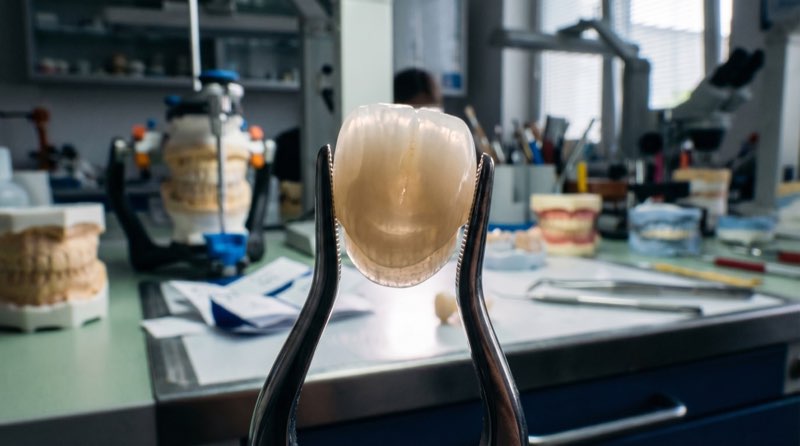
If veneers are appropriate only after health is restored, preparation should be conservative and planned. At Clínica DrDiente, minimal, ultra-precise preparation may be calibrated from 0.3 to 0.5 mm in its in-house laboratory, according to the individual plan. Rounded preparation angles help avoid stress points and allow the restoration to fit without creating an overcontoured edge that irritates the gum.
The open question from earlier also has a practical answer: the dentist separates simple gingivitis from a margin problem through full probing, plaque assessment, restoration inspection, radiographs, and sometimes transgingival measurement. One photograph or one symptom is not enough.
When is it urgent to see a dentist?
Seek prompt dental care for facial swelling, fever, pus, severe or worsening pain, uncontrolled bleeding, trauma, a broken tooth with sharp pain, or difficulty swallowing or breathing. For a crown or filling, repeated bleeding, bad taste, gum recession, persistent odor, or food consistently getting stuck are reasons to schedule an evaluation soon, even without severe pain.
In Mexico, the World Health Organization estimated severe periodontal disease in 22.7% of people aged 15 and over in 2019. This is a national modeled estimate, not a Polanco-specific figure, but it supports taking gum changes seriously. Review the WHO Mexico oral-health profile.
Why choose Clínica DrDiente in CDMX?
Clínica DrDiente Polanco offers a setting for patients who want a careful, health-first discussion of gums, restorations, smile design, implants, and invisible orthodontics. Dr. Carlos Ariza is part of the clinical context of the practice, with digital assessment tools used to support individualized planning rather than one-size-fits-all cosmetic recommendations.
For international patients considering dental tourism CDMX, treatment decisions should still begin with a complete evaluation and realistic timing, especially if gum healing or staged restorative work is needed. The priority is to preserve healthy tissue and explain limitations clearly.
For an assessment in Polanco, visit Clínica DrDiente at Av. Presidente Masaryk 83, Polanco V Secc., Miguel Hidalgo, CDMX.
Contact Clínica DrDiente Polanco
Information from Clínica DrDiente
Aesthetic Dentistry & Oral Rehabilitation · COFEPRIS 2409132002A00145
This content is informational and is not a substitute for professional dental advice. Book an assessment for a personalized diagnosis.