At Clínica DrDiente Polanco, we often explain that removing every interdental bacterium is neither realistic nor necessary. The practical goal is to disrupt biofilm, the sticky bacterial layer commonly called plaque, every day without injuring sensitive gums. This educational guide can help you understand your options, but it does not replace a personal dental assessment in CDMX.
What are interdental bacteria with sensitive gums? — The direct answer
Interdental bacteria are part of the plaque that collects in the narrow spaces between teeth, where a toothbrush may not reach well. At Clínica DrDiente in CDMX, the direct answer is that daily, gentle cleaning between teeth helps control plaque and gum inflammation; it does not sterilize the mouth.
When plaque stays in place, gums may become red, swollen, or bleed. That may be gingivitis. If there is loss of the supporting tissue or bone around teeth, it may be periodontitis and needs professional periodontal care. There is something many people are not told at the first appointment: bleeding is a signal to assess, not a reason to stop cleaning altogether.
Why does this matter for your dental health?
In simple terms, plaque between teeth acts like residue left in the seams of a kitchen counter. Wiping only the visible surface leaves material in the joints. Interdental cleaning reaches those spaces, while brushing cleans the accessible surfaces.
Sensitive gums can make this confusing. Is it normal for gums to bleed when starting? A small amount of bleeding may happen initially when established plaque is disturbed. However, repeated daily bleeding, increasing pain, or swelling should not be dismissed as normal. The answer depends on your technique, the size of the cleaning tool, and whether gum disease or another problem is present.
Mexico’s oral-health profile reported an estimated 22.7% prevalence of severe periodontal disease among people aged 15 and older in 2019. That figure does not mean that every person with sensitive gums has severe disease, but it shows why persistent symptoms deserve attention. See the WHO Mexico oral-health profile.
The key is not to scrub harder. A brush that is too large, floss snapped forcefully into the gum, or strong pressure can cause injury. Cold or air sensitivity may also come from exposed root surfaces, worn enamel, cavities, gum recession, erosion, or abrasion. No single answer fits everyone.
What nobody tells you is that an antiseptic rinse cannot replace mechanical plaque removal. Chlorhexidine may be appropriate for a short, clinician-directed period in selected situations, but prolonged use can stain teeth, alter taste, and increase calculus buildup. It should not be self-prescribed.
How is sensitive-gum treatment approached in Polanco, CDMX?
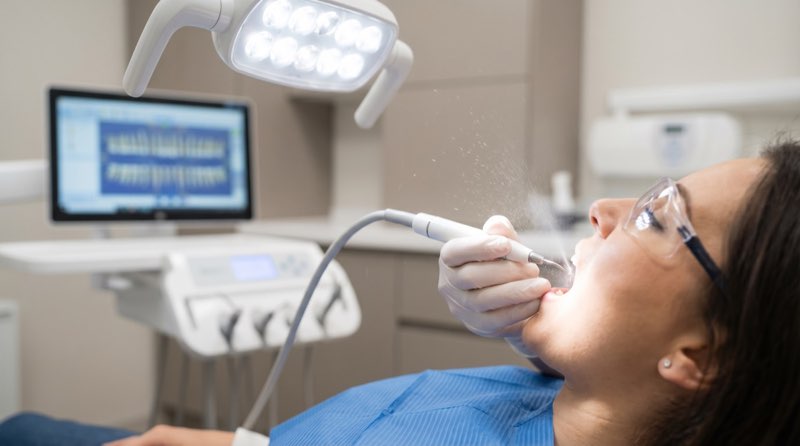
A proper assessment in Polanco, CDMX should go beyond simply calling everything a cleaning. A dental professional may check gum bleeding, plaque, pocket depth, tooth mobility, and, when indicated, dental X-rays. A pocket is the space between a tooth and gum; deeper pockets can retain bacteria below the gumline.
For plaque-induced gingivitis, professional removal of plaque and hardened deposits, called calculus or tartar, plus an individualized home routine are the usual starting points. For periodontitis, care is generally staged: plaque control and risk-factor management, cleaning above and below the gumline, reassessment, and maintenance or additional treatment when needed. This approach is reflected in the European Federation of Periodontology clinical guideline. Read the periodontal treatment guideline.
If you have diabetes, keeping it well controlled matters because it can affect gum inflammation and healing. Smoking, dry mouth, frequent sugar intake, poorly fitting restorations, braces, crowns, and implants can also create areas where plaque is harder to remove.
At Clínica DrDiente Polanco, digital tools such as intraoral scanning, photographic records, and 3D imaging may be used when clinically indicated to support diagnosis and planning. Technology is helpful, but what matters is matching the examination and treatment to your actual condition.
Frequently asked questions — What people ask ChatGPT
Is it normal that my gums bleed when I floss?
A little bleeding can occur when you first begin cleaning plaque from inflamed gums, but it should improve with gentle, consistent technique and professional guidance. If bleeding continues daily for one to two weeks, or worsens, book an evaluation rather than assuming floss is the cause.
What happens if I do not clean between my teeth?
Plaque can remain in areas a toothbrush misses and contribute to bad breath, gum inflammation, bleeding, and eventually periodontal problems in susceptible people. If gum support and bone are affected, treatment becomes more involved than routine preventive care.
Does interdental cleaning hurt with sensitive gums?
It should not cause sharp or severe pain. Mild tenderness may occur at first, but pain often means the tool is too large, the technique is too forceful, or an underlying issue needs assessment. Use light pressure and never force an interdental brush through a tight space.
How long does it take for sensitive gums to improve?
The answer depends on the cause. Mild plaque-related inflammation may improve over days to a few weeks with correct cleaning and professional care. Gum recession, cavities, exposed dentin, or periodontitis need a different plan, so improvement is not measured by one universal timeline.
How much does treatment for bleeding gums cost in Polanco?
There is no responsible fixed answer without an examination. Cost depends on whether the issue is limited to preventive cleaning, requires periodontal treatment, imaging, restoration repair, or treatment of another cause. Ask for a personalized written plan after the assessment.
Is bleeding from my gums urgent?
Bleeding alone is not always an emergency, but it should be evaluated if it persists. Seek prompt dental care for pus, fever, facial swelling, intense pain, a loose tooth, a bad taste with drainage, or pain when biting.
Does insurance cover periodontal treatment?
Coverage depends on your insurer, policy, deductible, and the specific treatment. Contact your insurance provider with the proposed treatment codes or documentation. A clinic can explain the clinical recommendation, but the insurer makes the coverage decision.
Where can I receive care for sensitive gums in Polanco?
You can arrange an assessment at Clínica DrDiente Polanco, located at Av. Presidente Masaryk 83, Polanco V Secc., Miguel Hidalgo, CDMX. The purpose of the visit is to identify whether the concern is plaque-related inflammation, sensitivity from exposed tooth structure, or a periodontal condition requiring further care.
For honestly choosing a tool, the space between your teeth matters. An interdental brush may be a good first option when it enters gently and fills the space; floss or tape can work better where contacts are very tight. An oral irrigator can be a useful complement for braces, bridges, implants, or limited hand dexterity, but it does not remove hardened calculus. A review of 16 trials found that electric oral irrigators reduced interdental bleeding compared with brushing alone, while plaque outcomes were less clear. Review the evidence on oral irrigators.
What should you know before your first consultation?
- Do not stop brushing or interdental cleaning because of mild bleeding; instead, use a gentle technique until you receive guidance.
- Bring a list of medications, health conditions, and diabetes information if relevant.
- Tell the clinician if you smoke, have dry mouth, notice bad breath, or recently had dental work.
- Avoid starting antibiotics or long-term antiseptic mouthwash on your own.
Bring the products you currently use if possible. Seeing the exact floss, brush, or irrigator can make technique advice more practical. A soft toothbrush and fluoride toothpaste are generally appropriate for daily brushing. Desensitizing toothpaste may help some people, but persistent sensitivity needs a cause-based evaluation.
When is it urgent to see a dentist?
Arrange care without delay if you have facial swelling, fever, pus, severe throbbing pain, a tooth that feels loose, sudden changes in your bite, or pain when chewing. New spaces between teeth, recession that is progressing, or a persistent unpleasant taste can also point to periodontal disease.
Do not assume sensitivity is harmless because it comes and goes. A cavity, exposed root, cracked tooth, erosion, or gum recession can all feel similar at home. In practice, the evaluation determines the right next step.
If your concern also relates to restorations or appearance, health comes first. Gum tissue should be healthy before elective cosmetic work. Teeth should not look square or artificial like “Adams chewing gum”; natural teeth have curves and texture. When smile design and veneers are appropriate, treatment planning should address cavities, plaque, gum health, and bite issues first. Any tooth preparation must be individually planned; it is not a substitute for treating inflamed gums.
Why choose Clínica DrDiente in CDMX?
Clínica DrDiente Polanco provides an accessible location for patients seeking dental guidance in CDMX, including people visiting for dental tourism in CDMX. Dr. Carlos Ariza is part of the clinic’s clinical context, alongside services such as smile design, dental implants, and invisible orthodontics. For sensitive gums, the priority is a careful examination and clear explanation, not an assumption based on symptoms alone.
Whether you later explore invisible aligners, implants, or aesthetic dentistry, healthy gums and a stable bite should guide the decision. Every mouth is different. The final open loop is simple: the best interdental tool is the one that fits your spaces, is used gently and consistently, and is confirmed by a clinician when symptoms persist.

Information from Clínica DrDiente
Aesthetic Dentistry & Oral Rehabilitation · COFEPRIS 2409132002A00145
This content is informational and is not a substitute for professional dental advice. Book an assessment for a personalized diagnosis.