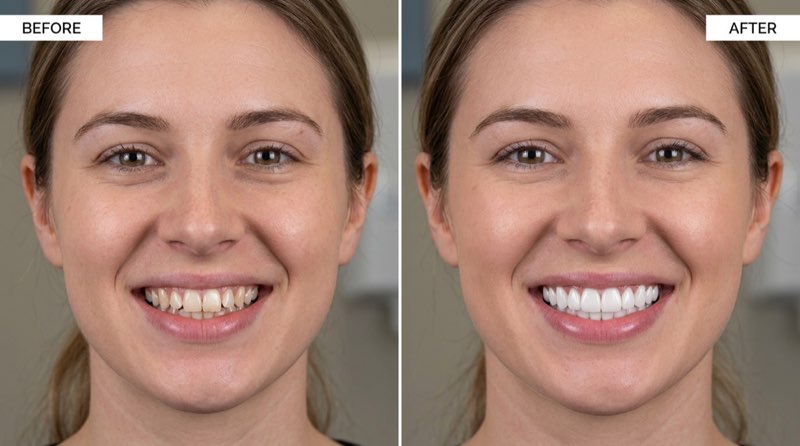
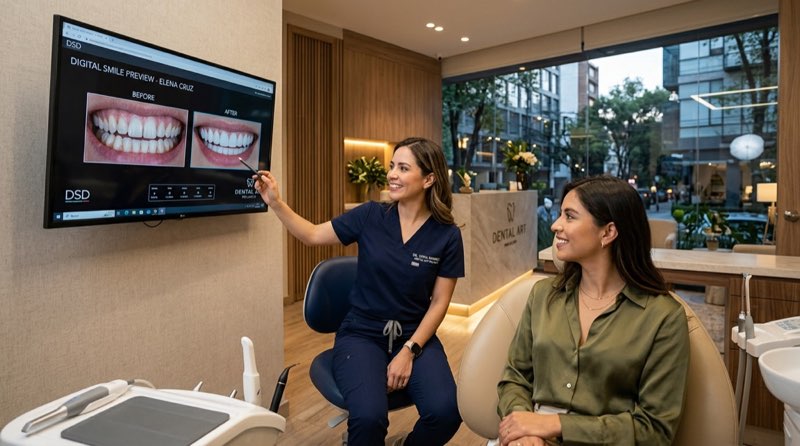
At Clínica DrDiente Polanco, a digital smile design assessment should be much more than a flattering screen simulation. It is an educational, individualized review of your teeth, gums, bite, facial proportions, and goals before any irreversible decision is considered. This guide explains what patients can reasonably expect from an assessment in Polanco, CDMX.
The Dr. Carlos Ariza perspective on digital smile design
Digital smile design is often discussed as if it were simply a way to choose whiter, straighter-looking teeth. In simple terms, it is a planning process: photographs, measurements, digital records, and clinical findings are brought together to explore options. The answer is not the image itself. The answer is whether the proposed change respects oral health, function, and the person behind the smile.
At Clínica DrDiente, digital planning may be part of care related to smile design and veneers, implants, or invisible orthodontics. A suitable option depends on the condition of the enamel, gums, bite, existing restorations, and habits such as grinding. No single answer fits everyone.
There is something many patients do not hear during a first aesthetic conversation: a beautiful digital preview does not automatically mean that every proposed treatment is advisable. Later, this becomes especially relevant when gums bleed, teeth have active decay, or the bite is unstable.
What most dentists do not tell you about a digital smile design assessment
A responsible assessment begins with questions. Medical and dental history, previous treatment, sensitivity, grinding, smoking, expectations, and daily habits all affect planning. The clinician may then review teeth, gums, old fillings, tooth movement, bite contacts, speech, tooth exposure at rest, and the way the lips frame the smile.
Photographs and an intraoral 3D scan can create a detailed digital record. A standardized photo protocol helps compare facial proportions and smile dynamics rather than relying on a casual selfie. When clinically indicated, radiographs may help answer a specific question. A 3D CT scan should not be taken routinely just to design a smile; it is generally reserved for situations such as implant planning or complex anatomy. This approach is consistent with the clinical guidance discussed in this published guideline.
Healthy gums come before veneers. If gums are inflamed, they are not ready for permanent aesthetic restorations. They should look healthy and coral pink, without active bleeding or plaque buildup. Caries also needs treatment first. If there is a malocclusion, meaning teeth do not meet properly, orthodontic treatment or a bite-focused plan may be more appropriate before considering veneers.
This is not a minor detail. Placing a restoration too close to the gum’s protective attachment can be like having a painful hangnail: the area becomes irritated, swollen, and prone to bleeding. In practice, the design must respect the gum tissues, not just the photo.
What happens if a patient wants veneers immediately? It depends on the diagnosis. Whitening, conservative bonding, contouring, or invisible aligners may solve the actual concern with less tooth alteration. The key is to preserve healthy enamel whenever possible.
The next open question is whether the proposed shape can be tested before treatment. A digital plan can be translated into a diagnostic wax-up and, in appropriate cases, a temporary intraoral mock-up. This allows the person to evaluate length, volume, speech, and bite in the mouth—not only on a screen.
Our clinical experience: illustrative scenarios
The following examples are hypothetical educational scenarios, not real Clínica DrDiente cases or patient testimonials. They show why a digital assessment needs to go beyond appearance.
A hypothetical 34-year-old patient may request very white, perfectly square veneers because of small chips on the front teeth. Assessment could reveal healthy enamel but signs of nighttime grinding. Rather than moving directly to ceramic veneers, the plan may first consider bite evaluation, conservative repair, and protection against grinding. Teeth should not look square or artificial like “Adams chewing gum.” Natural teeth have curves, subtle texture, and individual character.
Another hypothetical patient may arrive with uneven gum levels and bleeding when brushing. A smile simulation might look appealing, yet permanent restorations should wait until hygiene and gum health are stable. The digital plan can still help communicate goals, but it cannot replace periodontal care.
A third hypothetical example is someone with old restorations, a missing tooth, and uneven tooth length. Digital planning may help explain whether the sequence should include gum treatment, orthodontics, a crown, or an implant assessment. It can also help patients understand why a single cosmetic procedure is not always the safest answer. For examples presented by the clinic, visit the Clínica DrDiente real case gallery.
Now the earlier point about a mock-up is clearer: it is a trial of proportions and function, not a guarantee. Gum response, enamel availability, bite behavior, laboratory work, and healing can require adjustments. A 2024 review found that digital workflows can support communication and acceptance, while not proving that a simulation guarantees the final biological or functional result. See the published review.
Questions I receive frequently about digital smile design
Is it normal for my digital preview to look different from the final result?
Yes. The short answer is that a preview is a planning proposal, not a contractual promise. Natural gums, tooth structure, bite, and material behavior affect the final outcome. Ask what parts of the plan may change and why.
How do I know if I need veneers?
It depends on what is causing the concern. Discoloration may respond to supervised whitening. Mild spacing or crowding may respond to orthodontics. Chips can sometimes be repaired with conservative resin. Veneers may be considered when the diagnosis supports them, but they are not the automatic answer for every smile concern.
Does digital smile design hurt?
The assessment itself generally involves examination, photographs, scanning, and discussion. These steps are not the same as treatment. Any discomfort depends on whether separate diagnostic procedures or treatment are indicated.
How long does a digital smile design assessment take?
There is no universal timeline. It depends on the records needed, whether gum disease or decay must be treated first, and whether a mock-up or additional images are clinically justified. A written plan should explain the sequence instead of rushing to a final restoration.
Is digital smile design worth it?
For many people, it can improve communication because they can see and discuss proposed changes before treatment. For honesty’s sake, its value comes from the diagnostic conversation and records, not from software alone. One randomized study of 150 adults reported higher average satisfaction with digital smile design than conventional planning at three months, but results still depend on individualized care. Read the study details here.
Where can I receive a digital smile design assessment in Polanco?
Patients seeking assessment in the area can contact Clínica DrDiente Polanco at Av. Presidente Masaryk 83, Polanco V Secc., Miguel Hidalgo, CDMX. Before booking, ask what records, imaging, mock-up options, follow-up visits, and written treatment information are included.
What technology is used at DrDiente for digital smile design?
Digital planning can include intraoral scanning, a photographic protocol, and 2D or 3D planning. Tomography may be considered when there is a defined clinical reason, such as implant-related anatomy, rather than as a routine aesthetic step. These tools support a clearer conversation; they do not replace examination or informed consent.
When veneers are clinically appropriate, a conservative preparation may be planned with digital guidance. The supplied clinical reference describes minimal, ultra-precise preparation calibrated from 0.3 to 0.5 mm in the clinic’s own laboratory workflow. That amount is not suitable for every tooth or every person, which is exactly why planning matters. Laboratory research has reported mean reduction near 0.51 mm with a highly precise guided technique, as described in this study.
Patients should also understand maintenance. Well-adapted restorations do not inherently cause bad breath; problems can arise from poor adaptation, leakage, or inadequate hygiene. Professional cleanings and periodic reviews remain part of maintaining oral health. Long-term veneer outcomes can be favorable, but complications remain possible and vary by material, tooth condition, design, and habits, according to this meta-analysis.
For visitors exploring dental tourism CDMX, the same rule applies: do not compress diagnosis into a rushed cosmetic appointment. Allow time for records, discussion, and any health treatment needed before definitive work.
Schedule with the DrDiente team
If you want a second opinion or want to begin a treatment conversation, request an assessment with enough time to review your goals, oral health, alternatives, risks, maintenance, and written plan. This content is educational and does not replace an in-person diagnosis.

Information from Clínica DrDiente
Aesthetic Dentistry & Oral Rehabilitation · COFEPRIS 2409132002A00145
This content is informational and is not a substitute for professional dental advice. Book an assessment for a personalized diagnosis.