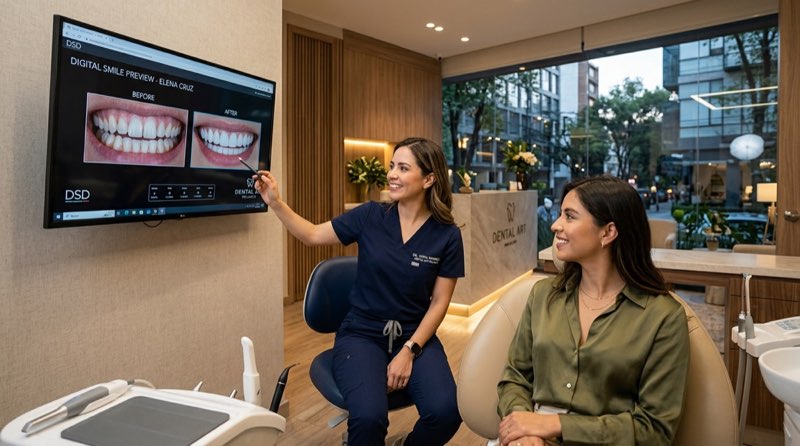

At Clínica DrDiente Polanco, patients often ask whether they can see and test a new smile before veneers are placed. The short answer is yes: a digital plan can be transferred into a temporary resin mock-up so you can smile, speak, and see proportions before irreversible steps are considered. This educational guide explains what that process may involve at our Polanco, CDMX location.
Dr. Carlos Ariza’s perspective on trying a new smile before veneers
A smile design should not begin with choosing the whitest shade or copying a photo from social media. In clinical dentistry, the starting point is an evaluation of teeth, gums, bite, facial proportions, and expectations. Dr. Carlos Ariza and the Clínica DrDiente team use this information to discuss whether veneers are appropriate or whether a more conservative route, such as invisible aligners, whitening, or restorative care may make more sense.
In simple terms, a mock-up is like trying on clothing before it is tailored. It gives you a physical preview of length, volume, and general character. You can see whether the proposed teeth show too much when you smile, whether they support the lips naturally, and whether they affect the sounds “f” and “s.” There is something many people do not hear at their first consultation: a digital image is useful, but it is not an exact guarantee of the final result. A mock-up is where the conversation becomes more concrete.
There is no single answer for everyone. What matters is that the plan respects healthy tooth structure, your gums, and how your upper and lower teeth meet. Later, I will explain why the bite can change the recommendation completely.
What most dentists do not tell you about previewing veneers
A proper preview is not just a cosmetic filter. It usually begins with an examination, intraoral photographs, facial photographs, an intraoral scan, and a bite record. These records can be used to create a virtual diagnostic wax-up: a proposed three-dimensional version of the new teeth. That proposal may then be transferred into the mouth as a resin mock-up.
With the mock-up in place, patients can evaluate everyday details: pronunciation, the edge position of the front teeth, facial balance, and whether the teeth feel too bulky. The key is in asking for changes before preparations are authorized. You may want a softer edge, less length, more asymmetry, or a less opaque shade. Natural teeth have curves and textures. They should not look square or artificial, like “Adams gum.”
For honesty’s sake, not every patient is ready for veneers on the first visit. Veneers should not be placed when there are cavities, plaque accumulation, bleeding gums, or active gum inflammation. Healthy gums should look coral pink. A restoration that crowds the gum margin can behave like an inflamed hangnail: it stays irritated, hurts, and may bleed. If there is gum disease, treatment comes first.
The same applies to an unstable bite or misaligned teeth. If the main issue is position, orthodontic treatment can sometimes preserve more natural tooth structure than placing ceramic over teeth that are out of position. This is the exception I mentioned earlier: a beautiful mock-up does not override biology or bite function.
Veneer treatment in Polanco, CDMX: what the preview appointment may include
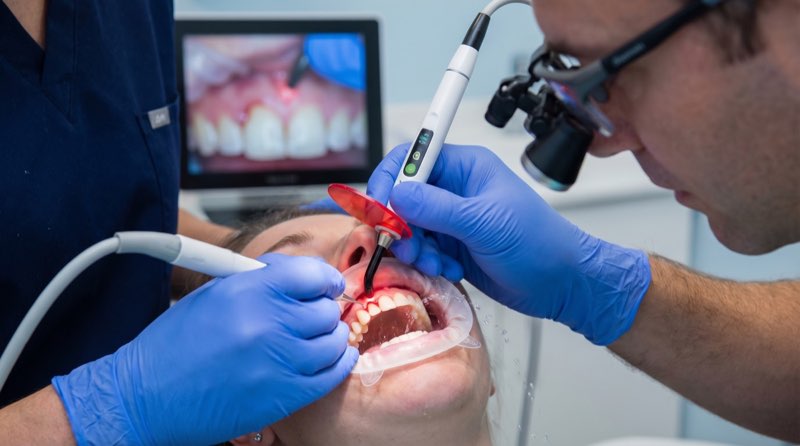
At Clínica DrDiente in Polanco, CDMX, planning may include intraoral scanning, a photographic protocol, digital planning, and three-dimensional imaging when clinically indicated. Advanced digital diagnosis helps the dental team discuss the proposal with greater precision, but it remains part of an individualized clinical assessment, not a remote diagnosis.
If veneers are appropriate, the mock-up can guide minimal preparation. When preparation is needed, it is planned carefully to avoid excessive bulk at the gumline and to help the restoration sit naturally. Preparation refers to polishing or reducing a small amount of enamel. The treatment plan should explain why it is needed, how many teeth are involved, and which alternative options exist.
How much does it take? It depends on tooth position, color, existing restorations, and the intended change. Some cases may require minimal preparation; others may need a different restoration altogether. Ask whether a shade try-in will be used before final bonding. The final color is affected by the ceramic, the tooth underneath, and the bonding material.
Our clinical experience: illustrative scenarios
The following examples are hypothetical educational scenarios, not documented Clínica DrDiente patient cases. They show why a preview can be useful. In one example, a 34-year-old patient wants longer front teeth after wear. The mock-up reveals that a small increase improves the smile, while a larger increase makes speech feel uncomfortable. The plan can then be adjusted before any preparation.
In another hypothetical scenario, a patient requests eight very white veneers. During the mock-up review, the proposed shade appears flat against the complexion and the tooth shapes look too uniform. A revised design with subtle texture and individual contours may look more believable. A smile should look like it belongs to the person, not like a template.
A third hypothetical example involves spacing and a crossbite. Even if a digital mock-up looks attractive from the front, the bite assessment may point toward orthodontics first. This is why an in-mouth test is more informative than a single edited photograph. You can view educational visual examples in the DrDiente real cases gallery, while remembering that an individual result depends on diagnosis and oral health.
Research supports the communication value of digital planning. A randomized clinical trial reported higher average satisfaction with digital versus conventional smile design, while another prospective study found that many participants accepted treatment after viewing a digital simulation. These findings describe understanding and acceptance; they do not promise a particular outcome for every person. Read the published clinical trial and prospective study for context.
Questions I frequently receive about trying veneers
Is it normal to feel unsure after seeing a digital simulation?
Yes. A digital simulation is a communication tool, not a final smile. The mock-up gives you a chance to assess the design while talking and smiling. If something feels too long, too white, or too uniform, say so before moving forward.
What happens if I do not like the mock-up?
The answer is simple: the design should be reviewed. Ask what can be changed and whether the proposed treatment still protects healthy enamel and gums. You should not feel pressured to approve a design that does not feel right for you.
How long does a veneer preview take?
It depends on the records needed and the complexity of the case. Some planning steps happen during the consultation, while the digital design and mock-up may require a later appointment. Your team should explain the sequence and what is included before you commit.
Does veneer preparation hurt?
Comfort depends on the procedure and each patient’s needs. Your clinician can explain anesthesia options and expected sensitivity after examining your teeth. If gums are inflamed, there are cavities, or the bite is unstable, treatment should be postponed while those concerns are addressed.
How do I know whether I need veneers or another option?
It depends on the cause of the concern. Whitening may help with color, composite resin may be a repairable option for small changes, and aligners may be preferable for tooth position. When tooth structure is significantly compromised, crowns or other rehabilitation may be discussed. Explore smile design options as a starting point for that conversation.
Where can I receive veneer planning in Polanco?
You can schedule an evaluation at Clínica DrDiente Polanco, Av. Presidente Masaryk 83, Polanco V Secc., Miguel Hidalgo, CDMX. The visit should include an individual review of gum health, cavities, bite, tooth structure, and realistic alternatives before any veneer decision.
What technology does DrDiente use for veneer planning?
Digital planning at Clínica DrDiente may combine intraoral scans, a photographic protocol, virtual diagnostic wax-ups, and three-dimensional imaging when it is appropriate for the clinical question. These tools help translate a discussion into measurable references for tooth length, proportions, and bite relationships.
A physical mock-up is especially useful because it lets you experience the proposal in motion. You are not only looking in a mirror; you are speaking, smiling, and noticing lip support. In practice, that is where small refinements become visible.
Ask your clinician to document the baseline condition with photographs and scans, discuss the proposed material, and explain maintenance. A recent systematic review reported high pooled long-term survival rates for feldspathic and lithium disilicate veneers, but survival does not mean no maintenance, repair, or replacement will ever be needed. Read the systematic review and meta-analysis for its limitations and findings.
Schedule with the DrDiente team
If you want a second opinion or want to begin exploring a smile design, schedule an evaluation at Clínica DrDiente Polanco. For visitors considering dental tourism CDMX, planning should still begin with records, a clinical examination, and transparent discussion of limitations. A preview can help you participate in the decision, but it never replaces a healthy foundation.
Information from Clínica DrDiente
Aesthetic Dentistry & Oral Rehabilitation · COFEPRIS 2409132002A00145
This content is informational and is not a substitute for professional dental advice. Book an assessment for a personalized diagnosis.