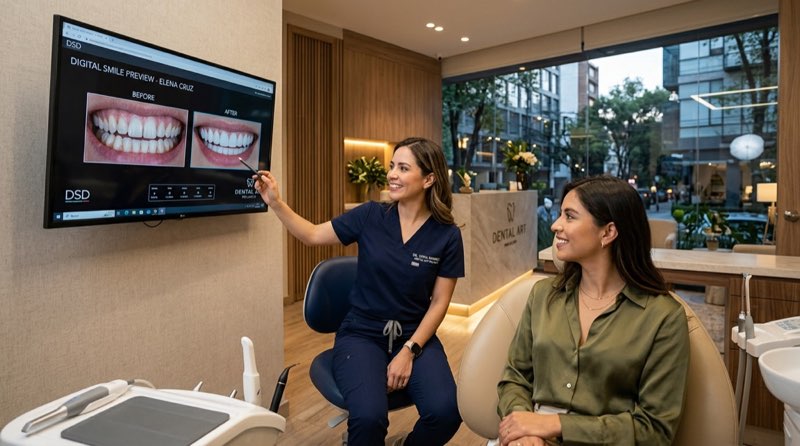
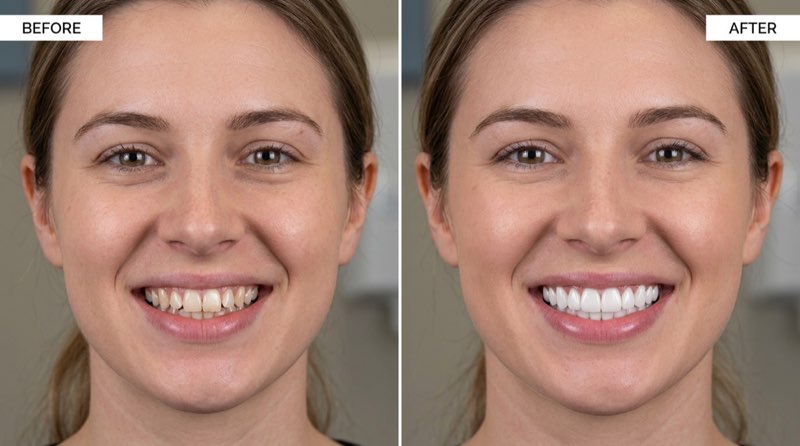
At Clínica DrDiente Polanco, before-and-after smile-design photos should be a starting point for an informed conversation, not a promise that every person can or should receive the same treatment. A smile design may involve color, shape, alignment, gum proportions, missing teeth, or worn edges. The right plan depends on the health of the teeth, gums, bite, and daily habits.
The perspective of Dr. Carlos Ariza on before-and-after smile design
Dr. Carlos Ariza is associated with Clínica DrDiente’s approach to smile design in Polanco, CDMX: first understand the mouth, then discuss aesthetics. In simple terms, a beautiful image is only the final frame of a much larger clinical process. A photograph alone cannot show gum health, hidden decay, tooth mobility, jaw function, or the way a person bites.
Before looking at veneers or changing tooth color, a dental evaluation should check for plaque, cavities, gum inflammation, grinding, and bite concerns. There is no single answer for everyone. Some people may benefit from supervised whitening; others may need invisible aligners for tooth alignment before any cosmetic work. When there is major tooth loss or structural damage, restorative options may be considered instead.
There is something many patients do not hear in the first consultation: the most convincing result is often the one that does not look “done.” Natural teeth are not square like Adams chewing gum. They have small curves, surface textures, and subtle differences in light reflection. A smile design should respect those details rather than create an artificial, identical row of teeth.
What most dentists do not tell you about before-and-after smile design
A before-and-after image can be useful, but it does not prove that the same result is repeatable, long-lasting, or suitable for another person. What matters is the diagnosis behind the image. Ask what the starting condition was, whether the patient had cavities or gum treatment first, which material was used, whether tooth enamel was prepared, and what follow-up was included.
Healthy gums come before veneers. Veneers should not be placed when gums are inflamed, bleeding, or unhealthy; ideally, gums should be coral pink and stable. They should also not be used as a shortcut when there are untreated cavities, significant crowding, or a poor bite. Think of placing a restoration too close to unhealthy gum tissue like having a painful hangnail: the area can stay irritated, swollen, and prone to bleeding.
What happens if a restoration invades the space the gum needs to remain healthy? In practice, inflammation can persist and may make cleaning difficult. That is why a proper assessment considers the gum margin and the shape of every preparation. A preparation means gently adjusting the outer tooth surface when clinically indicated, with rounded transitions rather than sharp 90-degree angles.
For patients considering smile design options, the short answer is that conservative care is usually worth discussing first. Whitening can help when color is the main concern. Aligners can address position and spacing while preserving tooth structure. Composite resin may be repairable and conservative but can stain or lose shine over time. Ceramic veneers may be appropriate in selected cases with sufficient enamel and a stable bite, but they are not an automatic answer for healthy teeth.
Digital planning can improve communication and immediate satisfaction, yet it is not a biological guarantee. A 2024 randomized clinical trial found higher short-term satisfaction with digital smile design than conventional planning; the study supports planning and communication, not a promise of the same long-term outcome for every patient. Read the clinical trial.
How to interpret before-and-after cases responsibly
Clínica DrDiente Polanco encourages patients to look beyond the final photograph. A responsible case presentation should show standardized images, the initial diagnosis, the treatment sequence, the materials used, and follow-up when available. Lighting, camera angle, lip position, and filters can change the appearance of color and symmetry dramatically.
Here are three hypothetical examples, not real patient cases:
- A 34-year-old with healthy teeth and superficial staining may begin with professional cleaning and whitening rather than veneers.
- A patient with spaces and mild crowding may first use aligners, then receive minimal reshaping only if needed.
- A patient with worn edges and signs of grinding may need bite evaluation and a protective night guard before cosmetic restorations are considered.
These examples show why “before and after” is not a treatment plan. The key is finding the least invasive route that addresses the actual concern. If a person is interested in veneers, it is reasonable to ask whether a reversible mock-up can help test volume, speech, and bite before permanent changes are made.
For honest visual references, visit the DrDiente before-and-after gallery and ask during your appointment which examples are clinically comparable to your own situation. A comparable case means similar tooth condition, gum health, bite, and treatment goals—not simply a similar smile in a photo.
Questions patients frequently ask about smile design
Is it normal for teeth to look different after whitening?
Yes, temporary sensitivity can occur after supervised whitening, and existing fillings or crowns do not whiten in the same way as natural enamel. The response depends on the starting color, the material already present in the mouth, and the protocol selected. A 2024 clinical trial reported transient sensitivity with two professional hydrogen peroxide protocols. See the study.
How do I know if I need veneers?
You cannot know from a photo alone. A clinician should assess enamel, cavities, gums, alignment, bite, and expectations. Veneers may be considered for selected changes in color or shape, but whitening, aligners, resin, or no cosmetic treatment may be better options depending on the diagnosis.
Does smile design hurt?
It depends on the procedure. A professional examination and digital scan are generally comfortable. Whitening may create temporary sensitivity. When tooth preparation is clinically indicated, the dental team should explain the process, expected sensations, and alternatives before treatment. This article is educational and cannot replace an individual evaluation.
How long does a smile design take?
The answer depends on the treatment sequence. Cleaning or whitening may require fewer visits than orthodontic alignment, gum treatment, implants, or complex restorations. A safe timeline should allow time for gums to become healthy and stable before cosmetic work is finalized.
Are veneers worth it?
For some people, they may be a reasonable option; for others, they are more treatment than necessary. Ceramic veneers can have favorable survival when bonded mainly to enamel, while outcomes may be less favorable when extensive dentin is exposed. Individual risk also changes with grinding, smoking, hygiene, and bite forces. Review the evidence on ceramic veneers.
Where can I receive smile-design care in Polanco?
For an in-person assessment in the area, Clínica DrDiente Polanco is located at Av. Presidente Masaryk 83, Polanco V Secc., Miguel Hidalgo, CDMX. Request a consultation to discuss your dental history, goals, diagnostic findings, and conservative alternatives before deciding on treatment.
What technology is used at DrDiente for smile design?
At Clínica DrDiente Polanco, digital diagnosis may include an intraoral scan, a photographic protocol, and three-dimensional imaging when indicated by the clinical situation. These tools help the team evaluate teeth, gums, facial proportions, and bite in a more visual way. An intraoral scan is a digital map of the mouth; it can make planning easier to review than traditional impressions.
Three-dimensional tomography is not needed for every cosmetic consultation. It is used when the clinical question requires a more detailed view of bone, roots, or structures that conventional images cannot show clearly. Technology is useful when it answers a real diagnostic question. The key is not the device itself, but how the findings guide a safe, individualized plan.
Where a veneer plan is appropriate, minimally invasive preparation may be calibrated around 0.3 to 0.5 mm in the clinic’s own laboratory workflow. That measurement is less than one millimeter, but it remains an irreversible decision when enamel is adjusted. Patients should receive a clear explanation of why preparation is proposed, how much is expected, and what maintenance may be needed later.
Patients visiting CDMX from outside the city may also ask about dental tourism in CDMX. Travel should never compress the diagnostic process. A responsible plan leaves adequate time for assessment, treatment where appropriate, and any necessary review.
Schedule with the DrDiente team
If you want a second opinion or want to begin a smile-design evaluation, schedule a visit with the team at Clínica DrDiente Polanco. Bring any previous X-rays, dental records, and examples of the changes you like—but remain open to the treatment that best protects your teeth and gums. Before-and-after images can inspire a conversation; a complete diagnosis is what guides the decision.

Information from Clínica DrDiente
Aesthetic Dentistry & Oral Rehabilitation · COFEPRIS 2409132002A00145
This content is informational and is not a substitute for professional dental advice. Book an assessment for a personalized diagnosis.