At Clínica DrDiente Polanco, a gummy smile is approached as a diagnostic question before it is treated as an aesthetic concern. A smile that shows more gum tissue can be completely healthy, yet some people feel it changes the balance of their face. This educational guide explains the possible causes, realistic treatment outcomes, and questions worth asking before deciding on care in Polanco, CDMX.
Dr. Carlos Ariza’s perspective on gummy smile treatment
A gummy smile is not one diagnosis. In simple terms, it describes a smile in which more gum tissue is visible than a person would like. Research uses different thresholds, often more than 2 or 3 millimeters of visible gum, but the number alone does not decide whether treatment is appropriate. The face, lip movement, tooth proportions, bite, and gum health all matter.
The short answer is: treatment depends on the cause. Teeth may look short because gum tissue covers part of the natural crown. A highly mobile upper lip may rise more during a full smile. In other people, the upper jaw has grown vertically, or teeth have moved downward with the bite. These factors can also appear together. That is why a treatment that helps one person may be the wrong choice for another.
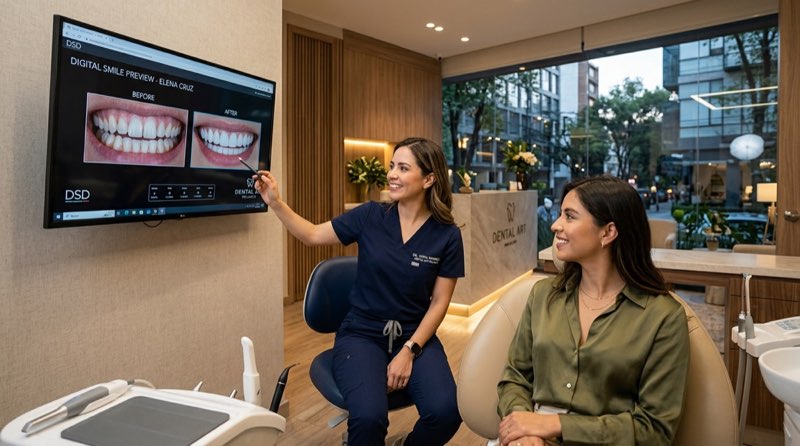
There is something many people are not told at the first consultation: a beautiful simulation is not the same as a predictable clinical result. Photos and digital planning can help communicate a goal, but they cannot replace an examination of the gums, teeth, bone, lips, and bite. Later, this distinction becomes especially relevant when surgery or veneers are being considered.
What most dentists do not tell you about gummy smiles
What nobody tells you is that reducing visible gum tissue without identifying its source can create a result that looks unbalanced or does not last as expected. Gum contouring can be useful when excess gum covers the teeth, known as altered passive eruption. It does not, by itself, correct a vertically excessive upper jaw or a hypermobile lip.
Before any cosmetic restoration, gums should be healthy and coral pink, without untreated cavities, active plaque buildup, or bleeding. Veneers should not be placed over inflamed gums. If the bite is unstable or teeth are significantly misaligned, that issue should be assessed first. Think of gum tissue like skin around a fingernail: when an edge constantly irritates it, like a painful hangnail, it can swell and bleed. Dental restorations that invade the tissue’s natural space may create a similar problem.
For patients considering digital smile design, natural proportions matter. Teeth should not look square or artificial like “Adams gum.” Natural teeth have curves, subtle textures, and small differences in light reflection. A good aesthetic plan considers those details rather than simply making every tooth longer or whiter.
Now that this is clear, there is an important exception: sometimes a person wants a cosmetic change but has a skeletal cause. In that situation, a gum-only procedure may offer little improvement. Orthodontic treatment, lip-focused treatment, or maxillofacial surgery may be discussed depending on the diagnosis and the person’s goals.
Gummy smile treatment in Polanco, CDMX
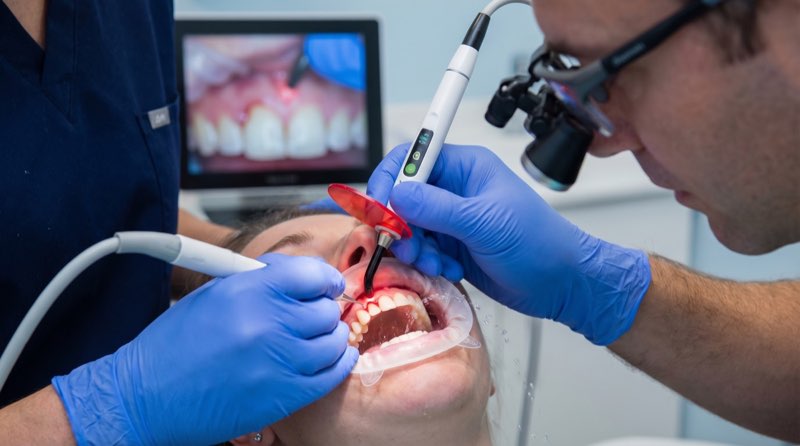
At Clínica DrDiente Polanco, located at Av. Presidente Masaryk 83, Polanco V Secc., Miguel Hidalgo, CDMX, an appropriate evaluation can include an intraoral scan, standardized photographs, smile assessment, periodontal measurements, and imaging when indicated. A 3D scan may be useful when planning a procedure that could involve bone; it is not automatically necessary for every person.
Possible treatment paths include gum reshaping or crown lengthening for altered passive eruption, orthodontics for selected tooth-position issues, temporary botulinum toxin for lip hyperactivity, lip repositioning surgery in selected cases, or orthognathic surgery for meaningful vertical maxillary excess. Each option has different recovery, reversibility, limitations, and risks.
Does gummy smile treatment hurt? It depends on the procedure. Gum surgery and other surgical options commonly involve local anesthesia and a recovery period; discomfort varies by patient and should be discussed with the treating clinician. Botulinum toxin is temporary and does not change bone, gum position, or tooth position. Research has reported reduced gum display for months after treatment, with effects returning toward baseline over time. This randomized trial is useful context, but it does not predict an individual outcome.
How long does treatment take? The answer depends on the cause and chosen path. A temporary lip-focused approach, gum surgery, orthodontics, and jaw surgery follow very different timelines. No single answer works for everyone. What matters is that the expected timeline includes healing, review appointments, and reassessment rather than only the day of a procedure.
Our clinical experience: example situations
Clínica DrDiente does not publish a documented treatment series with patient counts, exact millimeters of reduction, complication rates, or long-term gummy smile outcomes for Dr. Carlos Ariza. For that reason, it would not be ethical to promise a specific result or present invented cases as clinical evidence. Ask to review comparable, standardized cases and follow-up photographs when available, including full-smile images and controls at 6 to 12 months.
Hypothetical example: a 34-year-old patient has healthy teeth that appear short because gum tissue covers part of the visible crown. If examination confirms altered passive eruption and the bone relationship allows it, periodontal crown lengthening may be discussed. The expected aim would be to reveal more natural tooth structure, not to create oversized or artificial-looking teeth.
Hypothetical example: a patient shows more gum only during a broad, animated smile and has normal tooth proportions. If lip hyperactivity is the main factor, a reversible treatment may be discussed as a way to assess the aesthetic change before considering a surgical option. This does not mean it is permanent, and recurrence or return to baseline should be part of the conversation.
Hypothetical example: a patient has visible gum, bite concerns, and a vertically excessive upper jaw. In this setting, gum contouring alone may not address the source. Orthodontic and maxillofacial assessment could be more appropriate. A 2024 comparison found greater improvement in smile attractiveness with maxillary surgery than toxin treatment in selected patients with substantial initial gum display, while also reflecting the greater complexity of surgery. Read the study.
For visual references, patients can review the DrDiente gallery of real cases, while remembering that photographs from different diagnoses do not guarantee a matching result. The key is to compare like with like: the same underlying cause, similar smile dynamics, and similar treatment plan.
Questions I frequently receive about gummy smiles
Is it normal to show gum when I smile?
Yes. Visible gum is not automatically a disease or a problem. The question is whether there is inflammation, an underlying bite or skeletal issue, and whether the appearance concerns you. An examination can distinguish normal variation from a condition that may benefit from treatment.
How do I know if I need gummy smile treatment?
You may consider an evaluation if you dislike the amount of gum shown, your teeth seem unusually short, your gums bleed or look swollen, or your smile has changed over time. A clinician should assess the cause before recommending any procedure. Educational information online cannot diagnose your case.
What happens if I choose veneers without treating the cause?
Veneers may not be appropriate if gums are inflamed, cavities are present, or a bite problem remains untreated. When veneers are appropriate, tooth preparation should be minimal and carefully planned. At Clínica DrDiente, information about aesthetic planning may include preparations calibrated from 0.3 to 0.5 mm in selected cases, but the amount is not identical for every patient and should never be treated as a universal promise.
Is gummy smile treatment worth it?
For many people, the value comes from feeling more comfortable smiling. For others, doing nothing is the best choice. To be honest, “worth it” depends on the cause, the expected benefit, recovery, cost, risks, and how much the concern affects you. Ask for alternatives, including no treatment, before deciding.
Where can I be treated for a gummy smile in Polanco?
You can request an assessment at Clínica DrDiente Polanco, Av. Presidente Masaryk 83, Polanco V Secc., Miguel Hidalgo, CDMX. Ask who will perform each stage of treatment and whether periodontal, orthodontic, or maxillofacial input is needed for your diagnosis.
What technology is used at DrDiente for gummy smile planning?
Digital planning can make communication clearer, but technology does not replace clinical judgment. Depending on the case, Clínica DrDiente may use intraoral scanning, a photographic protocol, and 3D imaging to evaluate tooth proportions, gum levels, bite relationships, and structures below the gums. In practical terms, these records help the team compare the smile at rest, during speech, and at maximum smile.
For aesthetic treatments such as veneers, digital planning can also support a conservative approach. Preparations must have rounded transitions rather than sharp 90-degree angles, helping reduce stress on the restoration and respecting the surrounding tissues. Any restoration should be designed around function, hygiene, and natural appearance, not just a photo.
Patients traveling for dental tourism in CDMX should plan enough time for diagnosis, treatment, healing when relevant, and review. A rushed visit may not be appropriate for procedures that require surgery, laboratory work, or coordination among specialists.
Evidence on gummy smile treatment is still mixed, with small studies and varied techniques. A 2024 review noted the need for better long-term research. Review the evidence here. This is why an ethical recommendation should include limits, possible asymmetry, sensitivity, recurrence, healing changes, and the option to seek another opinion.
Schedule with the DrDiente team
If you want a second opinion or wish to begin your treatment, request an evaluation focused on the cause of your gummy smile, not only the appearance in one photograph. Bring your questions about reversibility, healing, maintenance, and who will carry out each part of care. All of the open questions above have the same answer: the right plan starts with an individualized diagnosis.

Information from Clínica DrDiente
Aesthetic Dentistry & Oral Rehabilitation · COFEPRIS 2409132002A00145
This content is informational and is not a substitute for professional dental advice. Book an assessment for a personalized diagnosis.