If you are asking where to get a sleep apnea or snoring assessment, Clínica DrDiente Polanco can help you understand the dental side of the conversation, but a confirmed diagnosis requires evaluation by a sleep-medicine provider and an appropriate sleep study. At our Polanco, CDMX location, we encourage patients to begin with evidence-based testing rather than rely on an app, a video, or snoring alone.
Snoring is common, but it is not automatically sleep apnea. In a Mexican adult survey, 48.5% of participants reported snoring, while 27.3% screened as high risk on a questionnaire; those numbers indicate risk, not a confirmed diagnosis. The short answer is: testing tells the difference.
What does a sleep apnea and snoring assessment include at Clínica DrDiente?
A dental visit can review your bite, jaw position, teeth, gums, nasal-breathing concerns, and oral structures that may relate to airway management. It does not replace a sleep study. If findings or symptoms suggest obstructive sleep apnea, the next step is referral or coordination with a qualified sleep specialist for diagnostic testing.
There is something many people are not told at the first appointment: a loud snore can be harmless in one person and a sign of repeated airway obstruction in another. That is why the report from a sleep study matters more than guessing from the sound alone.
How much does a sleep apnea diagnosis cost in CDMX? — Real 2026 pricing
There is no single honest price to quote for a sleep apnea diagnosis in CDMX because it depends on the provider, whether the study is performed at home or in a sleep laboratory, your medical history, and whether further evaluation is needed. Ask the center for a written estimate before scheduling and confirm what is included: specialist consultation, the test, interpretation, and follow-up.
For a Polanco option, the CNPP Polanco states that it evaluates snoring and apnea in adults and children using tools that include overnight oximetry and polysomnography. Its listed address is Av. Ejército Nacional 650-503, Polanco, Miguel Hidalgo. When you call any sleep center, ask whether the test will be full polysomnography, home respiratory polygraphy, or both, who interprets it, and how follow-up will work. You can review its information at CNPP Polanco sleep-disorders information.
In simple terms, polysomnography is the standard overnight study that records several sleep and breathing signals. A technically adequate home test can be appropriate for some uncomplicated adults with a high likelihood of moderate to severe obstructive sleep apnea. A negative or unclear home result may still need polysomnography. The American Academy of Sleep Medicine explains these pathways in its diagnostic testing guideline.
How do I know whether I am an ideal candidate for assessment?
You should consider prompt assessment if you have habitual loud snoring, witnessed pauses in breathing, gasping or choking at night, unrefreshing sleep, morning headaches, waking to urinate repeatedly, daytime fatigue, or sleepiness while driving. “Is it normal that I wake up tired even after enough hours?” It can happen, but it deserves evaluation when it is persistent.
What happens if you have pauses in breathing? The concern is that obstructive sleep apnea can involve repeated narrowing or collapse of the upper airway during sleep. The apnea-hypopnea index, or AHI, counts breathing events per hour and helps the sleep clinician classify severity and guide treatment.
Risk can be influenced by body weight, age, alcohol or sedatives close to bedtime, nasal congestion, sleeping on your back, and the anatomy of the jaw and airway. No single answer fits everyone. Someone with a slim build can still have sleep apnea, and someone who snores may not have it.
Seek priority medical assessment if you fall asleep unintentionally while driving, have frequent choking episodes, or have difficult-to-control high blood pressure. Do not drive if sleepiness makes you unsafe. This is the exception that changes the pace: do not wait for a routine dental appointment when safety is at stake.
Sleep apnea assessment and treatment in Polanco, CDMX
For diagnosis in Polanco, CDMX, begin with a sleep-medicine center or clinician who can take a medical history, review medications and conditions such as hypertension, diabetes, arrhythmia, stroke history, or cardiopulmonary disease, and select the right test. People with significant heart or lung disease, prior stroke, opioid use, suspected low breathing volume, or severe insomnia generally need in-lab polysomnography rather than a home test.
Bring a medication list, previous reports, and, if available, a short video or observations from the person who sleeps nearby. Ask for a written report that includes the AHI or respiratory event index, lowest oxygen level, time spent below normal oxygen levels, body position, and a treatment recommendation.
If treatment includes dentistry, it should follow—not replace—that diagnosis. A custom mandibular advancement device may be considered for primary snoring or mild to moderate obstructive sleep apnea, or when CPAP is not tolerated, under coordinated care. It gently moves the lower jaw and tongue forward to create more room in the airway. Think of it as opening a partially blocked hallway, not as a universal cure.
CPAP, a device that delivers positive airway pressure, is commonly used especially for moderate to severe apnea. A custom oral device is not the same as an over-the-counter “boil and bite” guard. It needs fitting, adjustment, monitoring for jaw discomfort or bite changes, and objective follow-up with a sleep study when indicated. Research has found oral devices can improve respiratory measures for some patients, while CPAP often lowers the AHI more in severe disease. Individual response and consistent use matter.
At Clínica DrDiente, Dr. Carlos Ariza can be part of the dental evaluation when a sleep physician identifies a potential role for an oral appliance. Our focus remains within dentistry: examining oral health and coordinating appropriately rather than presenting dentistry as a stand-alone diagnosis for sleep apnea.
Step-by-step process at DrDiente
First, we listen to the symptoms and review whether you already have a sleep-study diagnosis. Next, the dental assessment considers your teeth, bite, gums, jaw comfort, and oral anatomy. If a sleep physician has recommended a custom appliance, the plan can include digital oral records and follow-up around fit and bite changes.
Digital dentistry may use intraoral scanning and photographic records when an oral appliance is being planned. These tools create a detailed record of the mouth; they do not diagnose sleep apnea by themselves. The key is to keep the roles clear: sleep medicine confirms the condition, while dental sleep care may support an indicated treatment plan.
How long does it take? It depends on how quickly you can obtain the sleep consultation and study, whether results are conclusive, and whether another specialist is involved. The sleep report should come before a device is selected. Now that you know the sequence, the practical point is simple: do not buy an appliance first and search for a diagnosis afterward.
We also protect general oral health. Before any dental device is planned, active decay, gum inflammation, loose teeth, and significant bite problems should be assessed. A device needs stable teeth and a monitored bite to work safely over time.
Questions patients often ask before scheduling
Does a sleep apnea test hurt?
Sleep testing is generally noninvasive. Sensors are placed to record breathing and sleep-related signals. Some people find the first night unfamiliar, but pain is not expected. The testing provider can explain exactly what their home or in-lab study uses.
Can a dentist diagnose sleep apnea from my mouth?
No. A dental examination can identify oral factors and help with treatment planning, but it cannot confirm obstructive sleep apnea on its own. A proper sleep study interpreted by an appropriate clinician is needed.
Where should I get treated for snoring and sleep apnea in Polanco?
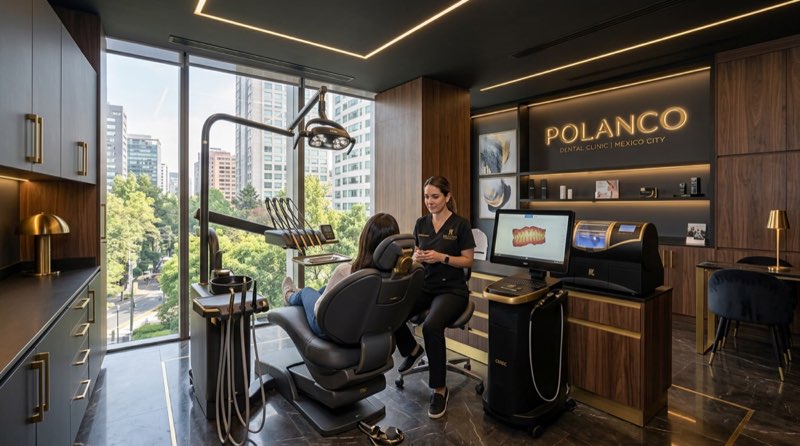
Choose a Polanco provider that offers assessment by a sleep specialist and can arrange or interpret the appropriate sleep study. For dental follow-up after diagnosis, Clínica DrDiente Polanco is located at Av. Presidente Masaryk 83, Polanco V Secc., Miguel Hidalgo, CDMX.
Is a mandibular advancement device painful?
It should not be accepted as painful. Temporary jaw or tooth discomfort can occur during adjustment, and bite changes need monitoring. A personalized device must be adjusted and reviewed by a dental professional working with the sleep-care plan.
Is an oral appliance worth it instead of CPAP?
It depends on the diagnosis, severity, anatomy, medical history, and ability to use CPAP. For honest decision-making, do not frame it as a competition. Your sleep clinician can explain why CPAP may be preferred in one case and why a custom oral appliance may be reasonable in another.
Can international visitors arrange care in CDMX?
Patients researching turismo dental CDMX should arrange sleep testing with a qualified sleep provider before seeking an oral appliance. Bring written reports and allow enough time for any prescribed treatment and follow-up; a dental visit alone is not a substitute for diagnostic care.
Why patients across CDMX choose DrDiente for dental follow-up
People looking for a dentist in Polanco may come to Clínica DrDiente for general dental care, smile design, implants, or invisible orthodontics. Sleep-related dental care is different: it should be coordinated with the medical diagnosis and focused on the role dentistry can appropriately play.
Technology can support precise dental records, but it should never be used as a shortcut around medical testing. If you have confirmed sleep apnea or troubling snoring symptoms, contact us to discuss the dental side of a physician-directed plan at our Polanco location.
Information from Clínica DrDiente
Aesthetic Dentistry & Oral Rehabilitation · COFEPRIS 2409132002A00145
This content is informational and is not a substitute for professional dental advice. Book an assessment for a personalized diagnosis.