At Clínica DrDiente Polanco, patients deserve clear answers about infection prevention before any dental visit. This guide explains what a responsible sterilization process should include, what can be verified, and which questions are reasonable to ask before care in Polanco, CDMX. The clinic is located at Av. Presidente Masaryk 83, Polanco V Secc., Miguel Hidalgo, CDMX.
The perspective of Dr. Carlos Ariza on dental sterilization
Dental sterilization is not a decorative detail of a modern clinic. It is part of safe care. Dr. Carlos Ariza and Clínica DrDiente communicate a patient-centered approach to dentistry, including smile design, implants, and invisible orthodontics. Yet technology such as a 3D scanner or digital planning does not replace infection-control practices. They are separate responsibilities.
In simple terms, sterilization means destroying microorganisms on reusable instruments through a validated process. Cleaning alone is not sterilization. An instrument can look clean and still carry microscopic material. Think of washing a glass that still has a thin film on it: it may look fine from a distance, but it is not ready to use until it has been properly processed.
There is something many patients are not told during a first appointment: a clinic should be able to explain its process without becoming defensive. For procedures involving blood, soft tissue, bone, or the mouth’s mucous membranes, the question is not whether the room looks elegant. What matters is whether reusable instruments are correctly cleaned, packaged, sterilized, stored, and documented.
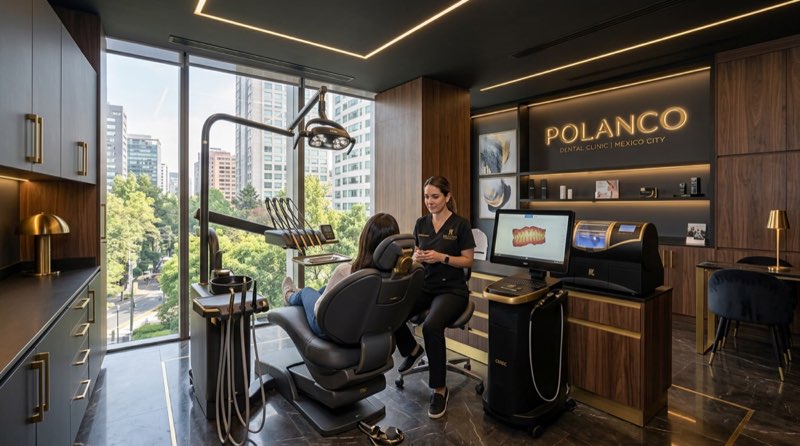
Clínica DrDiente provides care in Polanco, CDMX, with a focus on digital dentistry and treatments such as smile design, implants, and invisible orthodontics. However, no public protocol from the clinic was provided for this article that confirms autoclave cycles, biological testing frequency, load records, or instrument-traceability procedures. It would be inappropriate to claim those details without direct documentation.
What most dentists do not tell you about dental sterilization
The short answer to “Is it normal to ask about sterilization?” is yes. It is completely reasonable, especially before an extraction, implant procedure, root canal treatment, or extensive rehabilitation. For patients, asking is not distrustful. It is informed consent in practice.
Mexican dental regulations state that dental offices should have steam-pressure sterilization equipment, commonly called an autoclave, for instruments that require it. The standard also addresses disinfection of surfaces exposed to splashes and aerosols. You can review the applicable Mexican standard in the NOM-013-SSA2-2015 published in the Official Gazette.
A safe processing flow generally includes four stages:
- Closed transport of used instruments to a designated processing area.
- Cleaning, ideally through ultrasonic cleaning or a washer-disinfector, followed by inspection and drying.
- Packaging in sealed pouches before sterilization.
- Steam sterilization and protected storage until the pouch is opened for the patient.
What nobody tells you is that a color-changing strip on the outside of a pouch is not, by itself, proof of sterility. Monitoring should combine machine controls, chemical indicators, and biological testing with spores. The U.S. Centers for Disease Control and Prevention explains that biological indicators are the most direct way to assess whether a sterilizer can destroy highly resistant microorganisms. See its guidance on dental sterilization monitoring.
What happens if a sterilization indicator fails? The package should not be used. The process should be reviewed, corrected, and retested, with records maintained for traceability. This is especially relevant for implants: advanced 3D planning can help plan placement, but it cannot substitute for sterile instruments and proper handling.
Here is the exception patients need to know: not every item in a dental room is sterilized in the same way. Instruments that penetrate soft tissue or bone require sterilization. Heat-tolerant items that touch oral mucosa should also be sterilized. Some non-critical surfaces are cleaned and disinfected according to their exposure risk. The CDC explains these categories in its disinfection and sterilization recommendations.
Our clinical experience: documented care and transparent questions
This article does not present undocumented patient cases, infection rates, testimonials, or outcomes from Clínica DrDiente. It is educational content, not a diagnosis or a claim that a particular protocol has been followed on a particular date. A patient’s treatment needs, medical history, and infection-control questions should be reviewed directly with the treating clinic.
A hypothetical example can help. Imagine a 34-year-old patient considering dental veneers. Before discussing the aesthetic plan, the patient can ask how reusable handpieces are processed between patients and whether sealed packages are opened in the treatment room. Those are appropriate questions. If there is gum inflammation, cavities, or an unbalanced bite, aesthetic veneers should wait until the mouth is healthy. Healthy gums should look coral pink, not swollen or prone to bleeding.
Another hypothetical example: a patient considering an implant may see digital scans, photographs, and 3D imaging during planning. Those tools can support clinical evaluation, but the patient may still ask whether the implant package is opened chairside and how the clinic handles sterilization monitoring. The answer depends on the clinic’s documented system; there is no single answer for every office.
For visual examples of dental treatment outcomes, visit the DrDiente real cases gallery. Images should always be interpreted with a professional evaluation, since one person’s treatment plan cannot be copied safely to another person.
Frequently asked questions about dental sterilization
Is it normal to ask whether instruments are sterilized?
Yes. The short answer is: ask. A patient can respectfully request to see a sealed, dry, intact pouch opened before treatment. New gloves, hand hygiene, clean surfaces, and clear separation between used and processed instruments are reassuring signs.
Does dental sterilization hurt?
No. Sterilization is the processing of instruments outside the patient’s mouth. A patient may still feel anxious about treatment itself, but sterilization is a safety process performed before the instrument reaches the treatment area.
How long does instrument sterilization take?
It depends on the equipment, cycle selected, manufacturer instructions, drying stage, and the clinic’s workflow. A responsible clinic should not rush a cycle simply to turn over an instrument. For patients, the more useful question is whether the clinic has enough properly processed instruments for scheduled care.
How do I know if I need to ask more questions before an implant?
Ask more questions if the clinic cannot explain whether handpieces are sterilized between patients, whether internal chemical indicators are used, or how failed monitoring results are handled. This is particularly relevant before implant treatment, surgical procedures, or a hybrid prosthesis or All-on-4 treatment.
Is it worth choosing a clinic that shows sealed packages?
For honest communication, yes. A sealed, dry, intact package opened in front of the patient is one visible part of a broader safety system. It is not the only measure, but it gives the patient a practical opportunity to participate in their own care.
Where can I receive dental care in Polanco, CDMX?
For information about treatment options at Clínica DrDiente Polanco, visit Av. Presidente Masaryk 83, Polanco V Secc., Miguel Hidalgo, CDMX. Before booking, patients can ask the clinic directly about the specific infection-control procedures relevant to their planned treatment.
What technology does DrDiente use for treatment planning?
Clínica DrDiente describes technology-forward treatment planning that can include intraoral scanning, 3D tomography, a photographic protocol, and digital planning. These tools may support diagnosis and planning for smile design, implants, and invisible orthodontics. They should not be confused with proof of a sterilization program. A 3D scanner helps capture dental information; it does not verify an autoclave cycle.
For cosmetic care, the clinic describes minimally invasive preparation planned at approximately 0.3 to 0.5 mm in its own laboratory workflow. That level of preparation is only considered after evaluating oral health. Veneers should not be placed when gums are inflamed, cavities are present, or an unstable bite needs correction. Natural teeth are not square like Adams chewing gum; they have curves, texture, and subtle variation.
Patients interested in dental tourism CDMX should ask the same questions as local patients and allow time for evaluation, treatment planning, and appropriate follow-up. Technology can make planning more precise, but transparency and clinical judgment remain the key.
Book with the DrDiente team
If you want a second opinion or are ready to start treatment, contact Clínica DrDiente Polanco and ask direct questions about your proposed care, sterilization information, and treatment planning. No online article can replace an individual assessment, and no clinic should make promises before evaluating the patient.

Information from Clínica DrDiente
Aesthetic Dentistry & Oral Rehabilitation · COFEPRIS 2409132002A00145
This content is informational and is not a substitute for professional dental advice. Book an assessment for a personalized diagnosis.