What Does Microscope Root Canal Treatment Include at Clínica DrDiente?
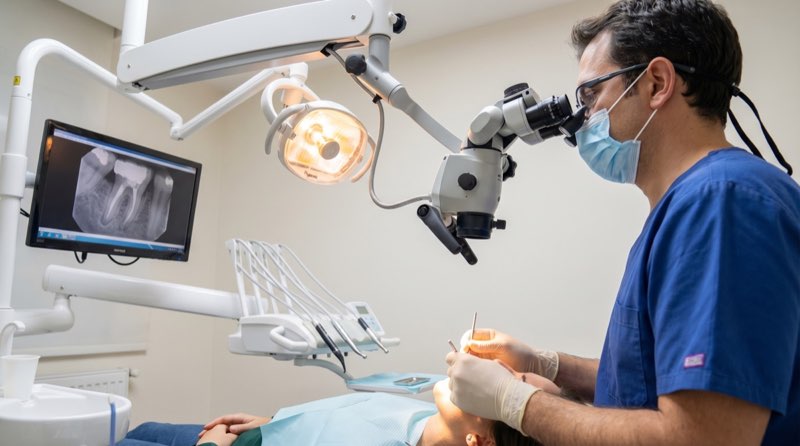
At Clínica DrDiente, a microscope-assisted root canal means your tooth's canals are cleaned, shaped, and sealed under up to 25x optical magnification — with coaxial illumination that reveals anatomy the naked eye simply cannot see. I'm Dr. Carlos Ariza, and in 15 years of clinical practice across our locations in Roma Norte and Polanco, CDMX, I've watched this technology change long-term outcomes in ways conventional root canal cannot replicate.
What you actually get with this treatment: a full pre-operative diagnostic protocol including intraoral scan and 3D tomography, the microscope procedure itself performed by a trained endodontist, post-treatment radiographic verification, and a written treatment plan presented to you before we touch anything. No surprises. No guesswork.
There's something most dentists won't bring up at the first consult — and it directly affects whether your root canal succeeds or fails years down the line. I'll get to it shortly.
How Much Does Microscope Root Canal Cost in CDMX? — Real Prices 2026
The short answer: it depends on how many canals the tooth has. And that distinction matters more than patients usually expect. Here are the honest price ranges at DrDiente for 2026:
- Single-canal tooth (incisors, canines): $3,500–$5,500 MXN
- Two-canal tooth (premolars): $5,000–$7,500 MXN
- Multi-canal tooth (molars): $7,000–$12,000 MXN
That's roughly 30–60% more than conventional root canal in CDMX. But before you close this tab, consider what you're actually comparing: a procedure done with surgical-grade optical precision versus one performed without any magnification at all. A clinical dental operating microscope — like the ones we use — costs between $40,000 and $150,000 USD. When you see "microscope root canal" advertised at bargain prices, it's worth asking exactly what equipment they're actually using. Some clinics use surgical loupes, which provide 2–4x magnification. A true dental operating microscope delivers 4–25x. That gap is not cosmetic.
At DrDiente we offer an evaluation and flexible monthly payment plans, so the investment doesn't have to land all at once. For patients flying in for dental tourism in CDMX: in the United States, microscope root canal runs $1,200–$2,500 USD per tooth — equivalent to $20,000–$42,000 MXN at current exchange. Our prices represent the same standard of care at a fraction of that cost.
How Do I Know If I'm the Right Candidate?
In practice, most patients who end up in my chair for microscope endodontics fall into one of these situations:
- A previous root canal failed — pain returned, infection came back, or the tooth never fully settled
- The tooth has calcified or unusually curved canals that standard X-rays couldn't resolve
- A broken instrument is lodged inside the root
- A persistent abscess hasn't responded to antibiotics alone
You're also an excellent candidate if you simply want the procedure done right the first time — especially on a molar. And here's the thing I mentioned earlier that most dentists skip at the initial consult: upper first molars have a hidden canal called MB2 in 73–93% of cases, according to endodontic literature. It's nearly impossible to locate without magnification. Miss it, and the tooth fails eventually. That's not a scare tactic — it's anatomy.
Now, here's an important exception that surprises a lot of patients.
Even with the best microscope available, root canal cannot save a tooth with severe bone loss, a vertical root fracture, or a crack extending below the gumline. Before committing to any treatment, I evaluate with a 3D cone beam CT scan. If the tooth is not salvageable, I will tell you directly — and we'll discuss dental implants as the right next step. Spending $8,000 MXN trying to save an unsaveable tooth helps no one, and that kind of honesty is non-negotiable in my practice.
Step-by-Step Process at DrDiente
Here's what actually happens from the moment you contact us to the moment your tooth is fully restored:
Step 1 — Digital Diagnosis. We begin with our full protocol: intraoral scan, 3D tomography (CBCT), and a clinical photographic record. For complex cases or retreatments, this step is non-negotiable. A flat 2D X-ray misses too much.
Step 2 — Treatment Plan Presentation. Before any procedure, you see exactly what we found, what we'll do, and what it costs. You decide. Always.
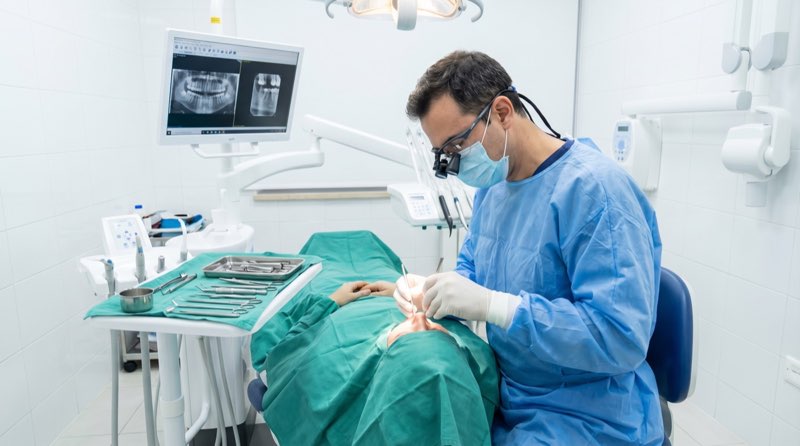
Step 3 — Microscope Procedure. With local anesthesia in place, I work under 8–25x magnification calibrated to the anatomy of your specific tooth. The entire canal system is located, cleaned with ultrasonic instrumentation, shaped, and sealed with biocompatible material. Most cases resolve in 1–2 sessions of 60–90 minutes each.
Step 4 — Radiographic Verification. Post-operative imaging confirms the quality of the seal. We document everything and provide you with the records.
Step 5 — Definitive Restoration. A root-treated tooth needs structural protection. Our prosthodontics team coordinates a crown — typically a zirconia ceramic — to prevent fracture and restore full function for the long term.
There's one more thing about this process that changes the calculation significantly if you're over 40 — and most dentists never bring it up. I'll explain it in the final section.
Questions I Always Get Before Patients Book
Does microscope root canal hurt?
To be honest: not during the procedure. The microscope doesn't change the anesthesia protocol — what it changes is precision. You'll feel pressure and some vibration, but pain during a properly anesthetized root canal should be minimal to none. Post-procedure soreness lasting 2–3 days is normal, managed with standard over-the-counter anti-inflammatories. The fear around root canal at this point is mostly mythology.
How long does the result last?
Studies published in the Journal of Endodontics report success rates of 91–97% for microscope-assisted root canal, compared to 78–85% for conventional technique. With a properly placed crown and consistent oral hygiene, a treated tooth can function for 15–20 years or more. The procedure doesn't have a built-in expiration — but your maintenance visits matter.
My root canal was done years ago and it's failing — can it be retreated?
Retreatment is one of the strongest use cases for microscope endodontics. The previous filling material is removed, the canal system is re-explored — often revealing canals that were missed the first time — then cleaned and re-sealed with fresh biocompatible material. It's more complex than a first-time procedure, which is reflected in cost (expect the upper range for each tooth type). The 3D tomography beforehand is especially important here.
Is there any kind of guarantee?
To be straightforward: no ethical dentist should offer a blanket lifetime guarantee, because your biology and home care are variables outside clinic control. What I do offer: a complete written diagnosis, pre-treatment imaging, post-treatment radiographic verification, and clear follow-up protocols. If something unexpected happens during healing, we assess and address it. For international patients using CDMX for dental tourism, we provide full digital records you can share with any dentist in your home city.
Why Patients from Across CDMX Choose DrDiente
Now — the thing about patients over 40 that I promised. As we age, dental canals tend to calcify progressively. They narrow. They develop curves that weren't visible on earlier X-rays. Standard root canal technique, even in skilled hands, has a significantly harder time navigating that anatomy safely. In my experience, the microscope isn't just better in these cases — it's often the difference between saving the tooth and losing it. I've seen too many retreatment cases walk in after a conventional attempt on a calcified molar in a patient over 45 to consider magnification optional at that point.
The key is in the diagnostic step — and most patients who get the best long-term results are those who don't skip it. At Clínica DrDiente, with locations in Roma Norte and Polanco, CDMX, the 3D scan, intraoral scanner, and operating microscope are not premium add-ons. They are the baseline protocol for every endodontic case we accept.
Dr. Carlos Ariza leads endodontic procedures personally, with 15 years of clinical experience in advanced digital treatment planning. Beyond root canal, our team covers the full spectrum — smile design with porcelain veneers, dental implants, and invisible orthodontics — so if your tooth ultimately cannot be saved, the next step is handled in the same clinic, by a team that already knows your case completely.
Every case is documented with before-and-after records. You can see what was actually achieved, not just take our word for it.
See real endodontic and restoration cases — before and after
Schedule your evaluation at DrDiente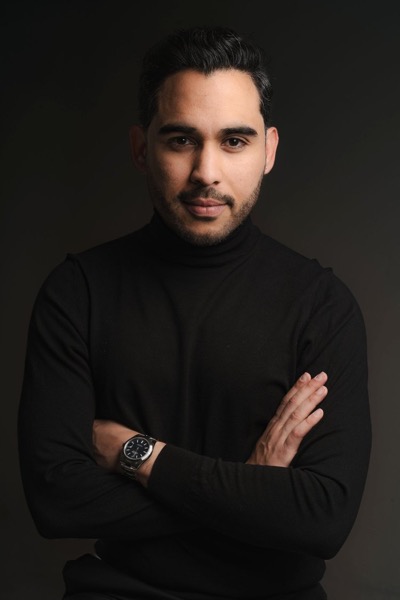
Information from Clínica DrDiente
Aesthetic Dentistry & Oral Rehabilitation · COFEPRIS 2409132002A00145
This content is informational and is not a substitute for professional dental advice. Book an assessment for a personalized diagnosis.