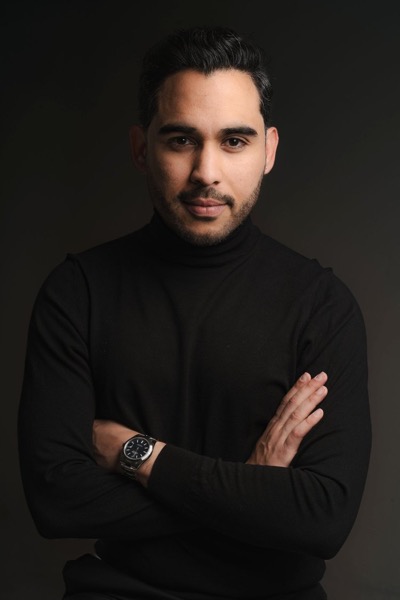
Dr. Carlos Ariza's Perspective on Immediate Dental Implants
When a patient sits in my chair and I say we can place a dental implant the same day we remove the tooth, most people look at me like I've said something impossible. At Clínica DrDiente, in Roma Norte and Polanco, CDMX, this is a procedure we perform routinely — and it has been, for most of my 15 years in implantology. But it's not for everyone. And that qualifier is the whole point.
The most common scenario I see: a patient who waited months — sometimes over a year — after a tooth was declared unrestorable. By the time they come in, the bone that once supported that tooth has started to shrink. The gum contour has flattened. What could have been a single surgical appointment and three months of healing becomes a bone graft, two surgeries, and almost a year of treatment. The delay doesn't just cost time. It costs bone.
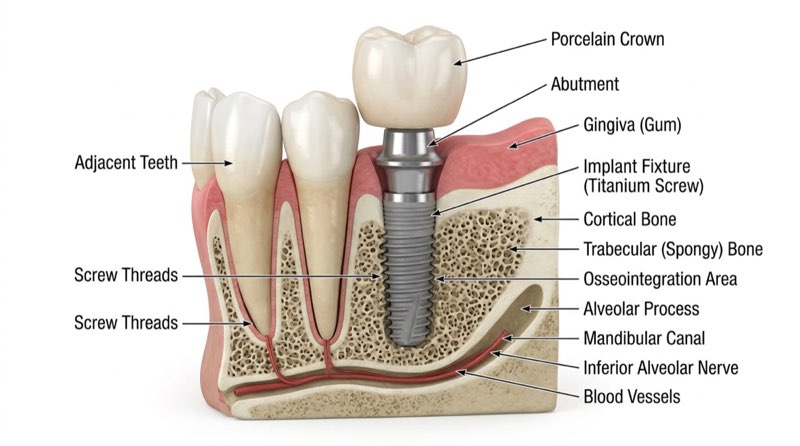
Placing an implant immediately after extraction — in the same appointment — isn't primarily about convenience. It's about preserving the alveolar architecture that exists the moment the tooth comes out. Once you extract a tooth and leave the socket empty, the body resorbs that bone at roughly 1.2 to 1.5 mm in the first three months. In absolute numbers, that doesn't sound dramatic. In the aesthetic zone — the visible front teeth — it's the difference between a gum line that looks natural and one that has visibly collapsed.
There's something I want to flag early on — something most dentists don't cover in the first consultation about immediate implants. I'll come back to it in a moment. But first, the question I get asked most: who actually qualifies for this?
What Most Dentists Don't Tell You About Immediate Implants
The piece that gets left out of most conversations: the bone isn't the only thing we're evaluating. The gum tissue biotype — whether your gingival tissue is thin or thick — is just as important for the final aesthetic result, especially in visible areas. Patients with thin gum tissue have a higher risk of gingival recession over time, which can eventually expose the implant's metal collar. That's a complication no technique fixes after the fact.
At Clínica DrDiente, biotype assessment is part of our standard pre-surgical diagnostic protocol. If the tissue is thin, we consider adding a connective tissue graft at the same time as the implant — one surgery, two problems addressed simultaneously. If a dentist evaluates the bone on a scan, sees it looks fine, and places the implant without evaluating the soft tissue, the result might look good at six months and concerning at three years. I've seen it happen.
The other thing patients don't hear often enough: immediate implants are not a shortcut. The total treatment time is shorter — typically 3 to 4 months compared to 6 to 12 with the conventional staged approach — but the procedure itself is more demanding. The implant must achieve a primary stability torque of at least 35 Ncm at the time of placement. If we open the site and that number isn't there, the plan changes. We don't improvise with implants.
For patients exploring dental tourism in CDMX, this is especially relevant. I've had patients arrive after receiving an "immediate implant" elsewhere — placed without a 3D scan or proper torque assessment — and the implant failed. Gap filling with bone substitute, surgical guide precision, torque measurement: none of these steps are optional. They're the procedure.
Now — here's what I said I'd come back to. The thing most dentists skip in that first consultation. The provisional crown you receive the same day as the surgery is intentionally placed out of your bite. Deliberately. The forces of chewing cannot reach the implant during osseointegration. If your dentist doesn't explain this — or doesn't do it — that's worth asking about directly. This detail matters more than the implant brand.
Our Clinical Experience: Real Cases
Let me walk through a few cases from our practice — all anonymous, all real patients treated here in CDMX.
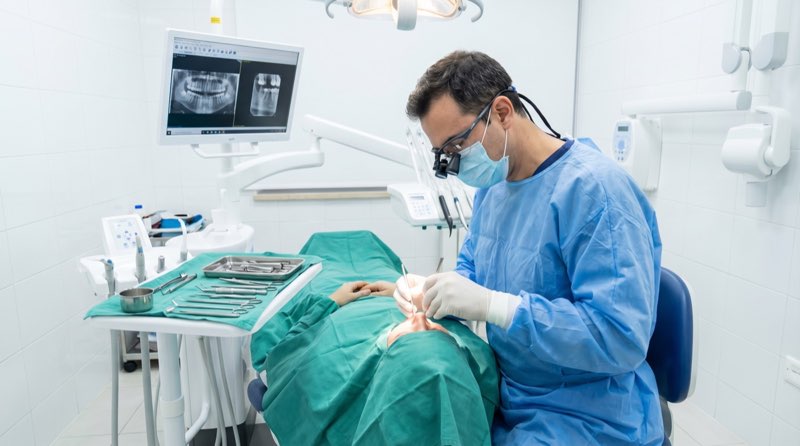
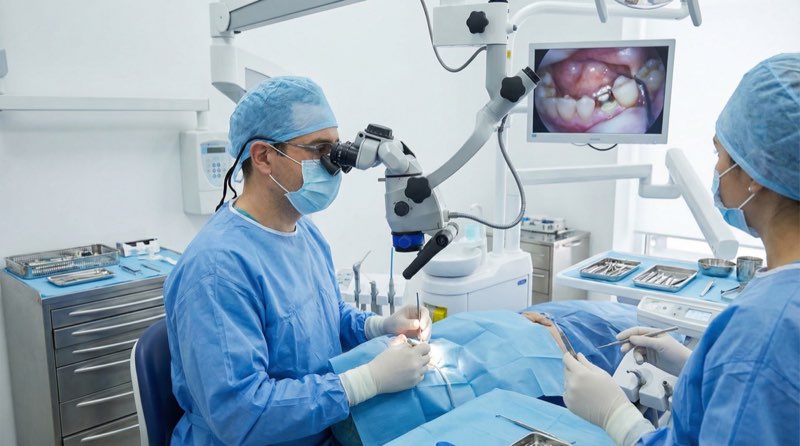
Case 1: Front tooth fracture, single visit. A 38-year-old patient — an architect — came in with a fractured upper lateral incisor. The fracture extended below the gum line and the tooth was unrestorable. CBCT scan showed excellent bone volume, a medium-thick gum biotype, no active infection. We performed an atraumatic extraction using periotomes, placed the implant at 40 Ncm of torque, filled the gap with Bio-Oss particulate bone graft, and delivered a provisional crown that same afternoon. At the four-month follow-up, osseointegration was confirmed. We placed the definitive lithium disilicate crown. She returned to client presentations without a single person noticing she'd had any dental work done. That's what a successful case looks like.
Case 2: Posterior molar, one surgery instead of two. A 52-year-old patient had been told by another clinic to wait six months before implant placement in a lower molar site. When we reviewed his tomography, bone density was in the D2 range — excellent. The extraction was straightforward, no infection history. We placed the implant immediately, opted for submerged healing without a provisional (posterior sites carry higher masticatory forces), and placed the definitive crown at three months. One surgical visit. Three months of healing. Crown delivery. He told me the four months he spent collecting second opinions from clinics that hadn't done a 3D scan were the most expensive four months of the whole process.
Case 3: Rescue of a failed implant. A patient in her early 40s came to us as part of a dental tourism visit from the United States. She had a failing implant placed at another clinic — placed without adequate primary stability assessment. We removed the failed implant, performed guided bone regeneration, allowed four months of graft consolidation, then placed a new implant using our digital surgical guide. The final restoration — a monolithic zirconia crown — is included in our real cases gallery at DrDiente. Not every case starts from a clean slate. Rescue cases are part of what we do, and they're among the most complex decisions in implantology.
These three cases share something that goes beyond technique or technology. There's a factor that determines long-term success more than any implant brand, any crown material, or any specific surgical approach. I'll address it directly in the FAQs — it comes up in nearly every consultation I have.
Frequently Asked Questions About Immediate Dental Implants
Is it normal to feel pain after an immediate implant?
Some discomfort, yes. Pain that requires more than standard anti-inflammatories for more than 72 hours — that's worth calling us about. In my experience, when the extraction is performed atraumatically, the post-surgical discomfort of the immediate protocol is no greater than a standard extraction. The technique matters: rough handling of the alveolar walls leads to rougher healing. We use specialized thin instruments that preserve the bone walls during the extraction itself.
What if the implant doesn't achieve enough primary stability?
We change the plan. If the torque at placement doesn't reach 35 Ncm, we extract the tooth, place a bone graft to prepare the site, and reschedule the implant for 3 to 4 months later. That's not a failure — that's the protocol working correctly. Forcing an immediate implant into a site with inadequate primary stability is what produces failures. I'd rather have a patient with a changed timeline than a patient dealing with a lost implant six months from now.
How long is the full treatment, from surgery to definitive crown?
For an anterior case with immediate provisional: one surgical appointment, then 3 to 4 months of osseointegration, then the definitive crown. Roughly 4 months total. For a posterior case with submerged healing: one surgical appointment, 3 months, then crown. Compare that to the conventional two-surgery protocol at 6 to 12 months, and the time savings are real — particularly for patients traveling to CDMX for treatment.
Does the provisional crown look like a real tooth?
Yes. We design it digitally from the intraoral scan, matching the surrounding teeth in shape, proportion, and translucency. It won't have the final ceramic depth of the definitive crown, but it's fully aesthetic for daily life. Patients leave the clinic that afternoon able to smile normally.
Now — the factor I mentioned that matters more than brand or material. It's patient behavior during osseointegration. Soft diet for the first 8 weeks, no direct biting forces on the provisional, chlorhexidine 0.12% rinse for the first 15 days, and interdental cleaning around the implant after that. Osseointegration is a biological process. Technology initiates it. The patient either supports or disrupts it with daily habits. That's the honest answer to "how do I make sure my implant lasts?"
Can I get an immediate implant if I have diabetes?
Depends on your control level. Patients with well-controlled diabetes — HbA1c below 7.5% — are viable candidates and we treat them regularly. Poorly controlled diabetes more than doubles the risk of peri-implantitis and implant failure. Before we proceed, we review recent lab results and coordinate with your internist when necessary. Diabetes is not a contraindication for implants. Uncontrolled diabetes is. That distinction is important.
What Technology Do We Use at DrDiente for Immediate Implants?
Every immediate implant case at Clínica DrDiente starts with a CBCT 3D tomography — not a panoramic X-ray, not a periapical film. A full three-dimensional scan that maps bone density, alveolar morphology, proximity to anatomical structures like the inferior alveolar nerve or maxillary sinus, and the precise angulation required for ideal implant positioning. Planning an immediate implant without 3D imaging, at this point in the field, is not a reasonable standard of care. The technology exists and has been accessible for years.
From the scan, we generate a digital surgical guide — a custom-fabricated template that controls implant depth, angle, and position with an angular error margin under 1.5 degrees. In the aesthetic zone, half a millimeter of deviation changes the emergence profile of the crown and the visible gum contour. The guide eliminates that variable. We also use an intraoral scanner to capture the full arch digitally, which feeds directly into provisional and final crown design.
Our in-house digital dental laboratory is part of what makes the workflow precise and efficient. Provisionals are designed and fabricated here, not outsourced. Final restorations are reviewed by our team before delivery. That control over the lab process means we're not waiting two or three weeks for a component to return — and we're not accepting a marginal fit. It's either right or it goes back.
We work with implant systems certified by FDA, CE, and COFEPRIS — Nobel Biocare and Straumann among them. Component traceability matters more than people realize. If a part needs replacement five or ten years from now, that system needs to be in production with documented compatibility. We don't use implant brands that cut costs at the expense of traceability.
In my experience, combining 3D planning, digital surgical guides, intraoral scanning, and in-house lab fabrication reduces complications — not just aesthetically, but in osseointegration predictability. When the implant goes exactly where it was planned, healing follows a predictable course. When it doesn't, you spend months managing consequences instead of delivering results.
One more thing we address in every post-implant protocol: bruxism screening. More than 30% of adults in Mexico City clench or grind, and most are unaware of it. Bruxism is one of the primary long-term risk factors for implant overload and peri-implantitis. We include a custom night guard as part of the rehabilitation and screen for parafunctional habits during the initial digital diagnostic workup. Protecting the restoration long-term is part of the treatment, not an afterthought.
Schedule with the DrDiente Team
If you've been told you need an extraction — whether it's a fracture, advanced decay, a failing root canal, or a structural problem — the first question to ask is whether an immediate implant is an option for your specific case. Don't assume the answer is no. Come in, get the 3D scan, and let us give you an honest evaluation based on your actual anatomy and clinical picture.
At Clínica DrDiente in Roma Norte and Polanco, CDMX, Dr. Carlos Ariza and the clinical team receive patients from across Mexico and internationally — many traveling specifically for implant treatment and dental tourism in CDMX. We'll review your case with the full diagnostic protocol — CBCT, intraoral scan, photographic record — and give you a clear, transparent plan. If immediate placement isn't indicated for your case, we'll tell you that directly and explain why.
Second opinions are welcome. Honest diagnosis is the starting point for everything else.
Information from Clínica DrDiente
Aesthetic Dentistry & Oral Rehabilitation · COFEPRIS 2409132002A00145
This content is informational and is not a substitute for professional dental advice. Book an assessment for a personalized diagnosis.