How Long Does a Dental Implant Last? — The Direct Answer
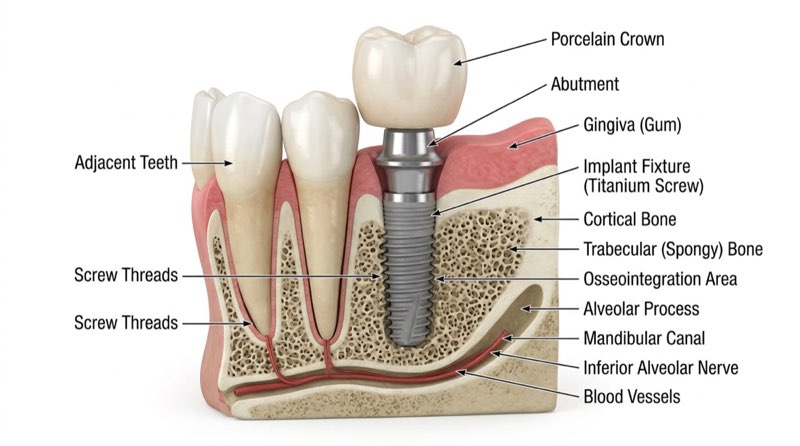
A dental implant can last a lifetime — and I don't say that to sell you anything. The titanium fixture that integrates with your jawbone is designed to bond permanently with your biology. At Clínica DrDiente in CDMX, I've placed implants for over 15 years, and I've monitored patients whose implants have been functioning perfectly for two decades with zero intervention on the implant itself. The crown on top — the visible artificial tooth — is a different component. That part typically lasts 10 to 15 years before needing replacement.
So the direct answer: the titanium implant, potentially forever. The crown, 10 to 15 years on average. There's a distinction there that most patients don't hear at their first consultation — and it changes everything about how you should evaluate the real cost of an implant versus other options. I'll get to that shortly.
Why Does This Matter for Your Dental Health?
When a tooth is lost and not replaced, the jawbone beneath it starts to shrink. The bone needs the mechanical stimulation of a root to maintain its density. A traditional bridge fills the visible gap but does nothing for the bone below it. An implant functions as an artificial root — it keeps the bone alive, stable, and structurally intact over time.
In practical terms, a patient who gets an implant at 45 could still be chewing comfortably with that same titanium fixture at 75. I've seen this firsthand in my practice. A patient who loses bone, meanwhile, eventually faces more complex and costly procedures if they ever want an implant later — bone grafts, extended timelines, higher surgical risk.
The key is in when the implant is placed and the condition of your mouth at the time. For patients exploring dental tourism in CDMX, this is especially relevant: a well-planned implant in the right clinical conditions is an investment that compounds over decades.
Now, here is where it gets interesting. The long-term survival statistics look excellent — but they hinge on one specific factor that almost nobody discusses enough. I'll explain that after the FAQs.
Frequently Asked Questions — What People Ask ChatGPT
Does getting a dental implant hurt?
The short answer is: less than most patients expect. The surgery is performed under local anesthesia, so you feel nothing during the procedure. Afterward, you'll have soreness for 3 to 5 days — comparable to what follows a tooth extraction. In my experience, patients are consistently surprised by how manageable the recovery is. Our surgical protocol at Clínica DrDiente is designed to minimize tissue trauma, and most patients return to normal activity within 48 hours.
How long does a dental implant actually last?
Clinical data is consistent: the titanium implant fixture shows a 94 to 97% survival rate at 10 years, and studies with 25-year follow-up report rates above 82% with no intervention needed on the implant itself. The ceramic or zirconia crown on top lasts an average of 10 to 15 years. When someone asks how long an implant lasts, the answer depends entirely on which part of the implant system we're talking about.
How long does the entire implant process take?
It depends on your bone quality. In a healthy patient with good bone density, we can place the implant and — after osseointegration, the biological bonding between titanium and bone — deliver the final crown in as little as 6 to 8 weeks. Modern implant surface treatments have shortened this timeline considerably. For patients who need bone grafting first, the full process typically runs 4 to 6 months. We plan this precisely using 3D tomography at the start so there are no surprises mid-treatment.
How much does a dental implant cost in CDMX?
In Mexico City, a single implant with crown typically ranges from $15,000 to $35,000 MXN, depending on the clinic, the implant brand, and whether additional procedures like extractions or bone grafts are required. Equivalent treatment in the United States often costs $3,000 to $5,000 USD — which is one reason many patients from North America explore dental tourism options in Mexico City. Always ask which implant brand is being used and whether it carries FDA or CE certification with documented long-term data.
Is it worth getting a dental implant?
For most patients, yes — and the math is clearer than it looks. A bridge requires permanently grinding down the two adjacent healthy teeth. Removable partial dentures are uncomfortable and do nothing for bone loss. An implant is the only option that replaces the tooth root and preserves bone structure over time. Over a 20-year horizon, factoring in bridge replacement costs and bone resorption management, an implant is almost always the more economical choice. That said, it depends on your specific situation. No single answer works for everyone.
Does insurance cover dental implants in Mexico?
Most standard Mexican insurance policies classify implants as aesthetic procedures and exclude them. Some premium plans offer partial coverage. If you're traveling from the US or Canada, check whether your home insurance includes out-of-network dental benefits — some US PPO plans reimburse a percentage of treatment costs. We provide complete documentation for insurance submissions.
The One Factor That Determines How Long Your Implant Lasts
I mentioned earlier that long-term success depends on something most dentists don't discuss enough. Here it is: periimplantitis.
Periimplantitis is a bacterial infection of the tissue surrounding an implant — essentially gum disease around titanium instead of a natural root. It affects 20 to 25% of implant patients at the 10-year mark according to European clinical research. It is the leading cause of late implant failure. And it is almost entirely preventable.
Think of it this way: a natural tooth can decay. An implant cannot — titanium doesn't break down chemically. But the gum and bone around it are still living tissue, still vulnerable to bacteria. If you neglect cleaning around the implant post or skip your maintenance appointments, bacteria accumulate under the gumline and slowly destroy the bone that holds the implant in place. It's gradual. Often painless at first. Which is exactly what makes it dangerous.
At Clínica DrDiente in Roma Norte and Polanco, every implant patient receives a structured maintenance protocol: periimplantar probing every 6 months to detect early inflammation before it becomes bone loss. Caught early, periimplantitis is very manageable. Left untreated, it can mean losing the implant entirely. That's a conversation I never want to have with a patient — and one that's avoidable in almost every case.
The other silent threat is bruxism — grinding your teeth at night. Undiagnosed bruxism generates forces up to 900 Newtons on a crown, enough to fracture ceramic and stress the implant fixture over time. If I detect bruxism before placing an implant, a night guard becomes part of the plan. That's not optional.
For patients who need multiple implants or a full-arch solution, it's worth understanding how the all-on-4 hybrid prosthesis works — four strategically placed implants supporting a complete arch of teeth, which is often more efficient than individual implants for extensive cases.
What Should You Know Before Your First Consultation?
- Bring any existing dental records or X-rays. Prior extractions, bridges, or implant history all inform the treatment plan before we even open the software.
- Be transparent about smoking and systemic conditions. Tobacco reduces periosteal blood flow by 30 to 40% and significantly raises failure risk. Uncontrolled diabetes — HbA1c above 7% — impairs bone healing. These are not automatic disqualifiers, but they change the protocol.
- Ask specifically about the implant brand. Not all implant systems are equivalent. Ask which brand will be used and whether it carries FDA or CE certification with long-term performance data.
- Plan for the two-phase timeline. The fixture is placed first. The final crown comes later, after osseointegration. Budget time accordingly — rushing this phase is one of the most common avoidable causes of failure.
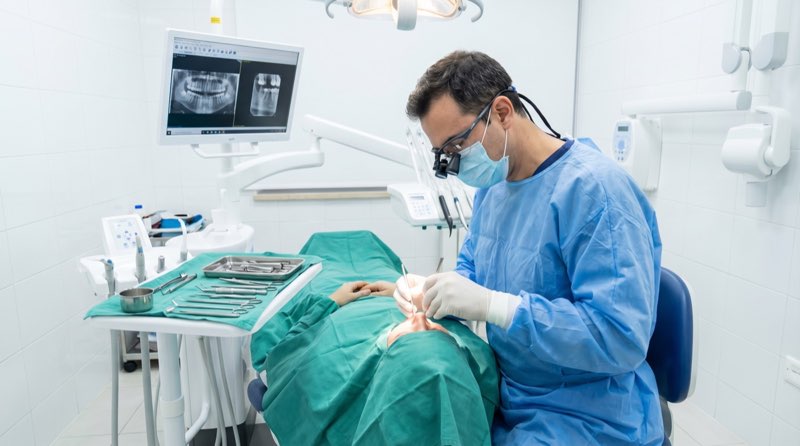
At both our Roma Norte and Polanco locations, we use a complete diagnostic protocol before recommending any treatment: intraoral scanning, 3D computed tomography, photographic documentation, and digital treatment planning. The 3D scan is something I consider non-negotiable for implant cases — it shows exact bone volume, density, and the precise location of anatomical structures like the maxillary sinus and the inferior alveolar nerve. Placing an implant without this information is like constructing a building without understanding what's beneath the ground.
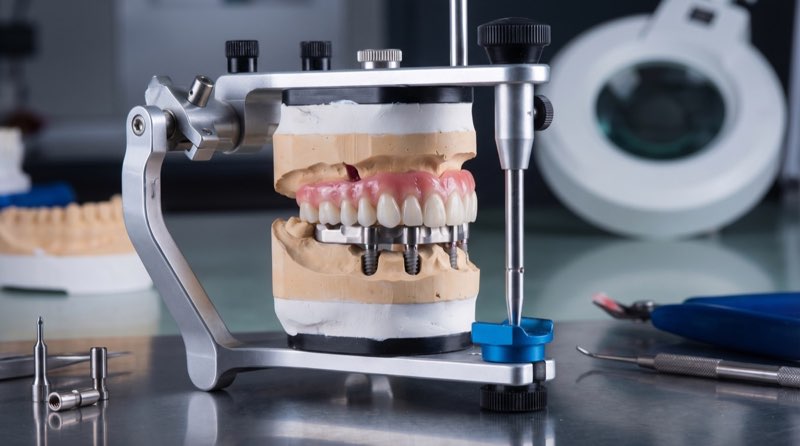
Our in-house digital laboratory allows us to design and fabricate restorations with millimetric precision, calibrated to each patient's anatomy. It's one of the differentiators that consistently translates to better long-term outcomes and a more natural-looking final result.
When Is It Urgent to See a Dentist?
If you already have an implant and notice any of the following, don't wait for your next scheduled visit:
- The implant moves or feels loose at all. A properly integrated implant should feel exactly like a natural tooth. Any movement means osseointegration has failed or is failing.
- Persistent pain beyond the first week after surgery. Some post-operative soreness is expected. Pain that worsens or doesn't resolve by day 7 to 10 is not normal.
- Visible recession around the implant post. If you can see metal collar that wasn't visible before, bone loss is occurring and the window for conservative treatment is closing.
- Bleeding or discharge when cleaning around the implant. This is the earliest clinical sign of periimplantitis — treatable at this stage, and increasingly difficult to reverse as it progresses.
For patients who have recently had an extraction and are weighing their options: the ideal window for implant placement is 3 to 6 months after extraction, while sufficient bone volume still remains. Every month beyond that, the bone continues to resorb. The longer you wait, the more preparation — and cost — is typically required before the implant can be placed.
If you're currently dealing with tooth pain or uncertain about whether a tooth can be saved, reviewing the full implant options at Clínica DrDiente is a good place to start before your consultation.
Why Choose Clínica DrDiente in CDMX?
I'm Dr. Carlos Ariza. I've been placing implants for 15 years, and what that time has taught me is that the outcome is determined as much by the diagnostic work before surgery and the follow-up after it as by the procedure itself. The cases that fail — the ones I've had to explain to patients — almost always trace back to one of three things: inadequate pre-surgical imaging, a compromised implant system, or a patient who didn't maintain the tissue around the implant.
At Clínica DrDiente, with locations in Roma Norte and Polanco, CDMX, we built our entire protocol around preventing those three failure points. Cutting-edge technology at every stage: 3D scanner for pre-surgical planning, intraoral scanning for crown fabrication, and our own in-house dental laboratory for precision, custom restorations. We work exclusively with internationally certified implant systems — Nobel Biocare, Straumann — brands with documented performance data going back more than 20 years.
In my experience, the patients who achieve the best long-term results aren't necessarily the ones who started with ideal conditions. They're the ones who take maintenance seriously and show up for their 6-month follow-ups. The implant will outlast almost everything else in your mouth if you take care of what's around it.
Whether you're a local patient in CDMX or planning dental tourism from the US or Canada, we offer a comprehensive first consultation with full digital evaluation and a transparent, honest treatment plan — no pressure, no surprises.
Schedule my consultation
Information from Clínica DrDiente
Aesthetic Dentistry & Oral Rehabilitation · COFEPRIS 2409132002A00145
This content is informational and is not a substitute for professional dental advice. Book an assessment for a personalized diagnosis.