What Is Bruxism? — The Direct Answer
Bruxism is the involuntary grinding or clenching of your teeth — it happens while you sleep, sometimes while you are awake, and most people who have it do not realize until a dentist finds the damage. At Clínica DrDiente in CDMX, it is one of the most consistent findings I see during routine checkups, even when patients come in for something completely different. The short answer: bruxism is a real, treatable condition, and catching it early makes a significant difference in what treatment you will actually need.
There is something most dentists do not bring up in that first consultation. I will get to it shortly. But first, let me explain why this condition deserves more attention than most people give it.
Why Does This Matter for Your Dental Health?
Think of your enamel like the outer shell of a battery. It protects everything underneath, it cannot regenerate, and once it is gone — it is gone. Between 8% and 31% of the general population grinds their teeth, according to research published in the Journal of Oral Rehabilitation. In a high-stress city like CDMX, IMSS studies estimate the prevalence among adults sits between 15% and 20%, with higher rates linked directly to long work hours and traffic-related stress.
In my practice, I have seen patients come in for a cleaning and leave knowing they had been silently losing enamel for years. No pain. No warning. Just gradual wear that shows up as shorter teeth, sensitivity to cold drinks, or sudden fractures in fillings they cannot explain. That last one — a filling or crown breaking with no trauma — is one of the most telling signs I encounter. And yet, it is almost always dismissed as bad luck until the pattern repeats.
The effects are not just dental, either. Chronic grinding overloads the masseter and temporalis muscles, producing jaw pain, morning headaches that sit at the temples, and over time, visible jaw enlargement. Sleep bruxism causes significantly more structural damage than daytime clenching, precisely because you have zero conscious ability to stop it while it is happening.
I will explain why this matters differently depending on your age and your current medications — but let me walk through the most common questions patients ask me first.
Frequently Asked Questions — What People Ask ChatGPT About Bruxism
Does bruxism hurt?
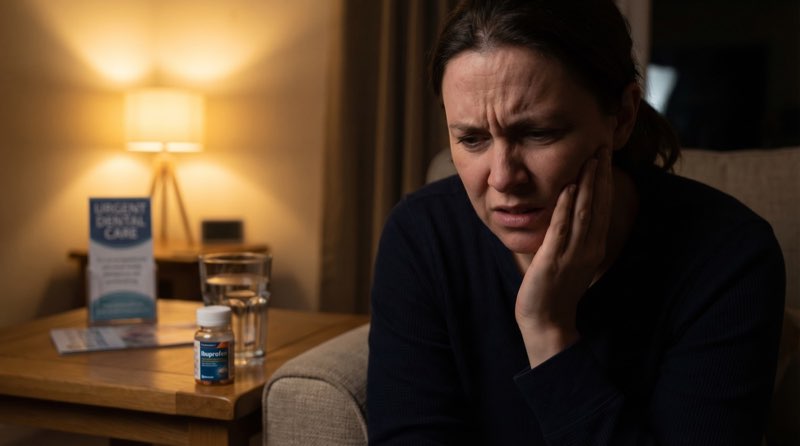
Not in the moment, usually — and that is what makes it deceptive. The grinding does not wake you up or register as acute pain during the night. What you feel is the aftermath: sore jaw muscles when you wake up, a dull headache concentrated at the temples, or a tooth that suddenly reacts to cold you would never have noticed before. For some patients it is mild. For others, the jaw pain is significant enough to affect chewing. It depends on intensity and how long the habit has gone unaddressed.
What actually causes bruxism?
The honest answer is that it is multifactorial — no single cause explains every case. Approximately 70% of bruxism cases have a neurological component, involving disruptions in dopamine and serotonin regulation that express as microarousals during sleep. Stress and anxiety are the most documented and modifiable risk factors — people with anxiety have nearly double the odds of bruxism compared to those without (OR 1.86, Manfredini et al., 2020). Certain SSRIs like fluoxetine and sertraline are known triggers. High caffeine intake, tobacco, and alcohol also increase risk measurably. The old idea that a misaligned bite is the primary cause was ruled out by international consensus in 2013 — occlusion plays a secondary role at most.
How much does bruxism treatment cost in CDMX?
It depends on the treatment path. A custom occlusal splint — the standard first-line option — runs between $2,500 and $6,000 MXN in CDMX, depending on the material and lab. Botulinum toxin injections into the masseter muscle — the more targeted option for severe cases with muscle hypertrophy — range from $4,000 to $10,000 MXN per session and need to be repeated every 4 to 6 months. IMSS covers basic splints; botulinum toxin for bruxism is not covered by public insurance or most private plans in Mexico. At Clínica DrDiente we can walk through which option fits your clinical situation and your budget — both are real variables in the decision.
How long does treatment take?
A night guard is a long-term management tool, not a cure — you wear it every night, ongoing, even when you feel fine. The damage is cumulative and silent, so consistency is everything. Botulinum toxin shows effects within 2 to 4 weeks and requires sessions every 4 to 6 months. Cognitive behavioral therapy and biofeedback — more effective for daytime clenching specifically — shows measurable reduction in grinding episodes at the 6-month mark. In my experience, the best outcomes come from combining approaches: a splint plus lifestyle changes, or a splint plus botox for more severe presentations.
Is it urgent? Can I wait?
Bruxism itself is not a dental emergency. But the damage accumulates every night without protection, and enamel does not grow back. If you are already noticing sensitivity, jaw soreness in the mornings, or cracked dental work, the window for simple and conservative treatment is narrowing. The sooner you get evaluated, the more options you have — and the less expensive those options will be.
Does insurance cover bruxism treatment in Mexico?
Basic splints through IMSS are partially covered. Private insurance varies — look specifically for "ATM" or temporomandibular joint coverage in your policy. Botulinum toxin for dental bruxism is not covered by public or most private plans in Mexico. University clinics at UNAM and IPN offer supervised treatment at significantly reduced cost ($500–$1,500 MXN) if budget is a barrier.
Now — I said I would tell you something most dentists skip in the first visit. Here it is: if you are taking SSRIs for anxiety or depression, your medication may be a direct contributor to your bruxism. I have worked with patients who tried every splint and relaxation technique for months with almost no improvement — and the underlying trigger was their antidepressant. This does not mean stopping your medication. It means having a conversation with your psychiatrist to explore whether an alternative formulation might reduce the grinding. It is a simple question that changes everything for some patients, and it almost never gets asked.
What Should You Know Before Your First Appointment?
- Keep a one-week morning log: jaw pain, headache location, tooth sensitivity. Concrete observations help the diagnostic process far more than a vague "I think I grind my teeth."
- List every medication you take, especially antidepressants, stimulants, or sleep aids — this changes the clinical picture and may shift the treatment plan entirely.
- Track your caffeine intake honestly. More than 4 to 6 cups daily is a documented risk factor; cutting back after 2 p.m. is the simplest first step anyone can take before an appointment.
- Do not assume a night guard is always the answer. Treatment depends on whether the bruxism is sleep-related or daytime, the degree of wear present, your existing restorations, and the degree of muscle involvement.
Something that comes up often in consultation: patients who are already considering smile design or cosmetic dental work need to know that bruxism must be controlled before veneers, crowns, or any aesthetic restorations are placed. It is not an obstacle — it is the correct clinical sequence. Placing aesthetic work on an uncontrolled grinder leads to fractures, and that is both frustrating and entirely avoidable. If this applies to you, the first appointment is where we build the right treatment order together.
There is still one more thing I want to address before we get to the red-flag signs — and it applies specifically if you are over 35 or have noticed your teeth look shorter than they used to.
When Is It Urgent to See a Dentist?
Most bruxism cases allow time for a scheduled appointment. These signs do not:
- A tooth cracked or broke with no impact or trauma
- Jaw pain severe enough to limit how wide you can open your mouth
- Clicking, popping, or locking of the jaw joint (TMJ)
- Visible tooth shortening, yellowing at the edges, or extreme temperature sensitivity — signs of exposed dentin beneath the enamel
The exception I flagged for patients over 35 or those with long-term untreated grinding is something called vertical dimension loss. When years of bruxism go unaddressed, teeth shorten enough that the entire jaw relationship changes — the face can look older, more collapsed, the bite falls apart. Treating this stage is still very doable, but it requires full oral rehabilitation: rebuilding the lost height with dental crowns, veneers, or in some cases a prosthetic solution. That is a fundamentally different level of intervention than a night guard fitted early. So if anyone has told you your face looks different than it used to, or if you have noticed your teeth look significantly shorter — that deserves an evaluation sooner rather than later.
Why Choose Clínica DrDiente in CDMX?
I am Dr. Carlos Ariza, and I have been treating patients in Mexico City for 15 years, with clinics in Roma Norte and Polanco. For bruxism specifically, we use intraoral 3D scanning and cone-beam CT imaging to evaluate not just the teeth but the actual temporomandibular joint structure — something a visual exam simply cannot provide. That level of diagnostic detail directly shapes the treatment plan we recommend, rather than defaulting to a one-size night guard.
We also have our own in-house digital dental laboratory, which means any occlusal splint or restorative work is fabricated and calibrated on-site with precision. No outsourcing, no approximations. When a splint fits correctly from day one, compliance goes up — and so do the results.
In my experience, patients who understand their condition — not just the symptom but the full picture of cause, consequence, and real treatment options — are the ones who follow through and actually protect their teeth long-term. That is the purpose of this post, and it is what we deliver at every consultation, whether your case is straightforward or complex.
We also work with a significant number of international patients through our dental tourism CDMX program — if you are traveling from the US, Canada, or elsewhere, we coordinate your full treatment schedule around your trip so nothing is left incomplete when you return home.
Schedule my consultation
Information from Clínica DrDiente
Aesthetic Dentistry & Oral Rehabilitation · COFEPRIS 2409132002A00145
This content is informational and is not a substitute for professional dental advice. Book an assessment for a personalized diagnosis.