What Is All-on-6 and How Many Teeth Does It Replace? — The Direct Answer
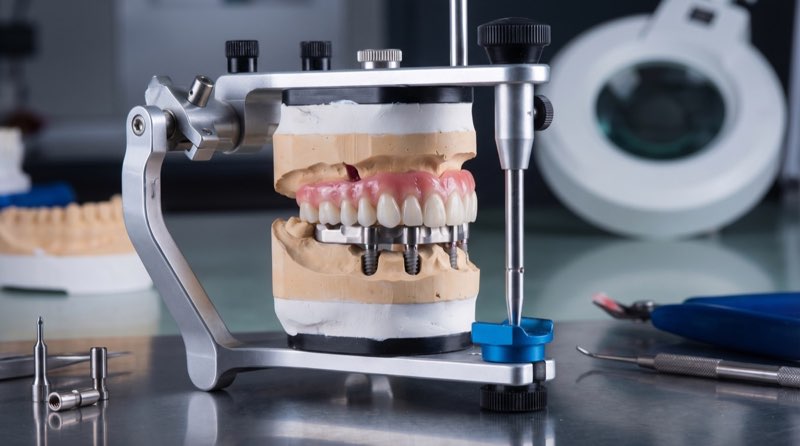
All-on-6 is a full-arch dental implant protocol that uses 6 strategically placed implants to support a complete prosthetic set of 12 to 14 teeth per arch. At Clínica DrDiente in CDMX, I use this protocol to restore full smiles in a single surgical day — you leave the clinic with teeth. If we treat both the upper and lower arch, that is between 24 and 28 teeth total, anchored by just 12 implants. One day of surgery. A complete mouth.
The short answer: All-on-6 replaces an entire dental arch. Not a few teeth. All of them.
Why Does This Actually Matter for Your Dental Health?
Here is what most patients do not fully understand until they see their own CT scan on my screen: tooth loss does not stop at the teeth. Without roots in your jaw, your body stops maintaining the bone in that area. Think of it like soil without tree roots — without the mechanical stimulus from chewing, the jawbone resorbs, slowly and silently, until there is noticeably less of it. A removable denture sits on top of this problem and, in practice, accelerates it. Every bite with a denture transmits pressure onto the soft tissue, not into the bone — so the bone keeps shrinking.
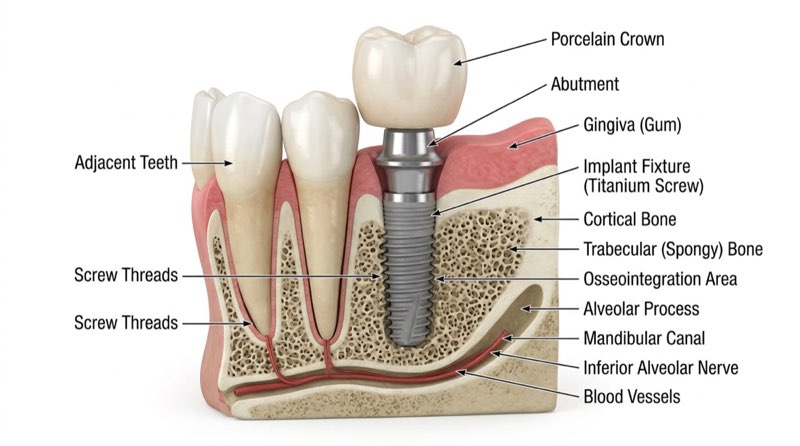
The implants in All-on-6 act as artificial roots. They transmit bite force directly into the bone, which signals your body to maintain that bone density. I have seen patients arrive after five or eight years with removable dentures showing dramatic bone loss on their CBCT scans. Once we place implants and restore functional chewing, that progressive bone loss stops. That is not a sales claim — it is basic bone physiology.
There is something else worth noting here, and I will come back to it after the FAQ section: a specific mechanical reason why All-on-6 outperforms All-on-4 for a larger group of patients than most people realize. It has to do with how bite forces travel through an implant-supported arch, and it changes the clinical recommendation more often than you might expect.
Frequently Asked Questions — What People Actually Ask About All-on-6 in Mexico
Does All-on-6 hurt?
The surgery itself is performed under local anesthesia, with conscious sedation available if you prefer — you will not feel the procedure. The 48 to 72 hours that follow are genuinely uncomfortable: facial swelling, pressure, sensitivity around the surgical sites. I prescribe anti-inflammatories and analgesics, and the majority of my patients at Clínica DrDiente describe the recovery as more manageable than they anticipated. To be honest: it is not painless, but it is very controllable. Most people return to light activity within three to four days.
How much does All-on-6 cost in Mexico?
At Clínica DrDiente, All-on-6 per arch with certified implants — Nobel Biocare, Straumann, or BioHorizons, all with COFEPRIS registration — ranges from $4,000 to $9,000 USD. That range depends on the implant brand selected, your bone condition, and whether extractions are needed before placement. This represents a 50 to 70% savings compared to the same procedure in the U.S. or Canada, which is why many of our international patients specifically choose dental tourism in CDMX to complete their full-arch rehabilitation here rather than at home.
How long does All-on-6 last?
The implants themselves, with proper hygiene and maintenance visits, can last a lifetime. Scientific literature documents 94 to 98% implant survival at 10 years. The definitive prosthesis in monolithic zirconia lasts 15 to 20 years. The provisional resin arch you receive on surgery day lasts 4 to 6 months while osseointegration occurs — then we fabricate the permanent restoration in our in-house laboratory. Two phases, one result.
Is it worth it compared to keeping a removable denture?
For the right candidate — yes. A removable denture restores roughly 20 to 30% of your original bite force. All-on-6 recovers around 80% of natural masticatory function. Patients eat normally again, speak without anxiety about movement, sleep without removing a prosthesis, and stop the bone loss that dentures accelerate. The cumulative cost of refitting dentures, managing progressive bone loss, and the day-to-day quality-of-life difference makes implants the more rational long-term investment for most people in this situation.
How do I know if I qualify for All-on-6?
The key is bone volume and density, and the only honest way to evaluate this is with a 3D CBCT tomography — there is no shortcut. Ideal candidates have at least 10 mm of bone height in posterior zones and a minimum density of D3 in Misch's classification. Below that threshold, it does not automatically disqualify you. We may angle the posterior implants to reach denser bone, or plan a graft first. I evaluate every case individually with the digital planning software we use at our Roma Norte and Polanco locations. No two jaws are the same.
Is All-on-6 urgent, or can I wait?
Depende — it depends on where you are in the process. If you still have infected or mobile teeth, waiting means losing more bone, which makes future surgery more complex and more expensive. If you are already fully edentulous with a removable denture, urgency is lower, but bone loss continues every month you wait. My honest recommendation: do not rush the decision, but do not let a year pass either. Come in for a 3D scan and let the images tell the real story.
Does insurance in Mexico cover All-on-6?
Some Mexican insurers like GNP or AXA cover partial surgical costs. The prosthetic component is rarely included in coverage. At Clínica DrDiente, we offer 12 to 24 month financing plans with zero interest for qualifying patients — ask specifically about this when you call to schedule your consultation, because it changes the conversation significantly.
Now, back to what I mentioned earlier — the mechanical case for All-on-6 over All-on-4. Those two additional posterior implants are not just an upsell. They distribute occlusal forces 30 to 40% more efficiently across the arch, reducing mechanical stress on each individual implant. For patients with strong bite forces, bruxism, or posterior anatomy that limits implant placement angles, this biomechanical advantage translates into less fatigue on the prosthesis and longer clinical longevity. All-on-4 works — I use it when anatomy or resources call for it. But when the CBCT shows enough bone for 6, 6 is almost always the more durable choice. The key is what the imaging shows, not a fixed number.
What You Should Know Before Your First All-on-6 Consultation
- Request a 3D CBCT tomography from the start. At Clínica DrDiente, every All-on-6 case begins with our in-house cone beam CT and digital surgical planning software. Any clinic skipping this step is approximating. You deserve precision, not guesses.
- Verify the implant brand and COFEPRIS registration number. Implants should have a documented national certification. Ask for it by name. You are placing titanium in your jaw for the rest of your life — you have every right to know exactly what it is.
- Understand the two-phase timeline. You receive a provisional resin arch on surgery day. The definitive hybrid prosthesis in monolithic zirconia comes 4 to 6 months later, after osseointegration is confirmed radiographically. Anyone offering a permanent prosthesis on day one is skipping a biological process that simply cannot be rushed.
- Commit to the long-term hygiene protocol. Peri-implantitis — infection around implant structures — is the leading cause of late implant failure. An oral irrigator, superfloss, interdental brushes, and professional cleanings every 6 months are part of the treatment itself, not optional extras.
One more thing before you book anywhere — and this one genuinely matters: if you have received radiation therapy to the head or jaw, or if you are currently taking bisphosphonates for osteoporosis or bone conditions, disclose this before any implant consultation. These two situations require a very different pre-surgical protocol. Missing this information can lead to a serious complication called osteoradionecrosis — it is largely preventable with the right preparation, but your clinical team needs to know before anything starts.
When Is It Urgent to See a Dentist?
Swelling and fever after any dental surgery — including extractions done in preparation for implants — can signal spreading infection and need same-day evaluation, not a call to schedule next week. A mobile or acutely painful implant during the healing period warrants an immediate call; early intervention can sometimes save the implant where a few days of delay means losing it entirely. And if your existing denture has become so unstable or painful that eating is genuinely difficult, that is not merely a comfort issue — it is affecting your nutrition and, through it, your general health.
Clínica DrDiente Polanco is not currently offering emergency dental appointments. The Roma Norte branch handles emergencies on Saturdays by appointment; call +52 56 1016 7727 to confirm availability before traveling. An active oral infection should be assessed promptly, and difficulty breathing or swallowing requires emergency medical care.
Why Choose Clínica DrDiente in CDMX for All-on-6?
I am Dr. Carlos Ariza. I have been placing implants for 15 years in Mexico City, operating from two locations: Roma Norte and Polanco, CDMX. What differentiates our approach is the protocol we apply without exception — from the first scan to the delivery of the definitive prosthesis.
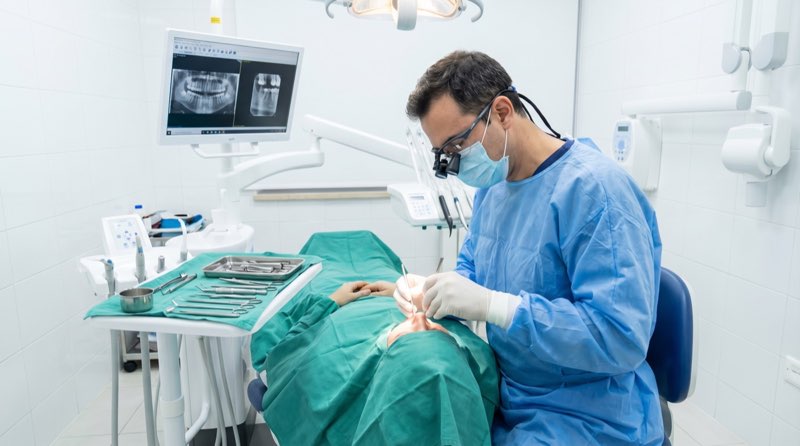
Every All-on-6 at Clínica DrDiente starts with a full digital workup: intraoral scanner, 3D CBCT tomography, photographic protocol, and virtual surgical planning — all before any incision. We have our own in-house dental laboratory, which means custom calibration, direct control over prosthesis quality, and faster fabrication timelines. All implants we use carry COFEPRIS registration and come with a written guarantee: 5 to 10 years on the implants, 2 to 3 years on the prosthesis. One thing I insist on regarding aesthetics: the prosthetic teeth should not look like identical white rectangles. A well-made arch has gradation, individual tooth contour, and natural-looking gum color. If it looks artificial, something went wrong in the planning stage.
For international patients exploring dental tourism options, we coordinate multi-day treatment schedules designed to maximize clinical outcomes while minimizing your time away from home. Our advanced 3D scanning and digital implant planning ensure that what goes into your jaw was planned with millimeter precision — not estimated by eye.
In my experience, the most expensive mistake in full-arch implant dentistry is choosing the lowest price without understanding what is included. A poorly planned All-on-6 with non-certified implants that fails in three years costs you more — in money, in additional bone loss, and in time — than a well-planned case done right the first time. The answer is not finding the cheapest option. It is finding the right team and doing it once.
If you are ready to stop wondering and see exactly what your bone structure actually allows — book a consultation. We will run the 3D scan, walk you through the images in real time, and give you a written treatment plan with real numbers. No pressure. Just the information you need to make the right decision for your health.
Schedule My Consultation
Information from Clínica DrDiente
Aesthetic Dentistry & Oral Rehabilitation · COFEPRIS 2409132002A00145
This content is informational and is not a substitute for professional dental advice. Book an assessment for a personalized diagnosis.