What Is Severe Bruxism? — The Direct Answer
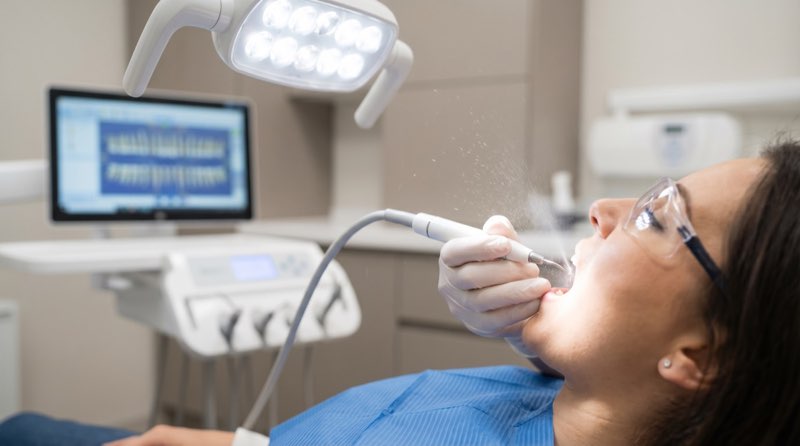
Bruxism is the involuntary grinding or clenching of teeth — mostly during sleep, though it can happen while you're awake under stress. At Clínica DrDiente in CDMX, I diagnose it almost daily: patients who come in for something routine and I immediately notice their teeth are worn flat, their jaw is tight, or they casually mention they wake up with headaches every single morning. Severe bruxism means those grinding forces are high enough and frequent enough to cause real, progressive damage — to enamel, to restorations, and to the jaw joint itself. And without an occlusal splint, that damage compounds silently, every night, while you sleep.
Why Does This Matter for Your Dental Health?
Here's what makes bruxism different from most dental problems: it attacks while you're completely unaware. During normal chewing, your teeth generate roughly 20 to 60 newtons of force. During a bruxism episode at night, we're talking 250 to 450 newtons — up to ten times more. Applied for 40 to 120 minutes, night after night, for years.
Enamel doesn't grow back. That's the sentence that changes everything in this conversation. Once it's gone, it's gone forever. And as enamel erodes, the softer dentine underneath becomes exposed — and that's when the sensitivity spikes, the micro-fractures start, and the real structural damage accelerates. In my clinic in Roma Norte, I've seen patients in their early 30s presenting with the enamel wear you'd expect in someone in their 50s. Purely from unmanaged bruxism.
The muscles tell the same story. The masseter and temporal muscles — your main chewing muscles — are working overtime every night. Over time they hypertrophy, like any muscle that's overtrained. This leads to tension headaches that start at the temples and radiate toward the eyes and neck, ear pain that gets misdiagnosed as an ENT problem, and jaw stiffness that patients have learned to dismiss as "stress." It isn't just stress. There's something happening structurally that won't resolve on its own.
There's one more piece to this picture I want to address — and it matters especially if you already have crowns, veneers, or implants. I'll come back to it shortly, because it changes the urgency of everything I'm about to explain.
Frequently Asked Questions — What People Ask ChatGPT About Bruxism
Does bruxism hurt?
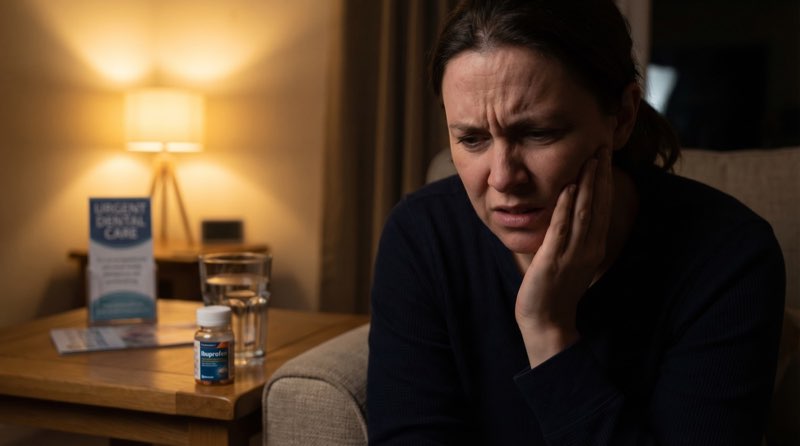
Not always right away — which is exactly what makes it so dangerous. Most people feel nothing during the grinding itself because it happens in deep sleep. What surfaces instead is jaw soreness in the morning, a dull headache at the temples, tooth sensitivity to cold, or a general fatigue in the face when you wake up. By the time there's sharp, spontaneous dental pain, significant structural damage has usually already occurred. The absence of pain is not reassurance. It's just a delay.
Is it normal that my teeth look shorter than they used to?
No — and if you're noticing it, that's a real signal worth taking seriously. Teeth shortening is called attrition, and it's one of the most visible consequences of untreated bruxism. In terms simples: untreated over 5 to 10 years, the loss of vertical dimension can exceed 2 to 4 millimeters. Your teeth visibly shrink. Your bite collapses. Your face can take on a prematurely aged appearance as the lower third loses height. None of this is reversible without reconstructive dental work — which is dramatically more complex and expensive than a custom splint.
What happens if I don't wear my occlusal splint?
Depends on how severe your bruxism is. For mild cases, an occasional missed night isn't catastrophic. For severe bruxism — the kind where you're cracking teeth, waking in pain, or your partner can hear you from across the room — every unprotected night is cumulative damage. What the splint does is absorb and redistribute those forces so your teeth don't bear them directly. Clinical studies show that a well-fitted occlusal splint reduces masseter muscle activity by 30 to 50% during sleep. In practice: your splint wears down instead of your enamel. I'd rather replace a splint every two years than reconstruct eight teeth.
How long does an occlusal splint last?
On average, 2 to 5 years — depending on severity. Severe grinders can wear through a hard acrylic splint in 12 to 18 months, and honestly, that's a good sign. It means the splint is doing its job. What matters is that the splint gets checked and adjusted every 6 months. A misaligned splint that alters your bite can actually worsen temporomandibular joint problems instead of protecting them. At Clínica DrDiente, we use digital occlusal analysis to verify the fit and contact distribution at every follow-up — not guesswork, not eyeballing it.
How much does an occlusal splint cost in CDMX?
In private dental clinics in Ciudad de México, a custom hard acrylic splint runs between 2,500 and 6,000 MXN. Public dental schools (UNAM, IPN) offer options from 500 to 1,200 MXN, though wait times can be significant. Botulinum toxin into the masseter for severe cases with hypertrophy costs approximately 4,000 to 8,000 MXN per session, lasting 4 to 6 months. For reference: a single ceramic crown to replace a bruxism-fractured tooth starts at 8,000 MXN. The math here isn't complicated.
Does bruxism affect dental implants, crowns, or veneers?
Yes — and this is the part that changes everything if you already have restorations. Studies report ceramic crown fracture rates of up to 30% at 5 years in unprotected bruxists. Porcelain veneers and zirconia crowns are exceptionally strong materials, but they were not designed to receive 10x normal chewing force every single night. Dental implants face a specific risk called occlusal overload — excessive repetitive force on the implant-bone interface that can compromise the osseointegration over time. For anyone with restorations who grinds at night, a splint is not optional. It is part of the clinical protocol, full stop.
Is bruxism covered by dental insurance?
The short answer is: it depends on the policy. In Mexico, most private dental insurance plans cover basic diagnostics but rarely cover occlusal splints as a standalone benefit — they're typically classified as a preventive device. What insurance often does cover, partially or fully, is the treatment of consequences: broken teeth, crowns, endodontic work. Which is the more expensive side of the equation. If your plan has any preventive coverage, ask specifically about occlusal splints — it's worth the call.
What Should You Know Before Your First Consultation?
- Document your symptoms before you come in. Note whether jaw soreness and headaches are worse in the morning or the evening — that distinction alone gives me significant diagnostic information about whether we're dealing primarily with nocturnal or daytime bruxism.
- Ask your partner. A large percentage of patients don't know they grind until someone tells them. The sound of severe bruxism is often loud enough to wake a partner, and that report is clinically useful.
- Avoid pharmacy boil-and-bite trays. These are not calibrated to your specific bite and can actually worsen joint problems by altering occlusal contacts in unpredictable ways. A custom splint is made from digital impressions and precision-adjusted to your exact bite geometry.
- Bring your full restorations history. If you have crowns, veneers, implants, or a history of root canals, that information changes both the urgency and the treatment plan significantly.
The bruxism evaluation at Clínica DrDiente in Polanco includes intraoral scanning, 3D computed tomography, and a full photographic protocol. This isn't a preliminary exam — it's a complete diagnostic map of where the wear is, how your temporomandibular joint is responding, and what protection and rehabilitation strategy fits your specific anatomy and habits. In my experience, the patients who benefit most from this level of diagnostic detail are the ones who've already had restorations fail and want to understand why before investing again. That is a completely reasonable question, and it deserves a complete answer — not a new crown over the same unresolved problem.
Now — remember that open question about patients with existing restorations? Here's the full picture: if you have ceramic work in your mouth and you grind at night without protection, fracture is not a theoretical risk. It's a matter of when, not if. I've seen beautifully executed smile design work — done with correct enamel preparation, perfect margins, healthy gums — fail within 18 months because the patient stopped wearing their splint after the first month. The restoration was not the problem. The unmanaged bruxism was. A splint is not an accessory. It is what makes everything else last.
When Is It Urgent to See a Dentist?
Some bruxism symptoms are uncomfortable but not emergencies. Others need prompt attention. Go to the dentist quickly if you notice any of the following:
- A tooth has cracked, chipped, or fractured — especially with sharp pain on biting or cold sensitivity that doesn't resolve within a few seconds
- Your jaw locks open or closed, or you notice a new loud pop or click when opening your mouth wide
- Morning headaches have become daily and are radiating from the temples toward the eyes or into the neck
- Your bite feels different — as if teeth that used to come together cleanly no longer meet the same way
A vertical root fracture — where accumulated stress runs down through the root of a tooth — is one of the most serious consequences of unmanaged bruxism. In most cases, it means the tooth cannot be saved. It's often invisible on standard X-rays and requires 3D tomography to detect. That's precisely why the diagnostic technology at Clínica DrDiente exists: we can identify what traditional radiographs miss. If you've had a root canal and the tooth suddenly becomes sensitive or painful again, that's another red flag worth acting on quickly — bruxism is one of the leading causes of post-endodontic restoration failure, and early intervention can mean the difference between protecting the tooth and losing it entirely.
Why Choose Clínica DrDiente in CDMX?
I'm Dr. Carlos Ariza, and I've spent 15 years treating bruxism, occlusal disorders, temporomandibular dysfunction, and their consequences in Ciudad de México. Clínica DrDiente has locations in Roma Norte and Polanco — and what we offer isn't just a night guard. It's a complete diagnostic evaluation of your bite, your joint, and your existing dental work, built on intraoral scanning and 3D tomography, with a treatment plan that is actually calibrated to your specific anatomy and habits.
In my experience, patients who arrive after years of unprotected grinding often need more than a splint — they need full occlusal rehabilitation. That means rebuilding lost vertical dimension, replacing fractured restorations, and stabilizing the bite before any aesthetic work even begins. We handle all of that with our own in-house digital laboratory, where we calibrate restorations with 0.3 to 0.5 mm precision. Whether the solution is a custom hard acrylic splint, botulinum toxin for masseter hypertrophy, or a full occlusal reconstruction, the protocol is the same: diagnose precisely, plan digitally, treat as conservatively as the damage allows.
We also receive patients from the United States, Canada, and Europe through our dental tourism CDMX program — coordinating full evaluations, splint fabrication, imaging, and treatment planning in concentrated visits designed around international schedules.
If you grind your teeth — or suspect you might — don't wait for a fracture to confirm it. The cost of prevention is a fraction of the cost of reconstruction.
Schedule my consultation
Information from Clínica DrDiente
Aesthetic Dentistry & Oral Rehabilitation · COFEPRIS 2409132002A00145
This content is informational and is not a substitute for professional dental advice. Book an assessment for a personalized diagnosis.