How Long Does Teeth Whitening Last? — The Direct Answer
The short answer: it depends on the method and your habits afterward. Professional in-office whitening typically lasts between 6 and 18 months, supervised at-home trays can extend results from 1 to 3 years, and over-the-counter strips give you around 3 to 6 months at best. At Clínica DrDiente in CDMX — with locations in Roma Norte and Polanco — I'm Dr. Carlos Ariza, and after 15 years treating patients, I can tell you that the duration question has a longer answer than most people get in the dental chair. What I tell every patient before we start: whitening is not permanent. But with the right protocol, you can hold those results far longer than the average guide suggests — and I'll show you exactly how.
Why Does Whitening Duration Matter for Your Dental Health?
Your enamel is porous. When hydrogen peroxide or carbamide peroxide does its job, it oxidizes the pigment molecules trapped in those pores and lightens them. The problem is those same pores stay temporarily open right after treatment, making your teeth exceptionally susceptible to restaining in the first 48 hours. Leave the clinic and go straight for a café de olla — you're undoing a meaningful portion of what you just paid for.
There's also a practical health consideration that often gets skipped in the initial conversation. Whitening agents can irritate inflamed or already-sensitive tissue. In my practice, I never begin whitening without confirming the gums are completely healthy — coral-pink, not red, not puffy, not bleeding. Whitening over active gum disease is one of the fastest ways to turn manageable sensitivity into genuine pain.
There's something most dentists don't tell you in your first whitening consultation — something that specifically changes the calculus for patients living in Mexico City. I'll get to it below, because it directly affects how often you actually need to come back for maintenance, and the answer might surprise you.
Frequently Asked Questions — What People Ask ChatGPT and Google About Whitening
Does teeth whitening hurt?
For most people, temporarily, yes. Between 38% and 72% of patients experience sensitivity during or after the procedure — typically a brief, sharp sensation with cold or sweet food. This resolves within 24 to 72 hours in the vast majority of cases. At Clínica DrDiente, we apply potassium nitrate before and after treatment, which clinical studies show reduces this effect by more than half. If your sensitivity is severe or lasts more than a week, come in — that is not a normal outcome and warrants an evaluation.
Is it normal that my teeth look extremely white right after the appointment?
Completely normal. Right after in-office treatment, teeth temporarily dehydrate and appear brighter than they will actually stay. The stable, real result settles in around two weeks post-treatment. Don't be alarmed if the brightness softens a little — that is the actual outcome, and it is still a meaningful improvement over where you started.
How much does professional teeth whitening cost in CDMX?
In Mexico City, professional whitening in a clinical setting generally runs between $2,500 and $6,000 MXN per session (2025–2026 pricing). That range reflects real differences in technology, product concentration, and the level of clinical supervision. Be cautious of very low-price offers from non-dental settings — spas and beauty centers applying high-concentration agents without proper technique or isolation. I have treated patients with gum burns and enamel damage from exactly that scenario. COFEPRIS limits over-the-counter products in Mexico to a maximum of 6% hydrogen peroxide; anything stronger legally requires professional supervision.
How long do whitening results actually last by method?
Here is the honest practical breakdown:
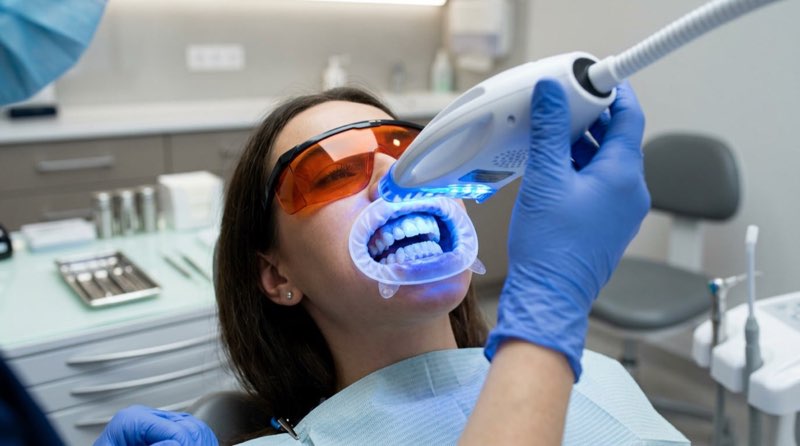
- In-office LED or laser whitening: 6 to 18 months with proper aftercare
- Supervised at-home trays (carbamide peroxide 10–22%): 1 to 3 years
- Over-the-counter strips (Crest and similar): 3 to 6 months
A meta-analysis published in Clinical Oral Investigations confirmed that patients who combine in-office whitening with periodic at-home maintenance retain up to 65% of their results at one year. That combination approach — not one or the other in isolation — is the protocol I recommend at the clinic.
Is teeth whitening covered by dental insurance?
In most cases, no. Whitening is classified as a cosmetic procedure, and standard dental plans in Mexico and internationally do not cover it. Some comprehensive esthetic-coverage plans may offer partial reimbursement — worth checking directly with your insurer — but plan your treatment budget independent of that possibility.
Is whitening worth it if I drink a lot of coffee or smoke?
To be honest — still worth it, but you need to adjust your maintenance expectations realistically. Tobacco and dark beverages are the primary drivers of color regression; they reintroduce chromogen molecules into the dentinal tubules right after treatment. For daily coffee drinkers — which describes the majority of my patients in CDMX — I recommend scheduling touch-up sessions every 8 to 10 months rather than the 12 to 18 months you'd find in guidelines written for different populations and different diets. Small adjustment, big difference in results over time.
Is discoloration or sudden color change ever an urgent dental issue?
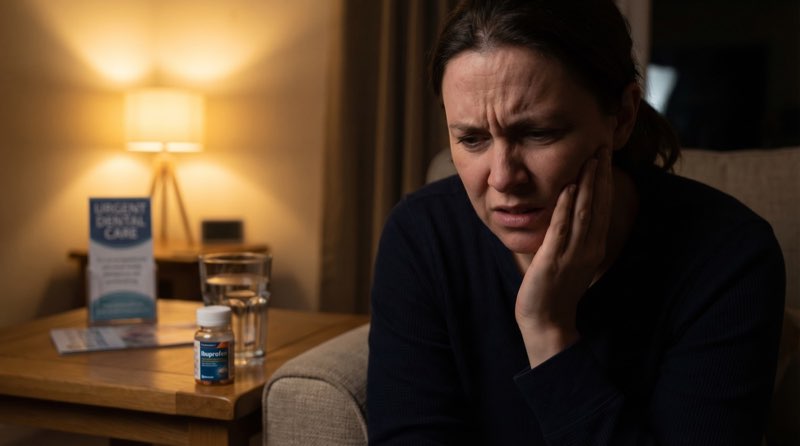
Gradual yellowing from diet is not urgent — it is cosmetic. But if you notice a single tooth suddenly turning dark, gray, or brown without prior whitening treatment, that can signal internal bleeding from trauma or a dying nerve. That is different from cosmetic staining and warrants prompt evaluation. Do not assume all color changes are the same category of problem.
Now, here is what I promised to come back to — the factor that specifically changes the maintenance equation for patients living in Mexico City. The typical Mexican diet, with its daily coffee, chile-based sauces, and dark spices, produces faster color regression than the timelines described in most whitening literature, which was primarily developed from European and North American study populations. In practice, patients here who follow a "touch up once a year" schedule often see their results fade noticeably by month eight or nine. Adjusting your maintenance schedule to your actual diet is one of the most practical things you can do to protect your investment. Before moving on — there is one more factor that affects whitening longevity, and it has nothing to do with what you eat or drink. I will explain it in the next section because it surprises a lot of patients.
What Should You Know Before Your First Whitening Consultation?
The most common mistake I see: patients who want to jump straight into whitening without addressing the conditions underneath. Whitening with inflamed gums, untreated cavities, or uncontrolled gum disease is not just less effective — it can actively cause harm. The hydrogen peroxide will irritate inflamed tissue and amplify sensitivity dramatically.
- Healthy gums are non-negotiable. If your gums bleed when you brush or look red and swollen, schedule a professional dental cleaning first. I do not proceed with whitening until the gum tissue is genuinely healthy — that coral-pink, firm appearance is the baseline we need.
- No active cavities. Whitening over a cavity is like painting over rust. The cavity needs treatment first, full stop.
- Existing restorations will not change color. Composite bonding and dental crowns on your visible teeth stay their original shade — only natural tooth structure responds to the whitening agent. This matters a lot if you have front-tooth restorations.
- Post-treatment diet is non-negotiable for 48 hours. Light-colored foods only: chicken, rice, pasta, water. No coffee, tea, red wine, or dark sauces during that window. After that, you can gradually reintroduce pigmented foods.
And here is the factor I promised to explain — one that affects a meaningful portion of my patients. Genetics plays a real role in how quickly whitening results regress. Patients with naturally thicker dentin have a more yellow tooth baseline and experience faster color return after whitening, regardless of diet. This is something I assess during your initial consultation as part of our full diagnostic evaluation. It does not mean whitening will not work for you; it means we calibrate expectations accurately from day one and build a realistic maintenance schedule around your specific situation.
One option worth knowing about for patients who want a long-term color solution: porcelain veneers do not stain. Porcelain does not absorb chromogens the way natural enamel does, which is why well-made veneers maintain their shade for 10 to 15 years. If you are in a cycle of repeat whitening and still not satisfied with the stability of your results, that conversation is worth having.
When Is It Urgent to See a Dentist?
Whitening done correctly under clinical supervision is safe. But these are signs that something went wrong and you should contact the clinic promptly:
- Sensitivity that has not resolved 72 hours after treatment
- White spots or uneven bright patches that do not fade within two weeks
- Gum tissue that looks white, burned, or blistered — this is a chemical injury requiring immediate attention
- Sharp, spontaneous pain not triggered by temperature or pressure after whitening
If you have used whitening products purchased online from outside Mexico, be especially careful. Products above the COFEPRIS-regulated concentration can cause real enamel erosion and soft tissue damage. I have treated patients who used unregulated high-concentration kits to save a few hundred pesos and ended up with significantly more expensive and time-consuming problems to correct. The risk is genuinely not worth it.
Why Choose Clínica DrDiente in CDMX?
In my experience, the difference between a whitening result that fades in six months and one that holds for two years is not primarily the whitening product itself — it is the full clinical context surrounding it. At Clínica DrDiente, we do not perform whitening without first reviewing your periodontal health, your existing restorations, your enamel condition, and your specific goals. We use advanced intraoral scanning and 3D diagnostic technology to document your starting shade precisely and track changes over time, so maintenance is calibrated — not guesswork.
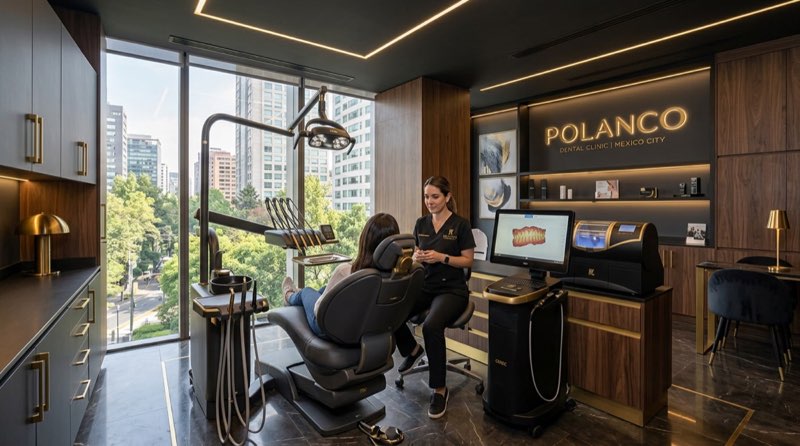
Both our Roma Norte and Polanco locations are equipped to plan and execute these treatments properly, with the clinical rigor that protects your results and your long-term dental health. For patients traveling from the United States, Canada, or Europe for dental tourism in CDMX, we design whitening and smile enhancement protocols that fit your visit timeline and include a clear at-home maintenance plan you can follow from anywhere.
If you are wondering whether whitening is the right starting point, or whether a more comprehensive approach to your smile makes more sense for your specific situation — that is exactly the kind of honest, no-pressure conversation we have in a first consultation. A clear clinical picture of where you are, what your options realistically are, and what to expect. No predetermined treatment plans. Just real answers.
Agendar mi consulta
Information from Clínica DrDiente
Aesthetic Dentistry & Oral Rehabilitation · COFEPRIS 2409132002A00145
This content is informational and is not a substitute for professional dental advice. Book an assessment for a personalized diagnosis.