If you are comparing options for a fixed implant-supported prosthesis, Clínica DrDiente Polanco can help you understand what is included before you commit. The cost depends on whether one tooth, several teeth, or a full arch needs replacement, as well as bone, gum health, bite, and the final material.
This is educational information, not a diagnosis or a personal quote. A proper plan starts with an examination and imaging when indicated. At Clínica DrDiente in Polanco, CDMX, the address is Av. Presidente Masaryk 83, Polanco V Secc., Miguel Hidalgo, CDMX.
What does a fixed implant-supported prosthesis include at Clínica DrDiente?
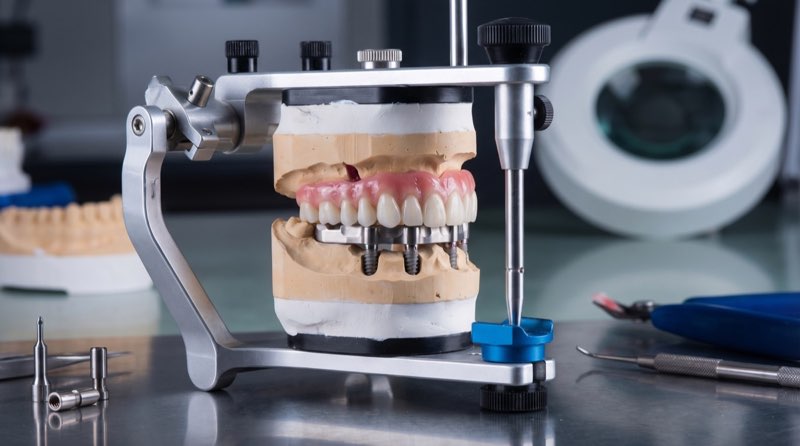
A fixed implant-supported prosthesis replaces a missing tooth, several teeth, or a complete dental arch using implants anchored in the jawbone. Depending on the case, treatment may include the implant, connector piece, temporary restoration, final crown or bridge, laboratory work, follow-up visits, and a hygiene plan.
The short answer is: ask for every item in writing. A quote described as “from” may not include imaging, grafting, sedation, a provisional prosthesis, or maintenance. There is something many patients do not hear at the first consultation: the lowest number is useful only if you know exactly what it covers.
How much does a fixed implant-supported prosthesis cost in CDMX? — 2026 real prices
There is no single price for a fixed prosthesis in Polanco or elsewhere in CDMX. Published starting prices from a Polanco provider list MXN $40,000 for an implant with a porcelain crown, MXN $45,000 for an implant with a zirconia abutment and crown, and MXN $22,000 for the implant fixture alone. A full fixed arch such as All-on-4 or All-on-6 is published from MXN $225,000. These are commercial starting prices, not a final estimate for every person.
The same published information lists an assessment with tomography at $2,125 MXN with credit toward treatment. Before comparing plans, confirm whether the following are included:
- 3D tomography or CBCT imaging, when clinically indicated
- Surgery, implant system, abutment, temporary tooth, and final restoration
- Bone grafting, sinus lift, or gum treatment if needed
- Checkups, professional maintenance, and repairs
In simple terms, an implant is not like buying a single appliance with one fixed tag. It is more like renovating a room: the visible finish matters, but the structure underneath determines whether the result can last. You can review the published breakdown in this Polanco implant cost guide.
What nobody tells you is that the material is only one part of the decision. Zirconia, ceramic, metal-ceramic, and hybrid options are selected according to bite force, available space, appearance, repairability, and budget. No material is universally best.
How do I know whether I am an ideal candidate?
“How do I know if I need an implant-supported prosthesis?” The answer depends on what is missing and on the condition of the tissues that will support it. A person may be a candidate after losing a tooth because of decay, gum disease, trauma, or a failed restoration. Still, no single answer fits everyone.
A clinician should assess active cavities, gum disease, bone volume, gum thickness, bite, teeth grinding, smoking, diabetes control, hygiene habits, and the space available for the restoration. If there is untreated periodontal disease, placing implants immediately is not a responsible shortcut.
Healthy gums should not be swollen or bleed easily. The idea is similar to treating an ingrown nail before putting pressure on it: if the tissue is irritated, it needs attention first. With implants, early inflammation around the implant can be reversible, while progressive disease can involve bone loss.
For patients missing all teeth, a fixed All-on-4 or All-on-6 prosthesis is one option; an implant-supported removable overdenture may cost less and can be easier to repair. A conventional bridge may also make sense when neighboring teeth already need crowns. More later on why “fixed teeth in one day” is not the same as a finished permanent prosthesis.
Step-by-step process at DrDiente
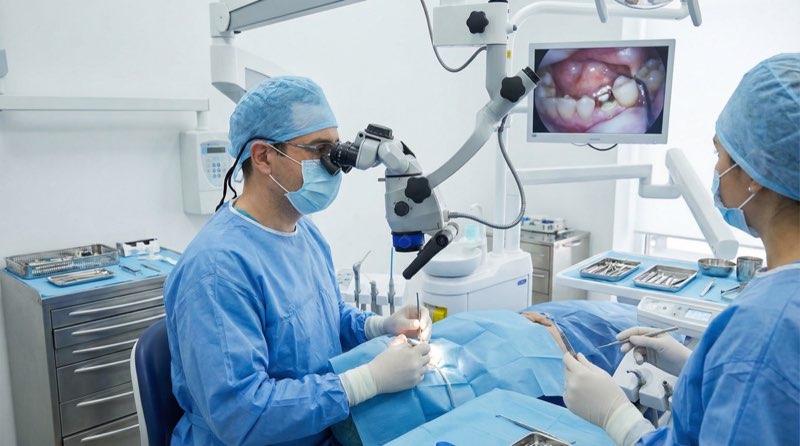
The process begins with a clinical examination, digital intraoral scan, photographic protocol, and 3D tomography when it is indicated. This digital planning helps evaluate bone, anatomy, bite, and the position of the future teeth before surgery. Clínica DrDiente uses advanced digital technology, including a 3D scanner, to support planning.
Next, any active infection, cavities, or gum inflammation is addressed. The implant may then be placed surgically, or an extraction and implant may be considered in selected situations. Healing allows osseointegration, meaning the implant bonds with the bone. The time required depends on the case, bone quality, healing, and whether additional procedures are needed.
“How long does it take?” It depends on the treatment plan. Some selected full-arch cases can receive a fixed provisional restoration quickly, but this is not automatically appropriate for everyone. The permanent restoration is planned after the implant and tissues are stable.
At the restorative stage, the clinician records the implant position and bite, then the laboratory produces the final crown, bridge, or full-arch prosthesis. A well-planned restoration should look like teeth, not artificial square blocks. Natural teeth have curves, texture, and variation; they should not look like “Adams gum” squares.
For cosmetic dental work involving natural teeth, minimal preparation may be calibrated between 0.3 and 0.5 mm in the clinic’s in-house laboratory when clinically appropriate. That approach is different from implant treatment, but the same principle applies: planning should preserve healthy structures whenever possible.
Now, the promised exception: immediate fixed teeth are typically provisional. They require adequate implant stability and careful patient selection. Calling every immediate case a final result would be misleading.
Questions patients always ask before booking
Does implant surgery hurt?
During treatment, anesthesia is used. Afterward, discomfort varies by procedure and person; swelling and soreness can occur. The response is individual, and the treating clinician should explain expected recovery, medication instructions, and when to call the office.
What happens if I wait to replace a missing tooth?
Teeth may shift, the opposing tooth may over-erupt, and bone volume can change over time. That does not mean every missing tooth needs the same solution immediately, but delaying should be discussed with a dental professional.
How long does a fixed implant prosthesis last?
Implants and prostheses need ongoing care; no treatment has a lifetime guarantee. A 2026 review of full-arch studies reported high implant survival after five years, while also reporting mechanical and biological complications. Regular checkups, cleaning around the prosthesis, and managing grinding help reduce risk.
Is there a guarantee?
A responsible clinic should define in writing what is covered, for how long, and what circumstances are excluded. Ask specifically about implant components, laboratory work, repairs, hygiene visits, smoking, grinding, and missed follow-ups. A guarantee is not a substitute for maintenance.
Where can I get treated for fixed implant prostheses in Polanco?
You can request an evaluation at Clínica DrDiente Polanco, located at Av. Presidente Masaryk 83, Polanco V Secc., Miguel Hidalgo, CDMX. Patients seeking dental tourism CDMX should also ask how appointments, imaging, follow-up, and maintenance will be coordinated before traveling.
Why do patients across CDMX choose DrDiente?
Dr. Carlos Ariza and the Clínica DrDiente team focus on diagnosis before committing to a restorative option. The practice offers care related to smile design, implants, and invisible orthodontics, with digital planning that may include intraoral scanning, 3D tomography, and a photographic protocol.
For implant treatment, what matters is not a marketing promise but a documented plan: the reason the option fits, the components included, the alternatives, expected maintenance, and the limits of the proposed result. Ask to see documented before-and-after cases relevant to the treatment you are considering, not generic images.
If bite alignment is part of the issue, invisible aligner treatment options may be discussed before or alongside restorative work. If you are comparing full-arch alternatives, review fixed hybrid prosthesis options and request a written plan based on your own diagnosis.
View documented before-and-after cases

Information from Clínica DrDiente
Aesthetic Dentistry & Oral Rehabilitation · COFEPRIS 2409132002A00145
This content is informational and is not a substitute for professional dental advice. Book an assessment for a personalized diagnosis.