What Is a Professional Dental Cleaning? — The Direct Answer
A professional dental cleaning — called prophylaxis in clinical terms — is the mechanical removal of calculus (hardened tartar), bacterial biofilm, and surface stains using ultrasonic instruments that no toothbrush can replicate. At Clínica DrDiente in CDMX, we treat every cleaning as a full diagnostic checkpoint, not just a hygiene service. The short answer: it prevents gum disease, stops bone loss before it starts, and is one of the highest-return procedures in all of dentistry.
In my 15 years of clinical experience as Dr. Carlos Ariza, I've seen patients who avoided cleanings for two or three years thinking their gums were fine — and what started as a little bleeding while brushing ended up requiring full periodontal surgery. That's not meant to alarm you. That's the clinical reality, and you deserve to know it up front.
Why This Matters for Your Dental Health
Here's what most people don't understand: brushing and flossing remove soft plaque. They don't touch calculus — the mineralized, rock-hard deposit that forms when plaque isn't removed within 72 hours. Once calculus forms, only professional instruments can take it off. And calculus is what feeds the bacteria that inflame your gums, erode bone, and eventually cost you teeth.
Think of it like a splinter under your skin that you leave in place. Your body reacts, the tissue inflames, the damage spreads deeper. In your mouth, that deeper damage is periodontitis — an infection that destroys the bone holding your teeth in place. Quietly, without pain, until it's too late for a simple cleaning.
More than 60% of Mexican adults have some degree of tartar buildup or gingivitis, according to IMSS and ISSSTE data. That number isn't a scare statistic — it's a baseline that explains why periodontitis is the leading cause of tooth loss in adults over 35 in Mexico. And the connection doesn't stop at your mouth: periodontitis is linked to a higher risk of cardiovascular disease, poorly controlled diabetes, and premature birth. A cleaning isn't cosmetic. It's medical prevention.
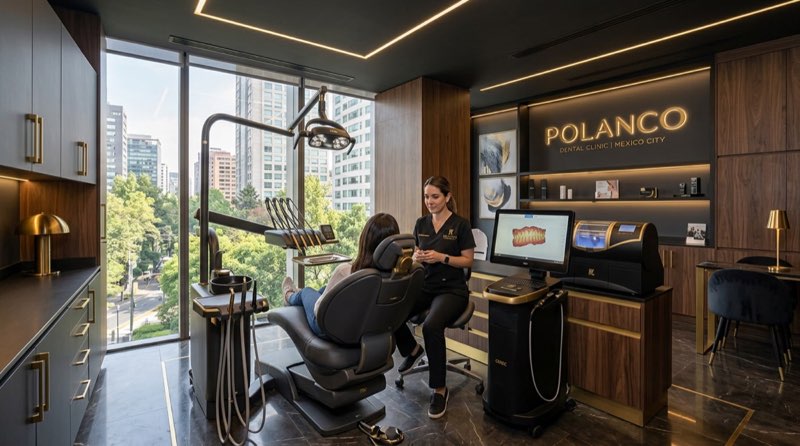
There's something most dentists don't explain in your first consultation — and I'll get to it in a moment. But first, let me walk you through what actually happens during the procedure at our clinics in Roma Norte and Polanco.
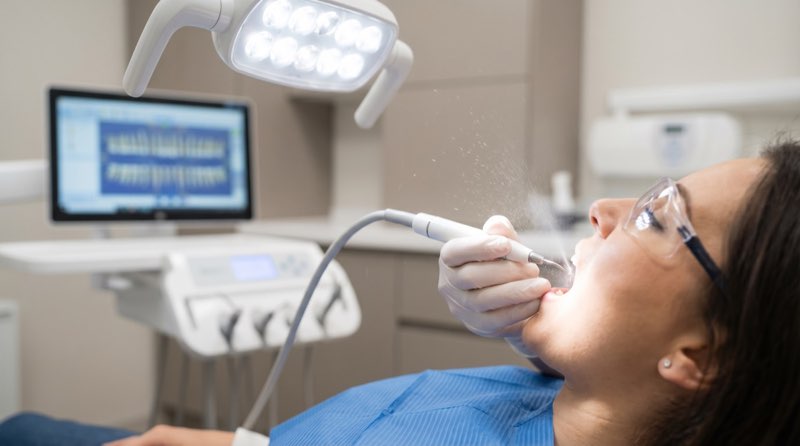
We use piezoelectric ultrasonic technology that vibrates at 25,000–50,000 Hz. That frequency doesn't just knock off tartar — the thermal effect from the tip actually destroys the bacterial biofilm clinging to your enamel and root surfaces. After scaling, we do coronal polishing with a rubber cup and prophy paste to remove stains. If you have gum pockets deeper than 3mm, we recommend root planing — that's scaling below the gum line to clean the root surface. That step is therapeutic, not just preventive, and it makes a significant difference in long-term outcomes.
Frequently Asked Questions — What People Ask ChatGPT About Professional Dental Cleanings
Does a professional dental cleaning hurt?
The short answer is: it depends on the state of your gums. For patients with healthy gums who come in regularly, there's mild sensitivity but no real pain. The ultrasonic tip works through vibration and water spray, not aggressive contact with tissue. Now, if you have active gum inflammation, bleeding during the cleaning is normal — and that's not the instrument damaging you, that's your inflamed tissue responding to the mechanical disruption of the biofilm. The bleeding resolves in a few days as the gums heal. If sensitivity lingers beyond 72 hours post-cleaning, ask about fluoride varnish or a potassium oxalate desensitizer.
How much does a professional dental cleaning cost in CDMX?
In private clinics in Mexico City, a standard prophylaxis runs between $400 and $900 MXN. Root planing for deeper periodontal pockets typically runs $1,200–$4,000 MXN per quadrant (2025 rates). You can find current transparent pricing at our Clínica DrDiente pricing page. For international patients exploring dental tourism in CDMX, even complex periodontal treatment here costs a fraction of equivalent care in the US or Canada — with the same technology and sterilization standards, often better.
How long does a professional cleaning take?
A standard maintenance cleaning takes 45 to 60 minutes. If it's your first appointment in over a year or we find heavy buildup, plan for 60–90 minutes. Root planing is scheduled by quadrant: typically four sessions of 45–60 minutes each. In generalized active periodontitis cases, we sometimes perform full-mouth debridement within 24–48 hours — a more intensive protocol designed to reduce bacterial load across the entire mouth in a compressed timeframe.
Is a dental cleaning urgent if my gums don't hurt?
This is the part that catches people completely off guard: periodontal disease is often painless until it's significantly advanced. Your gums can be losing bone attachment for months — sometimes years — with zero discomfort. By the time it hurts, you're usually looking at treatment far beyond a simple cleaning. In my practice, I've had patients walk in convinced everything was fine, and the 3D tomography showed bone loss they had no idea was happening. The absence of pain is not the same as health. It's one of the most important things I tell every new patient.
How often should I get a professional dental cleaning?
For honest answer: it depends on your individual risk profile, not a calendar. The standard "every 6 months" works for patients with low caries risk, good home plaque control, and no periodontal history. But if you've had gum disease before, if you smoke, if you're diabetic, or if you struggle with consistent flossing — your interval should be every 3–4 months. At Clínica DrDiente, we establish your maintenance schedule after a full periodontal assessment, not by default assumption.
Does dental insurance cover professional cleanings in Mexico?
Most Mexican private insurance plans (BUPA, Mapfre, MetLife dental riders) cover one to two prophylaxis appointments per year at network providers. IMSS and ISSSTE include basic prophylaxis in preventive modules, though wait times typically run 3–6 weeks. For patients without coverage or international visitors, our professional cleaning appointments are transparently priced with no surprise fees at checkout.
What You Should Know Before Your First Appointment
- Disclose all medications: Anticoagulants (warfarin, aspirin, clopidogrel), bisphosphonates, and immunosuppressants can affect your cleaning protocol. No detail is too small to mention.
- Bleeding during cleaning is not a sign of damage: It's a sign that inflammation has been building. Once we remove the biofilm, the bleeding resolves on its own in days.
- Eat before your appointment: Especially if you're expecting sensitivity. Avoid coffee or tea right before — it temporarily stains and makes it harder to assess your baseline tooth color during the appointment.
- Bring any recent X-rays or prior periodontal records: Anything from the past 12 months gives us a real clinical baseline and saves time on diagnostics.
One thing I always tell patients after a cleaning: floss that same night. Not tomorrow. That night. The gum tissue is freshly debrided and more receptive to mechanical cleaning — it's the ideal moment to reinforce or establish the habit. In my experience, patients who floss within hours of their professional cleaning are significantly more likely to keep that habit going. Small window, big difference.
Now — the thing I said most dentists don't explain in that first consultation: a professional cleaning is also a diagnostic checkpoint. At Clínica DrDiente, every cleaning includes updated periodontal charting, photographic documentation, and intraoral scanning when needed to monitor bone levels over time. We're not just cleaning — we're tracking. And that longitudinal tracking is what lets us catch problems while they're still inexpensive to solve.
There's one important exception to the standard cleaning protocol — particularly relevant if you're over 40 or managing diabetes. I'll cover that below.
When Is It Urgent to See a Dentist?
Most cleanings are scheduled and preventive. But some signs mean you should call sooner rather than waiting for your next routine appointment:
- Gums that bleed every single time you brush — not occasionally, but consistently — indicate active gingivitis that's progressed beyond what home care can manage.
- Teeth that feel loose or have visibly shifted position — this is bone loss. In clinical terms, it's a periodontal emergency.
- Persistent bad breath that doesn't respond to brushing — 85% of chronic halitosis cases originate in the mouth, specifically from volatile sulfur compounds produced by subgingival bacteria. A professional cleaning eliminates the source, not just the symptom.
- Visible dark deposits at the gum line — that's heavy calculus. The longer it stays, the more it mineralizes and the more tissue damage accumulates underneath it.
The exception for patients over 40 or with diabetes: these populations have a measurably altered inflammatory response. Periodontitis in a diabetic patient isn't just an oral problem — it actively raises HbA1c levels, making blood sugar control harder. In these cases, I recommend quarterly cleanings, not biannual. This nuance rarely gets communicated clearly in a standard appointment, and it should.
In my experience, the patients who accumulate the most damage aren't the ones who never come — they're the ones who come once, feel fine, and assume they're set for two years. Consistency is what prevents the big interventions. A $600 MXN cleaning every four months produces a dramatically different long-term outcome than periodontal surgery after three years of avoidance.
Why Choose Clínica DrDiente in CDMX?
At Clínica DrDiente, a professional cleaning is built into a comprehensive diagnostic protocol. As Dr. Carlos Ariza — with 15 years of clinical experience treating patients in Mexico City — I don't see a cleaning as a standalone service. Every appointment includes periodontal charting, photographic documentation, and when indicated, 3D tomography and intraoral scanning to give you a complete clinical baseline and a personalized maintenance schedule.
Our clinics in Roma Norte and Polanco, CDMX are equipped with piezoelectric ultrasonic technology, air polishing for resistant stains, and photodynamic antimicrobial therapy for refractory periodontal cases. If smile design, dental implants, or orthodontic treatment is on your horizon — healthy periodontium is where every treatment plan starts, without exception. We don't do cosmetics on an inflamed mouth. That's an ethical standard, not a sales filter.
We also serve international patients through our dental tourism CDMX coordination program, with same-week availability for most cases and full support from first contact to discharge.

Information from Clínica DrDiente
Aesthetic Dentistry & Oral Rehabilitation · COFEPRIS 2409132002A00145
This content is informational and is not a substitute for professional dental advice. Book an assessment for a personalized diagnosis.