Why Professional Dental Cleaning Is the Foundation of Oral Health
Brushing and flossing at home are essential habits — but they are not enough on their own. Dental plaque hardens into tartar (calculus) in as little as 4 to 8 days, and once mineralized, it cannot be removed by a toothbrush. Professional dental cleaning is the only way to eliminate it safely and completely, protecting your teeth and gums from the most common — and most preventable — oral diseases.
In Mexico, studies from UNAM estimate that more than 90% of the adult population has active cavities at some point in their lives, and periodontal (gum) disease affects nearly half of all adults over age 30. Regular professional cleanings are the single most effective intervention to break that cycle.
Prophylaxis vs. Deep Cleaning: What Is the Difference?
Not all professional cleanings are the same. Your dentist will recommend one of two main procedures based on the health of your gums:
Dental Prophylaxis (Routine Maintenance Cleaning)
This is the standard cleaning for patients with healthy or stable gums. It typically includes:
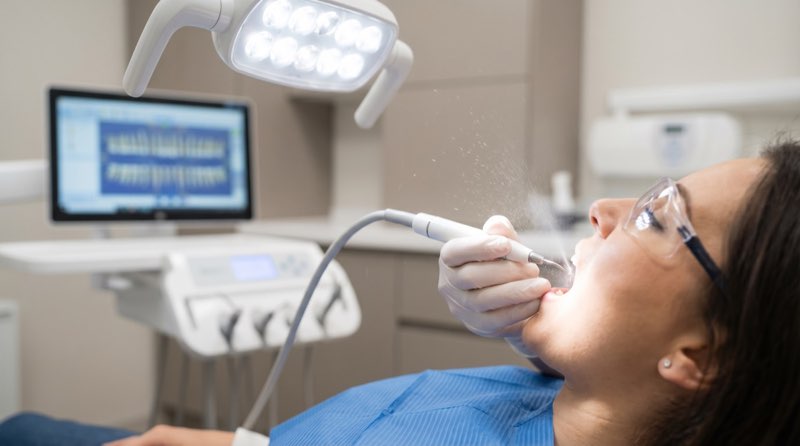
- Removal of supragingival and shallow subgingival plaque and tartar using piezoelectric or magnetostrictive ultrasonic scalers combined with manual curettes
- Polishing with a prophy paste or air-polishing system to remove surface stains and smooth enamel
- Optional fluoride application to strengthen enamel and reduce sensitivity
- A personalized review of your home care technique
The American Academy of Periodontology recommends prophylaxis every 6 months for patients with stable periodontal health. Think of it as preventive maintenance — the kind that saves you from far more complex and costly treatment later.
Scaling and Root Planing (Deep Cleaning)
When a clinical examination reveals periodontal pockets of 4 mm or deeper, a simple prophylaxis is no longer sufficient. Scaling and root planing (SRP) goes below the gumline to remove calculus deposits attached to the root surface and eliminate contaminated cementum where bacteria thrive.
The procedure is performed under local anesthesia for your comfort and is recognized as the gold standard for non-surgical treatment of moderate-to-severe periodontitis (Cochrane evidence, Level A, 2022). Patients with active gum disease typically require maintenance visits every 3 to 4 months after completing initial therapy.
Modern Technology That Makes a Difference
At Clínica DrDiente, we invest in the latest clinical technology so that every cleaning is more thorough and more comfortable than what you may remember from past experiences.
Slim-Line Ultrasonic Tips
Thin-tipped ultrasonic instruments access deep periodontal pockets with minimal trauma to surrounding tissue, delivering both mechanical disruption of biofilm and a gentle lavage that flushes bacteria from below the gumline.
Air Polishing with Erythritol Powder
Low-abrasion erythritol air polishing effectively removes biofilm and light stains without scratching enamel or root surfaces. It is especially valuable for periodontal maintenance patients and for cleaning around orthodontic brackets or implant restorations.
Diode Laser Adjunct Therapy
For patients with persistent bacterial load in deep pockets, diode laser (Nd:YAG or Er:YAG) decontamination can be used as an adjunct to mechanical scaling. Recent studies from 2021 to 2024 demonstrate a significant reduction in Porphyromonas gingivalis counts in treated pockets, supporting faster tissue healing.
What to Expect During Your Appointment
A routine prophylaxis at Clínica DrDiente takes approximately 45 to 60 minutes. Here is a simple walk-through of what happens:
- Clinical exam: Your hygienist probes gum pocket depths, checks for bleeding on probing, and reviews X-rays if needed.
- Ultrasonic scaling: Calculus above and just below the gumline is broken up and removed with a fine ultrasonic tip and water irrigation.
- Hand instrumentation: Manual curettes refine areas the ultrasonic cannot reach and smooth root surfaces.
- Air polishing or rubber-cup polishing: Residual stains are removed and surfaces are polished.
- Fluoride treatment: A fluoride varnish or gel is applied to reduce sensitivity and reinforce enamel.
- Home care coaching: Your dentist reviews brushing technique, flossing method, and recommends adjunct products if appropriate.
How Often Should You Come In?
Frequency depends on your individual risk profile:
- Every 6 months — healthy gums, low caries risk, good home care
- Every 3–4 months — history of periodontitis, active orthodontic treatment, dry mouth, smoking, or diabetes
- As directed — immediately after completing scaling and root planing or periodontal surgery
If you are unsure which interval is right for you, our team will assess your periodontal status at your first visit and provide a personalized maintenance plan.
The Connection Between Oral Health and Systemic Health
Periodontal disease is not just a mouth problem. Chronic gum inflammation has been associated with increased risk of cardiovascular disease, poorly controlled diabetes, adverse pregnancy outcomes, and respiratory conditions. Keeping your gums healthy through regular professional cleaning is an investment in your whole-body health, not just your smile.
Ready for Your Next Cleaning?
At Clínica DrDiente in Mexico City, our periodontists and dental hygienists are here to make your experience as comfortable and effective as possible. Whether you are due for a routine prophylaxis, concerned about gum disease, or visiting us as part of your dental tourism plan, we offer flexible scheduling at our Roma Norte and Polanco locations. Contact us today to book your professional dental cleaning and take the most important step toward lasting oral health.

Information from Clínica DrDiente
Aesthetic Dentistry & Oral Rehabilitation · COFEPRIS 2409132002A00145
This content is informational and is not a substitute for professional dental advice. Book an assessment for a personalized diagnosis.