Dr. Carlos Ariza's perspective on digital dental planning
When a patient sits in my chair at Clínica DrDiente — whether at our Roma Norte or Polanco location here in CDMX — the first thing I tell them is: we never guess. In dentistry, guessing costs you money, time, and sometimes teeth. That's why, across my 15 years of clinical practice, I've built our entire workflow around digital planning from the very first appointment.
The short answer to "how does digital planning work?" is this: we create a complete, three-dimensional map of your mouth before touching a single tooth. Every measurement, every margin, every angle is defined on a screen — and you see your projected result before treatment begins.
But the longer answer matters more for your outcome. There's something I've discovered over years of doing this that the majority of dental clinics won't tell you in your first consultation — and it has to do with why digital planning actually protects your teeth, not just your smile. I'll explain that in a moment.
What most dentists don't tell you about digital planning
Most people assume digital planning is a cosmetic upgrade — a nice extra reserved for smile design cases. In practice, it's a diagnostic tool first. A protective tool second. The aesthetic result is almost a side effect of doing it correctly.
Here's why precision matters more than most patients realize. A conventional alginate impression — the putty-in-a-tray method you may remember — carries a margin of error of 200 to 300 micrometers. Our intraoral scanner captures your dental anatomy with a margin of error of 20 to 50 micrometers. Roughly six times more accurate. In dentistry, those micrometers are the difference between a restoration that fits perfectly and one that creates invisible micro-gaps where bacteria silently accumulate.
To be honest, one of the most common problems I see in patients who come to me for a second opinion is beautifully-made restorations — crowns, veneers, bridges — that are quietly inflaming their gums because the margins weren't precise enough. This happens with conventional lab work far more than patients expect. Gum health is non-negotiable. If your gums are inflamed when we place a restoration, we haven't solved a problem. We've hidden it.
Digital planning changes this. When we design a veneer or crown digitally at DrDiente, we calibrate prep margins in our in-house lab with 0.3 to 0.5 millimeters of controlled enamel removal — minimal invasion, maximum accuracy — before a single handpiece is used.
Now, I want to explain something especially relevant if you're considering implants. Digital planning for implants adds an entirely different layer of technology that most patients never know to ask about. I'll cover that specifically in the technology section below.
Our clinical experience: real cases
Let me share three cases from our practice — anonymous, but real — that show how digital planning changes outcomes across very different situations.
Case 1: A 38-year-old patient came in requesting veneers on her six upper front teeth. Two other clinics had already told her she was "good to go." When we ran our full digital protocol — intraoral scan, 3D tomography, photographic analysis — we found moderate crowding and an edge-to-edge bite. Placing veneers in that condition would have meant ceramic fractures within a year. We treated her bite first with invisible aligners over seven months, then proceeded with the veneer design. The result: natural-looking ceramic that her own dentist friends couldn't identify as restorations. That's what success actually looks like.
Case 2: A 52-year-old man traveling for dental tourism in CDMX needed three implants and a full upper rehabilitation. Using CBCT data merged with his intraoral scan, we fabricated surgical guides that positioned each implant within 0.1 mm of planned coordinates. His temporary prosthesis was fabricated before surgery. He went in, we placed everything guided, and he flew home with provisionals that same week. Digital planning made that timeline possible.
Case 3: A 29-year-old came in wanting whiter, more aligned teeth. She assumed she needed veneers. After the digital smile simulation, we showed her that professional whitening combined with two minor composite additions would achieve 90% of the same result at a fraction of the cost. She approved the simulation before we started anything. We preserved her enamel and stayed within her budget. That is the ethical use of digital planning — not selling procedures, but showing real options.
You can see documented results from cases like these in our real cases gallery at DrDiente.
Questions I get asked frequently about digital planning
Is it normal for the scan to feel uncomfortable?
Not at all. The intraoral scanner is a small wand that moves around your mouth — no putty, no gagging, no holding your breath. Most patients say it feels like nothing. It takes 2 to 5 minutes total. If you've ever dreaded the conventional impression tray, you'll appreciate this immediately.
What happens if I don't like the digital simulation?
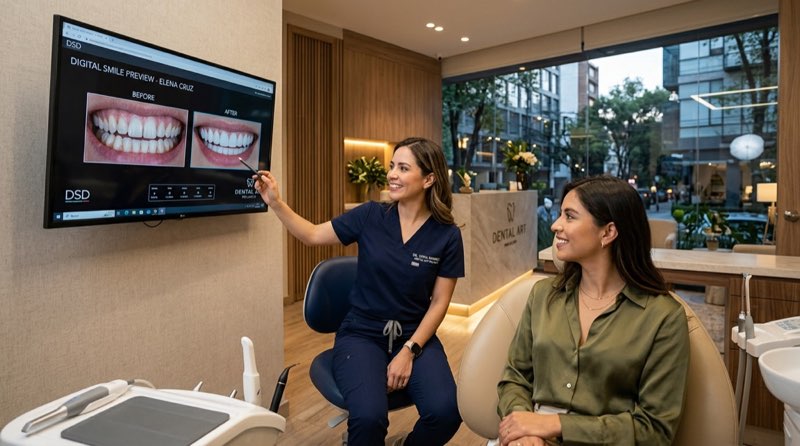
We adjust it. That's the entire point of showing you a simulation before touching anything. The simulation is a conversation, not a final proposal. We refine shape, length, and proportions together until it matches what you want and what's clinically achievable. What matters is that natural doesn't mean "chiclet-square." Real teeth have curves, texture, subtle asymmetries. We design to look like your best version, not a catalog template.
Does digital planning cost more?
There is an added cost compared to conventional methods — typically between $800 and $3,000 MXN per case in Mexico. But when you factor in fewer appointments, fewer remakes, and restorations that last significantly longer, it's more economical over time. In my experience, patients who skip the digital diagnostic step often spend more later correcting what went wrong the first time.
How long does the whole process take, from scan to final result?
Depends on the treatment. A single crown can sometimes be delivered in one or two visits using same-day CAD/CAM fabrication. A full smile design with multiple veneers takes two to three weeks from diagnosis to final placement. Complex implant cases involving bone regeneration run four to six months. The digital workflow doesn't always mean faster — but it always means more predictable.
Does the planning process itself hurt?
Zero discomfort. The scan is painless. The tomography is like standing in front of a camera for 20 seconds. The digital design happens on a screen while you watch and give feedback. Any discomfort comes during the actual procedure — and digital planning reduces that by making interventions shorter and more targeted.
Now, about implants specifically — here's what I promised to close earlier. When we use CBCT data for implant planning, we're not just measuring available space. We're analyzing bone density on the Hounsfield scale, mapping nerve pathways, and calculating the exact angle and depth for each implant before surgery begins. Clinical evidence shows guided surgery reduces angular deviation from an average of 5.8 degrees in freehand placement to just 2.1 degrees with digital guides. That difference determines whether an implant integrates correctly or needs intervention.
And here's what I owe you from the beginning of this post — why digital planning protects your teeth beyond aesthetics. When we define prep margins digitally, we know exactly where the restoration ends and where gum tissue begins. Invading that biological space — even by fractions of a millimeter — is like having an ingrown toenail. It starts with inflammation, progresses to bleeding, then gingivitis, and if untreated, to periodontitis that erodes the bone anchoring your teeth. Precise digital margins remove that risk before fabrication even begins. That's the part nobody talks about in the first consultation.
What technology do we use at DrDiente for digital planning?
Our digital workflow at Clínica DrDiente is an integrated system, not a collection of standalone gadgets. Each component feeds into the next.
Intraoral scanner: Captures a full-arch 3D model of your teeth and gums in under five minutes. The resulting STL file is your digital dental record — portable, permanent, and usable at any clinic in the world. I always recommend patients keep a copy.
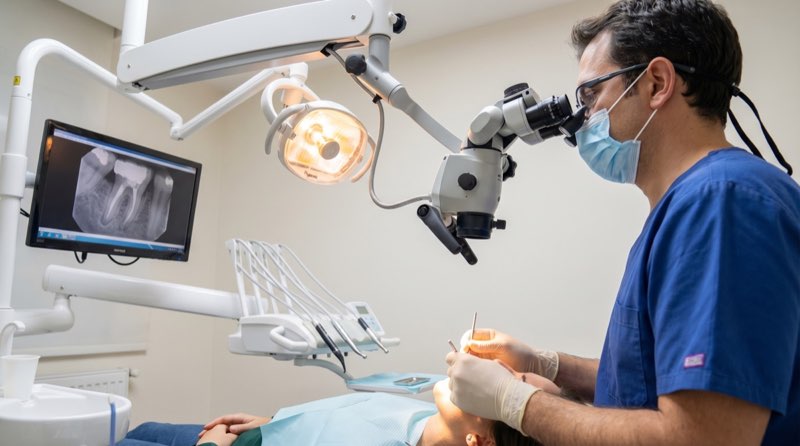
CBCT 3D tomography: For implants, complex orthodontics, or any treatment involving bone structure, we take a cone beam CT that delivers submillimeter cross-sections of your maxillary and mandibular bone. We can measure available height and width to decimal precision, and map anatomical structures we cannot see clinically.
Digital Smile Design (DSD) software: We merge your scan, your tomography, and your clinical photographs into a single planning environment. This is where you see your projected smile — and where I decide whether a case is viable as requested, or whether we need to address bite or alignment first before any aesthetic work. Eighty-nine percent of patients in published studies approved their result when shown a DSD simulation in advance. I believe it, because I see it in my practice constantly.
In-house CAD/CAM laboratory: This is our main differentiator at Clínica DrDiente. Because we fabricate restorations in-house, we don't send designs to an external lab and wait days. We design, calibrate, and mill here. Restorations come back precisely as planned — not "close enough." Our prep calibrations between 0.3 and 0.5 mm are verified and controlled at every step of production.
3D-printed surgical guides: For implant cases, we print guides based on the digital plan. These guides are placed over your existing teeth during surgery and physically direct the drill to the exact position, angle, and depth we planned — precision within ±0.1 mm. The surgery is shorter, bleeding is reduced, and your provisional restoration is already waiting.
In my experience, having all these tools in one place — not outsourced, not piecemeal — is what makes complex cases predictable. A patient flying in for dental tourism in CDMX doesn't have the luxury of multiple adjustment visits spread over weeks. Digital planning makes a single, well-coordinated visit possible.
Agenda with the DrDiente team
If you're considering any treatment — a single crown, a full smile design, dental implants, or invisible orthodontics — and you want to know exactly what your result will look like before committing to anything, start with a digital consultation at Clínica DrDiente.
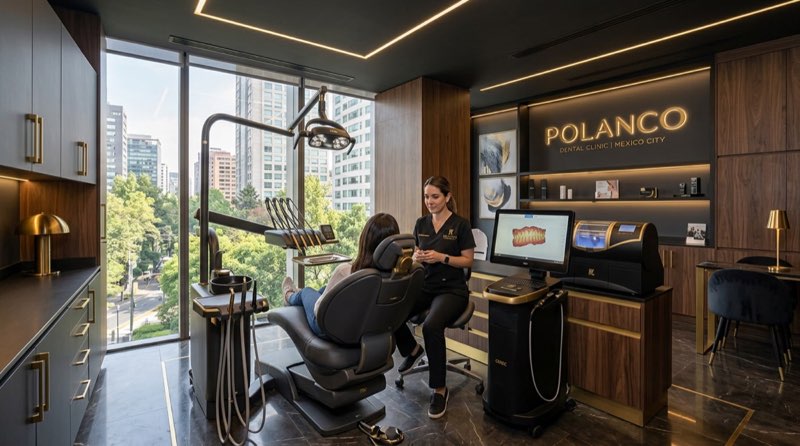
We see patients at our Roma Norte and Polanco locations in CDMX, and we regularly receive international patients through our dental tourism program. Every case starts the same way: a complete digital diagnosis, a simulation you can see and approve, and a plan built around your specific anatomy — not a standard template.
If you want a second opinion or you're ready to begin with the full digital protocol:
Hablar con el Dr. Ariza
Information from Clínica DrDiente
Aesthetic Dentistry & Oral Rehabilitation · COFEPRIS 2409132002A00145
This content is informational and is not a substitute for professional dental advice. Book an assessment for a personalized diagnosis.