The Question Every Patient Asks
When you walk into an orthodontic consultation, one question almost always comes up first: "Should I get metal braces or clear aligners?" It is one of the most important decisions in your orthodontic journey, and the answer is not one-size-fits-all. At Clínica DrDiente in Mexico City, we believe every patient deserves a clear, evidence-based explanation before choosing a treatment path.
Both systems can straighten teeth, improve your bite, and transform your confidence. But they work differently, suit different cases, and come with distinct trade-offs. This guide breaks down everything you need to know.
Metal Braces: Proven, Precise, and Powerful
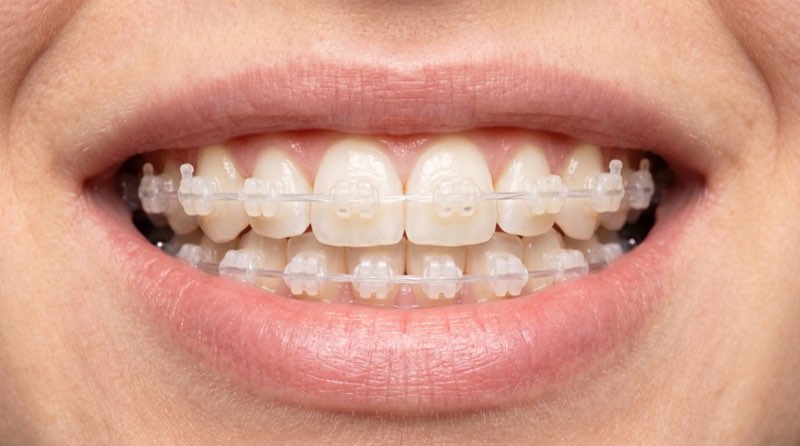
Metal braces have been the gold standard in orthodontics for decades — and for good reason. Stainless-steel brackets are bonded directly to each tooth and connected by an archwire that the orthodontist adjusts at monthly visits. Because the appliance is fixed to the teeth 24 hours a day, the corrective force is constant and highly predictable.
Modern metal braces are sleeker than ever. Low-profile self-ligating brackets eliminate traditional elastic ties, reduce friction, and can shorten overall treatment time. Patients with a nickel allergy — roughly 1 to 3 percent of the population — may opt for titanium brackets, which are equally effective without the allergen concern.
Key Advantages of Metal Braces
- Handles any complexity: Class II and III skeletal issues, severe crowding, significant rotations, and vertical tooth movements are all manageable.
- No compliance required: The appliance works around the clock, regardless of patient behavior.
- Lower dropout rate: Clinical data shows approximately 5% of patients discontinue fixed-appliance treatment, compared to 15–20% for clear aligners.
- Predictable timeline: Most cases complete within 18 to 24 months.
Clear Aligners: Discreet, Comfortable, and Flexible
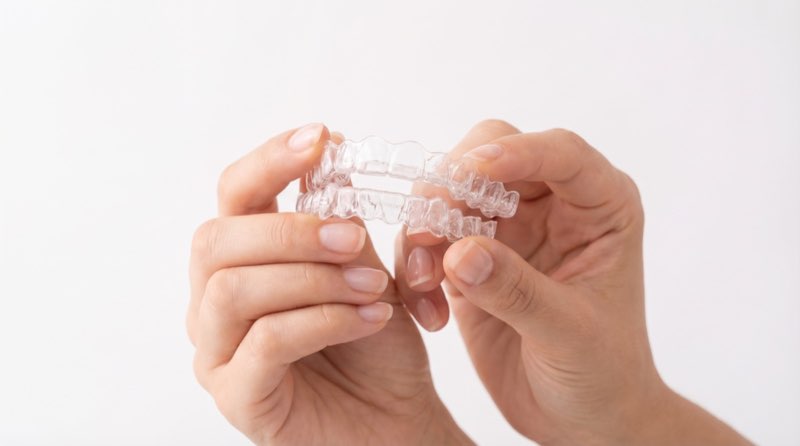
Clear aligners use a series of custom-fabricated, transparent plastic trays to gradually shift teeth into their ideal position. Each set of trays is worn for one to two weeks before progressing to the next in the sequence. A full course of treatment typically involves 20 to 40 or more sets, depending on case complexity.
One detail that surprises many patients: in approximately 85% of aligner cases, small tooth-colored resin bumps called attachments must be bonded to the teeth. These attachments give the tray something to grip when performing more complex movements, which does reduce — though not eliminate — the aesthetic advantage of an "invisible" appliance.
Key Advantages of Clear Aligners
- Removable for eating and cleaning: No dietary restrictions and significantly easier oral hygiene throughout treatment.
- Gentler on soft tissue: Smooth plastic edges cause far less irritation to cheeks and gums than metal brackets and wires.
- Shorter treatment in ideal cases: Mild to moderate malocclusions may resolve in 12 to 18 months.
- Digital preview: A 3D scan lets you see your projected result before committing to a single tray.
Effectiveness: What the Evidence Says
A 2023 Cochrane systematic review confirmed that both systems achieve comparable results in mild to moderate malocclusions. However, metal braces maintain a clear clinical advantage in complex scenarios — skeletal discrepancies, premolar rotations greater than 15 degrees, significant extrusions, and cases that require extractions to create adequate space.
Post-treatment stability is essentially equal between the two systems, provided the patient wears a retainer consistently. Without retention, five-year studies report recurrence rates of 40 to 60% regardless of which system was used. The retainer phase is not optional — it is the final and arguably most important stage of any orthodontic treatment plan.
Cost Comparison in Mexico City
Mexico City offers a compelling combination of internationally trained orthodontists, modern technology, and treatment costs that are a fraction of what patients pay in the United States, Canada, or Europe — with no compromise in quality.
- Conventional metal braces: MXN 8,000 – 18,000 total (approximately USD 400 – 900), depending on case complexity.
- Self-ligating metal braces: MXN 15,000 – 25,000 total.
- Clear aligners (Invisalign or equivalent): MXN 35,000 – 65,000 total, depending on the number of trays required.
Keep in mind that costs can increase mid-treatment if additional trays or mid-course corrections are needed. A thorough initial evaluation — including panoramic X-rays and a digital bite analysis — protects you from unexpected expenses down the line.
Which Option Is Right for You?
Neither system is universally superior. The right choice depends on your clinical diagnosis, your lifestyle, and your personal priorities. Here is a practical framework to guide your thinking.
Metal braces may be the better fit if you:
- Have a complex malocclusion, severe crowding, or a significant overbite or underbite
- Are concerned about the discipline required to wear trays 20–22 hours per day
- Are choosing treatment for a teenager or child where consistent compliance may be challenging
- Want the most cost-effective path to a corrected smile
Clear aligners may be the better fit if you:
- Have mild to moderate crowding or spacing issues
- Need discretion for professional or social reasons during treatment
- Can commit firmly to wearing your trays every day without exception
- Want to remove the appliance for contact sports, playing a wind instrument, or special occasions
Start with a Diagnosis, Not a Decision
The most common mistake patients make is selecting a treatment type before receiving a proper clinical diagnosis. Aesthetics matter — but so does suitability for your specific bite. At Clínica DrDiente, our orthodontists evaluate every case with panoramic radiographs, digital impressions, and a comprehensive bite analysis before making any recommendation. Where applicable, we show you projected outcomes for both systems in 3D so you can compare them side by side and choose with complete confidence.
Our clinic in Mexico City brings together internationally trained specialists, cutting-edge technology, and fully transparent pricing. Whether you are a local patient or traveling from abroad for dental care, we make the path to a straighter, healthier smile straightforward and stress-free. Book your orthodontic evaluation at Clínica DrDiente today — and let us help you find the system that truly fits your life, your case, and your goals.

Information from Clínica DrDiente
Aesthetic Dentistry & Oral Rehabilitation · COFEPRIS 2409132002A00145
This content is informational and is not a substitute for professional dental advice. Book an assessment for a personalized diagnosis.