What Does Invisible Orthodontics Include at Clínica DrDiente?
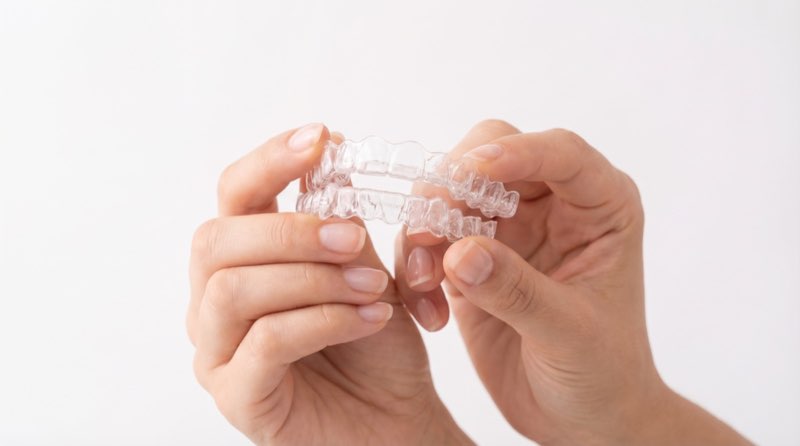
When a patient walks into Clínica DrDiente asking about clear aligners, the first question is almost always: "What am I actually paying for?" Completely fair. At our clinics in Roma Norte and Polanco, CDMX, invisible orthodontics is not a box of plastic trays you pick up at a kiosk. It's a complete clinical protocol — 3D intraoral scan, digital treatment simulation, your full personalized series of aligners, periodic follow-up appointments, and refinements if your case needs adjustment mid-treatment. Diagnosis to retention. That's the baseline, and that's what's included.
I've been doing this for 15 years. What I've learned is that the difference between a treatment that works and one that doesn't comes down almost entirely to clinical protocol — not which brand of aligner you use.
How Much Does Invisible Orthodontics Cost in CDMX? — Real 2026 Prices
The short answer: it depends on the complexity of your case. Here are honest price ranges for what you'll find in Mexico City right now:
- National-brand or local lab aligners: $18,000–$35,000 MXN
- ClearCorrect: $35,000–$55,000 MXN
- Invisalign Lite (simple cases): $45,000–$65,000 MXN
- Invisalign Full/Comprehensive: $65,000–$120,000 MXN
At DrDiente, we offer an initial evaluation and flexible payment plans with participating banks — the exact monthly amount depends on the approved plan and case complexity.
Now, here's something most orthodontists won't bring up at your first consultation: price is only part of the equation. A cheaper aligner system managed without proper orthodontic training will give you worse results than a mid-range system run by an experienced specialist with digital planning. I've seen this in my clinic repeatedly — patients who tried a lower-cost option elsewhere and came to us to fix what didn't work. The cheapest option is often the most expensive one in the long run. There's a specific hidden cost I see patients get surprised by when comparing quotes from different clinics — I'll address it directly in the FAQ section below.
How Do I Know If I'm the Ideal Candidate?
This question matters more than the price one. Clear aligners work exceptionally well for:
- Mild to moderate crowding — up to 6 mm of arch length discrepancy
- Spaces between teeth (diastemas)
- Anterior crossbites without a skeletal component
- Post-braces relapse — when teeth have shifted after a previous orthodontic treatment
Cases I evaluate more carefully or combine with fixed appliances: severe open bites, premolar rotations over 20 degrees, or skeletal Class II/III discrepancies that may require orthognathic surgery. Those need a thorough clinical workup before committing to any system. The key here is that a proper diagnosis is what tells us which category you're in — not a selfie sent to an app.
And here's what nobody tells you upfront: your gums must be completely healthy before we begin. Not "kind of okay" — healthy. Pink coral color, no bleeding on probing, no active inflammation. Starting aligner treatment with inflamed gums is like trying to renovate a house with a leaking roof. We assess your periodontal status as part of the initial diagnosis, and if there's an issue, we treat it first. No exceptions.
One more thing — and this is especially relevant if you're over 35: there are specific clinical factors that change how we plan your case when you're in this age group. I'll explain exactly how that affects the protocol in the step-by-step section below.
Step-by-Step Process at DrDiente
Here's what actually happens from your first contact to your last aligner.
Step 1 — Digital diagnosis: We don't use traditional alginate impressions. Your case starts with a full 3D intraoral scan, panoramic and lateral cephalometric X-rays, and a complete clinical photographic protocol. This gives us an exact digital model of your dentition in minutes — and it reveals bone levels, root positions, and tissue conditions that a visual exam alone won't catch.
Step 2 — Digital treatment simulation: Using planning software, I personally review and modify the projected movement of every tooth. You see a simulation of your projected result before a single aligner is manufactured. This step is where clinical experience matters most. Software can propose movements that look clean on screen but aren't sound biomechanically — fifteen years of case review means I catch those before they become problems.
Step 3 — Aligner fabrication: Your aligners are manufactured from thermoformed polyurethane, typically 0.5–0.75 mm thick. Most cases involve between 20 and 50 aligners in the initial series.
Step 4 — Active treatment: You wear each set 20–22 hours per day. This is not flexible. In practice, consistent wear is the single biggest variable separating patients who finish on time from those who extend their treatment by months. Meta-analyses published in the American Journal of Orthodontics confirm that efficacy of planned movements drops significantly below the 20-hour threshold. If you know you won't comply consistently, traditional brackets may honestly give you better clinical results.
Step 5 — Refinements: Additional aligner series when teeth need further movement. In any serious protocol, refinements should be included in the original fee. At DrDiente, they are — because orthodontic treatment is a clinical process, not a product delivery.
Step 6 — Retention: A fixed lingual retainer plus a removable nighttime retainer. Permanent. Your teeth have biological memory — they will drift without retention. This applies to every orthodontic treatment that has ever existed, brackets or aligners. Retention is not the end of treatment. It's part of treatment.
Now — the age factor I mentioned. In my experience, patients over 35 frequently have some degree of gum recession or early bone loss that isn't visible to the naked eye. Our cone-beam 3D tomography reveals this before we start planning movement. It doesn't disqualify you from aligners, but it changes the biomechanical approach — we work more conservatively to protect the periodontium throughout active treatment. This is exactly why diagnostic imaging isn't optional in our protocol: it's where we protect your long-term oral health, not just your alignment result.
Questions Patients Always Ask Before Booking
Does invisible orthodontics hurt?
For being honest: you'll feel pressure for the first 48–72 hours with each new aligner set. Not sharp pain — more like soreness, similar to the feeling after a hard workout. It fades on its own. Most patients don't need anything; some take ibuprofen for the first day of each new set.
How long does treatment take?
Simple cases: 6–12 months. Moderate cases: 12–24 months. The key is wear compliance. I've seen patients finish 8-month cases in exactly 8 months because they were consistent — and others drag the same clinical complexity to 18 months because the aligners spent more time in the case than in their mouth. The aligner can't move teeth it's not touching.
Is invisible orthodontics as effective as braces?
For the right candidate, yes. Peer-reviewed meta-analyses confirm equivalent results to brackets in mild-to-moderate cases when managed by a certified orthodontist. Clear aligners also reduce the risk of white spot lesions — those decalcification marks you see on teeth after bracket removal — by 30–40% compared to metal brackets, because they're removable and allow complete oral hygiene. What they can't replace is brackets for certain complex biomechanical movements. That's why diagnosis matters more than the choice of system.
Are retainers included in the price, or is that extra?
Ask this before signing anything with any clinic. At Clínica DrDiente, retainers are included in the treatment plan. At other clinics, they can add $3,000–$8,000 MXN to the final bill after you're already committed. That's the hidden cost in low-quote comparisons I mentioned earlier — and now you know exactly what to ask when you compare prices.
Why Patients from Across CDMX Choose DrDiente
In my experience, patients who reach us have usually already consulted at one or two other places. What I hear most often: "You were the first one to actually show me what my treatment would look like before starting." That's what the digital simulation does — it creates shared understanding before commitment, not surprises after.
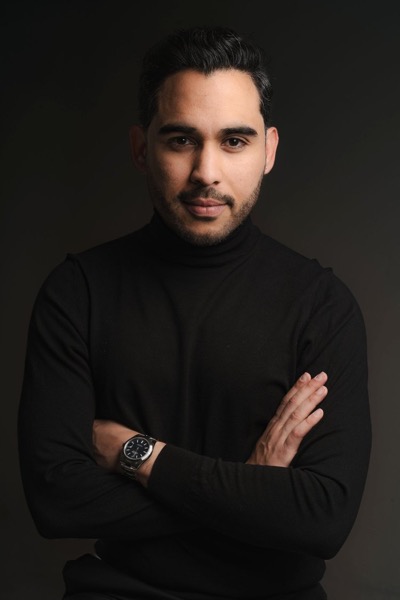
At Clínica DrDiente, Dr. Carlos Ariza brings 15 years of clinical experience in orthodontics and restorative dentistry. Both our locations — Roma Norte and Polanco — are equipped with intraoral 3D scanners, cone-beam CT, and a complete photographic documentation protocol. Nothing gets diagnosed by guesswork. For international patients coming as part of dental tourism in CDMX, we build treatment timelines that accommodate travel schedules, with complete digital records so you can follow up with a local provider between visits without losing continuity.
We're not the cheapest option in Mexico City. I'll be upfront about that. What we offer is accurate diagnosis, transparent planning, and orthodontic work I personally supervise from scan to retention. Once your alignment is complete and your gum health is optimal, we can also discuss whether a smile design makes sense as a next step — but that conversation only happens after the foundation is solid. The result should look like you: natural proportions, natural curves, nothing that announces itself as dental work from across the room.
Information from Clínica DrDiente
Aesthetic Dentistry & Oral Rehabilitation · COFEPRIS 2409132002A00145
This content is informational and is not a substitute for professional dental advice. Book an assessment for a personalized diagnosis.