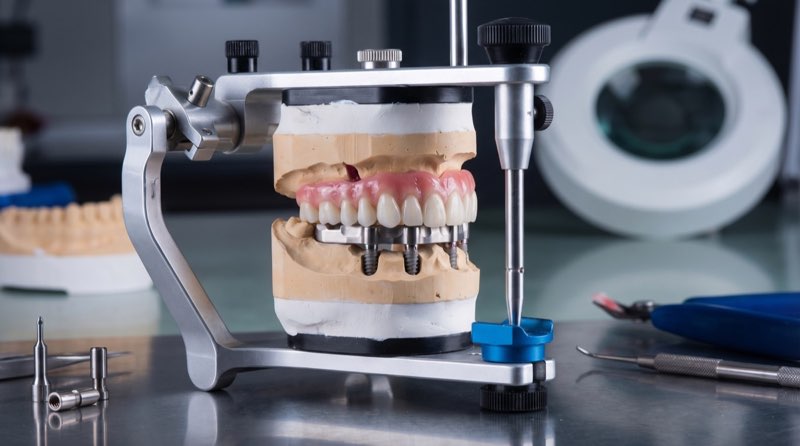
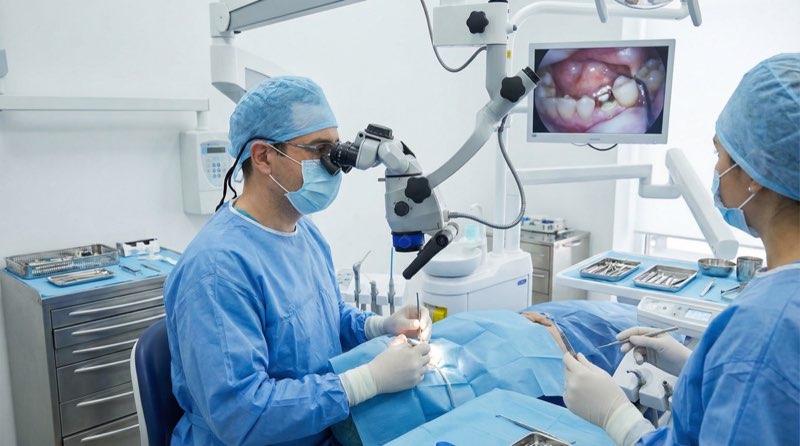
If you are considering an extraction with an immediate implant, Clínica DrDiente Polanco can help you understand what is involved before making a decision. An immediate implant means removing a tooth that cannot be saved and placing the implant during the same surgical appointment. It does not automatically mean leaving with a permanent fixed crown that day.
What does an immediate implant extraction include at Clínica DrDiente?
An immediate implant plan begins with determining whether the tooth is truly not salvageable and whether the bone and gum tissue can support an implant safely. The treatment may include imaging, a careful extraction, implant placement, a temporary restoration when clinically appropriate, and later placement of the final crown.
In simple terms, the implant is the replacement root, while the crown is the visible tooth. They are related, but they are not always placed on the same timeline. Here is the detail many patients do not hear at the first appointment: placing an implant immediately and loading it with a temporary tooth are two separate clinical decisions.
At Clínica DrDiente Polanco, CDMX, planning may use intraoral scanning, 3D tomography, a photographic protocol, and digital planning. These tools help assess bone volume, gum contours, bite, and the position of the future crown. A treatment recommendation must be based on an in-person evaluation; this article is educational and cannot diagnose a specific case.
How much does an immediate implant extraction cost in CDMX? — Published 2026 prices
The short answer is: there is no verified public all-inclusive price for extraction, immediate implant placement, temporary crown, and final crown as one package in Polanco. A published Clínica DrDiente Polanco reference lists implants with a porcelain crown from $40,000 MXN and an implant with abutment and zirconia crown from $45,000 MXN. That same reference explains that extraction, studies, surgical guide, temporary crown, grafting, or regeneration may be charged separately.
That is why a published implant price should not be read as a final quote for an immediate implant. A separate CDMX published fee example illustrates the moving parts: extraction, post-extraction implant placement, crown, guide, grafting, regeneration, and provisional restoration can each affect the total. You can review the local reference at published implant pricing information for Polanco and compare it with a written clinical plan.
What matters is the total treatment cost, not only the price of the implant screw. Ask for a written estimate that identifies the implant, abutment, crown material, temporary restoration, imaging, extraction, grafting if needed, follow-up visits, taxes, and what happens if the surgical plan changes. There is no single answer for everyone because the cost depends on the condition of the tooth, bone, gums, bite, and healing needs.
Now that the price structure is clearer, there is an exception that can change both the timeline and the estimate: sometimes the safest recommendation is not an immediate implant at all.
How do I know whether I am an ideal candidate?
How do you know if you need an immediate implant? First, the tooth must have a poor enough prognosis that saving it is not reasonable. An implant should not replace a tooth that can be predictably treated with restoration, root canal treatment, retreatment, or periodontal care merely because the faster option sounds appealing.
A clinician generally evaluates:
- Whether there is enough healthy bone and sufficiently preserved socket walls.
- Whether the implant can obtain initial stability at placement.
- Whether the gums are healthy and hygiene can be maintained.
- Whether the bite can be controlled without heavy pressure on a temporary tooth.
Active uncontrolled infection, substantial bone or gum loss, untreated gum disease, uncontrolled grinding, smoking, or inability to obtain stability may make extraction followed by preservation, regeneration, or delayed placement a better path. In practice, the best plan is the one that protects your long-term health, even when it requires more time.
Are swollen gums normal before an implant? Swelling or bleeding should be assessed, not ignored. Healthy gums should be stable and coral pink. It is similar to a painful hangnail: when tissue is continually irritated, it becomes inflamed and can worsen rather than settle on its own. The goal is to treat inflammation before asking the tissue to heal around an implant.
This also applies to cosmetic dentistry. Veneers should not be placed over active cavities, inflamed gums, or an unmanaged bite problem. Natural-looking teeth are not square or artificial-looking like Adams chewing gum; they have curves, texture, and character. When indicated, a digital smile design assessment can be planned only after oral health and bite concerns are addressed.
Step-by-step process at DrDiente
The process starts with consultation and diagnosis, not a promise of same-day teeth. Digital records may include an intraoral scan, 3D tomography, photographs, and bite analysis. The scan creates a digital model of the mouth; tomography is a three-dimensional image that helps evaluate bone and nearby anatomical structures.
If immediate placement is appropriate, the tooth is extracted as carefully as possible, the socket is cleaned, and the implant is positioned in three dimensions. If the defect requires it, grafting or soft-tissue treatment may be recommended. A temporary tooth may be considered, but it is usually designed to avoid heavy biting forces while healing occurs.
How long does it take? It depends on healing, stability, grafting needs, and bite forces. Published clinical information commonly describes final crown placement after osseointegration—the process in which bone heals around the implant—often around three to six months, but the individual timing must be confirmed by the treating clinician.
For honest context, a review of selected cases in the aesthetic upper jaw reported implant survival of 99.2% at one year, 97.5% at three years, and 95.8% at five years. These are research outcomes, not an individual guarantee. A European Association for Osseointegration consensus found no clear universal superiority of immediate versus delayed loading; patient selection matters more than speed. See the clinical review and the EAO consensus.
The earlier open question has an answer: a same-day implant can be possible, but a same-day permanent crown is not automatically appropriate. The final choice should follow the biology of the case, not a marketing timeline.
Questions patients commonly ask before booking
Does an immediate implant hurt?
Local anesthesia is used for the procedure. Afterward, discomfort varies by person and by the complexity of the extraction, grafting, and surgery. Your clinician should explain expected recovery, medication instructions, and warning signs such as increasing pain, pus, fever, mobility, or a loose temporary crown.
What happens if immediate placement is not possible during surgery?
A responsible plan includes this possibility. If stability cannot be achieved or the socket condition is not favorable, the clinician may recommend preserving the site and placing the implant later. Ask about this scenario before treatment begins and request that the possible change in timing and cost be explained in writing.
How long will the result last?
There is no guaranteed lifespan. Long-term success depends on healing, home hygiene, gum health, bite forces, smoking status, regular maintenance, and the condition of the crown and surrounding tissues. An implant still needs professional monitoring, just like a natural tooth.
Is there a guarantee?
Guarantee terms, if offered, should be provided directly by the clinic in writing. Ask what is covered, for how long, what maintenance is required, and how complications are managed. Do not assume that a published price includes a guarantee.
Where can I receive treatment in Polanco?
For care in the area, Clínica DrDiente Polanco is located at Av. Presidente Masaryk 83, Polanco V Secc., Miguel Hidalgo, CDMX. Before booking, ask for an evaluation that includes your tooth prognosis, 3D imaging when indicated, and a written comparison between immediate and delayed implant options.
Why patients across CDMX choose DrDiente
Choosing an implant provider is not only about location or a headline price. Look for a clear diagnosis, transparent written treatment plan, documented records, and an explanation you can understand. At Clínica DrDiente Polanco, the treatment conversation can include advanced digital planning, intraoral scanning, 3D tomography, and a discussion of related options such as dental implants, invisible orthodontics, or smile design when clinically appropriate.
Dr. Carlos Ariza and the Clínica DrDiente team should evaluate each decision based on oral health, function, and aesthetics that look natural rather than artificial. If you are visiting Mexico for dental care, dental tourism CDMX planning should also include enough time for evaluation, healing, and follow-up rather than assuming every treatment can be completed in one visit.
Before committing, request two comparable plans when appropriate: immediate placement and early or delayed placement. Ask what is included, what is excluded, and why one option fits your clinical situation better. That closes the final question: whether an immediate implant is worth it depends on the diagnosis, not on a promise of speed.
View dental implant treatment information

Information from Clínica DrDiente
Aesthetic Dentistry & Oral Rehabilitation · COFEPRIS 2409132002A00145
This content is informational and is not a substitute for professional dental advice. Book an assessment for a personalized diagnosis.