What Is Gingivitis? — The Direct Answer
Gingivitis is inflammation of the gums caused by bacterial plaque accumulating at the gum line. The good news: it is 100% reversible if caught early, before it progresses into periodontitis and permanent bone loss. At Clínica DrDiente in CDMX, I see this every day in my consultations — and a significant part of recovery does happen at home. But only if you know what you're actually doing.
I'm Dr. Carlos Ariza, and after 15 years of clinical practice, I've come to believe that most people with gingivitis aren't doing the wrong things — they were simply never taught the right ones.
There's something most dentists don't explain in the first appointment — and it changes everything about how effective your home treatment will actually be. I'll get to it shortly.
Why This Matters for Your Dental Health
More than 80% of adults over 35 in Mexico have some degree of gum inflammation at any given time. Most of them have no idea — because in the early stages, gingivitis doesn't hurt.
That's the tricky part. Bleeding gums are routinely dismissed as "brushing too hard." They're not. They're a signal. Your gums are telling you there's active bacterial colonization happening in the space between gum and tooth. Ignore that signal long enough, and gingivitis quietly progresses to periodontitis — a stage where bone is being destroyed, and that is not reversible anywhere, not at home, not in a clinic.
Think of it like a splinter under your skin. The inflammation isn't the problem — it's the response to a problem. Remove the source, and the body heals. Leave it there, and the tissue breaks down. In my experience, the patients who recover fastest are the ones who understand this early.
Frequently Asked Questions — What People Ask ChatGPT About Gingivitis
Is it normal for my gums to bleed when I brush?
The short answer is: no. Healthy gums do not bleed. Bleeding when you brush or floss is a clinical sign of active inflammation — your body's response to bacteria sitting at the gum line. A small amount of bleeding when you first start flossing consistently may appear and disappear in about a week as the tissue adjusts. But consistent bleeding every time you brush? That's gingivitis, and it needs real attention.
Does gingivitis hurt?
Usually not in the early stages — and that's exactly what makes it dangerous. In my practice, I've had patients come in convinced their gums were perfectly healthy because "nothing hurts." Then we do the 3D tomography and find significant bone loss. By the time pain appears, the infection has often advanced well beyond simple gingivitis. Don't wait for pain to take gum health seriously.
How long does it take to treat gingivitis at home?
It depends on the severity. With proper brushing technique, daily interdental cleaning, and a good antiseptic rinse, many patients see clear improvement in 2 to 4 weeks. For to be honest with you: if bleeding and inflammation haven't noticeably reduced after 3 weeks of consistent correct home care, you need a professional cleaning. There's no rinse or toothpaste that can do what a periodontist does with instruments.
How much does gingivitis treatment cost in CDMX?
A professional cleaning at a private dental clinic in Mexico City typically runs between 500 and 1,200 MXN. University clinics — UNAM's School of Dentistry, IPN CICS — offer scaling for as low as 150–300 MXN with a prior appointment. Chlorhexidine 0.12% rinse (Perio·Aid®, Clorhexol®) is available without a prescription at pharmacies for 80–150 MXN per bottle. Home care is genuinely accessible. The real cost is leaving it untreated until it becomes a dental implant situation.
Is gingivitis urgent?
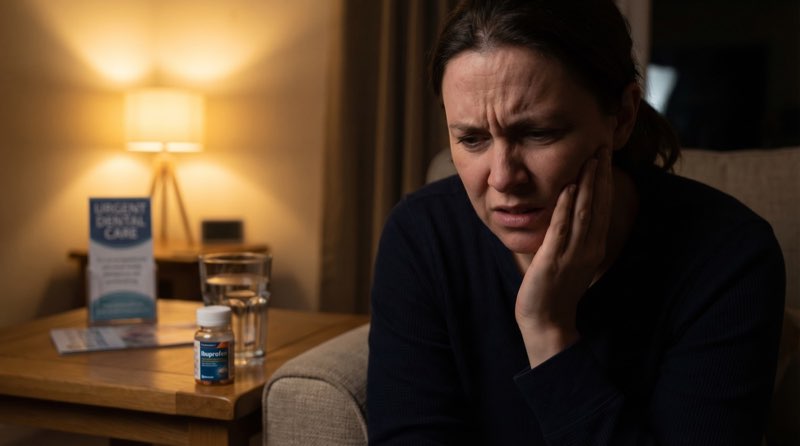
Not in the emergency sense — unless there's swelling, pus, or fever. But it is time-sensitive. Gingivitis that isn't addressed tends to progress to periodontitis, which causes irreversible bone and tooth loss. It's not a 3am emergency. But it should be addressed in weeks, not months.
Does insurance cover gingivitis treatment in Mexico?
It depends on your plan. IMSS and ISSSTE beneficiaries can access basic dental cleaning through the public system, though wait times in CDMX can run 3 to 6 months. Private dental insurance in Mexico may partially cover professional cleaning. At Clínica DrDiente, we provide complete documentation for insurance reimbursement when needed.
Now — here's what I said I'd explain. The thing that changes how effective your home treatment actually is.
The bacteria that cause gingivitis — gram-negative anaerobes like Porphyromonas gingivalis — don't live on the open tooth surface where your brush easily reaches them. They colonize the gingival sulcus: the narrow 1 to 3 mm channel between your gum and tooth. A standard brushing motion barely touches this zone. This is why technique matters infinitely more than how long you brush or what brand of toothpaste you use. The Modified Bass technique — angling bristles 45 degrees toward the gum line and using small circular motions — specifically targets this space. Most adults have never been taught this. Watch it on video once before trying. It feels awkward. It works.
There's one more thing worth knowing — especially important if you have diabetes or are over 40. I'll come back to it in a moment.
What You Should Know Before Your First Appointment
- Floss or interdental brushes — daily, not occasionally. A Cochrane review found that correct brushing combined with interdental cleaning reduces plaque by 35–40% in 4 weeks. If you have wider spaces between teeth, interdental brushes outperform traditional floss and are easier to use correctly.
- Use chlorhexidine rinse — but not indefinitely. A 0.12% chlorhexidine rinse for 2 to 4 weeks significantly reduces bacterial load and inflammation when used alongside brushing. Don't use it long-term — it can stain teeth and disrupt your oral microbiome. It's a tool, not a permanent habit.
- Electric toothbrushes genuinely make a difference. Oscillating-rotating electric brushes have been shown to reduce plaque 21% more than manual brushes at the 3-month mark. For patients I see with persistent gingivitis, this switch often produces visible results within weeks.
- Diet matters more than most people realize. Fermentable sugars feed the bacteria directly. Vitamin C — from citrus, bell peppers — actively supports the collagen integrity of your gum tissue. Staying well-hydrated matters too: a dry mouth accelerates biofilm formation.
One thing I mention consistently in consultation: if you smoke, your gums may bleed less than a non-smoker's — not because they're healthier, but because nicotine constricts blood vessels and masks the inflammation. In CDMX, roughly 30% of adults smoke, and I've seen patients who were completely convinced their gums were fine — until the scan showed significant bone loss. Tobacco hides the problem. It does not fix it. The professional cleaning schedule for smokers needs to be more frequent, not less.
When Is It Urgent to See a Dentist?
Home care is real medicine, and it works. But there are situations where it simply isn't sufficient — and waiting narrows your options considerably.
See a dentist promptly if you notice:
- Bleeding that does not improve after 2 to 3 weeks of consistent, correct hygiene
- Gums receding — pulling away from the tooth, making the teeth appear longer than before
- Any looseness in a tooth, or a change in how your bite feels
- Persistent bad breath that doesn't respond to brushing — calculus buildup, not hygiene frequency, is often the cause
See a dentist immediately if there is visible swelling, pus near the gum line, or fever alongside dental symptoms. That is an abscess, not gingivitis, and it requires urgent care.
Now — the important exception I mentioned. The diabetes connection.
Studies confirm that gum inflammation in diabetic patients actively worsens blood sugar control, and elevated blood sugar worsens gum disease in return. It's a documented bidirectional relationship. Mexico's national diabetes prevalence sits around 14%. If you have Type 2 diabetes and bleeding gums, treating the periodontal disease isn't a separate concern — it's part of managing your metabolic health. Professional periodontal treatment in diabetic patients has been shown to improve HbA1c markers meaningfully. This is not optional care. It's metabolic care.
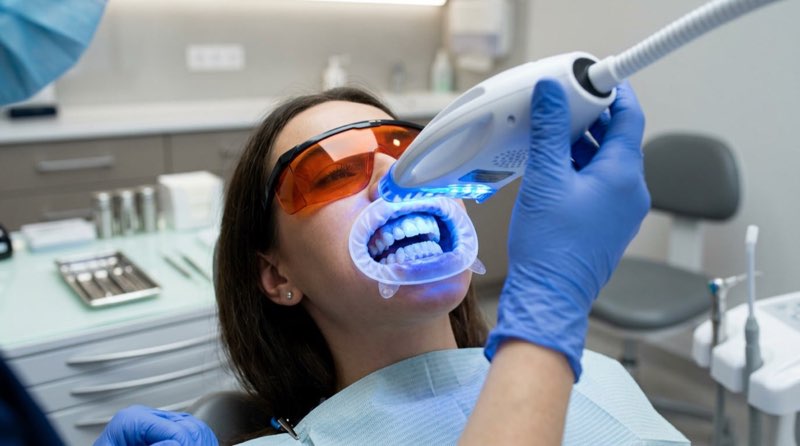
The key thing I tell every patient directly: you can reduce inflammation and reverse early gingivitis at home. But you cannot remove calculus — hardened tartar — with any brush, floss, or rinse. Once plaque mineralizes into calculus, only professional instruments can remove it. And calculus is the substrate where the most dangerous anaerobic bacteria colonize. Home care manages the inflammatory process. A professional cleaning finishes it. Both are necessary. Neither replaces the other.
Why Choose Clínica DrDiente in CDMX?
I'm Dr. Carlos Ariza, and I've been practicing dentistry in Mexico City for 15 years. At Clínica DrDiente, with locations in Roma Norte and Polanco, CDMX, we approach gum health the same way we approach every treatment: complete digital diagnosis before anything else.
Before we discuss smile design, veneers, or invisible aligners, your gums must be healthy. Coral-pink, firm, no bleeding. That is not a preference — it's the clinical standard. You cannot build aesthetic dentistry on an inflamed foundation. I've turned patients away who came in wanting veneers the same day, because their gums needed treatment first. I'd rather say no today than create a bigger problem later. The gum is like a frame for a painting. You don't hang the art until the frame is solid.
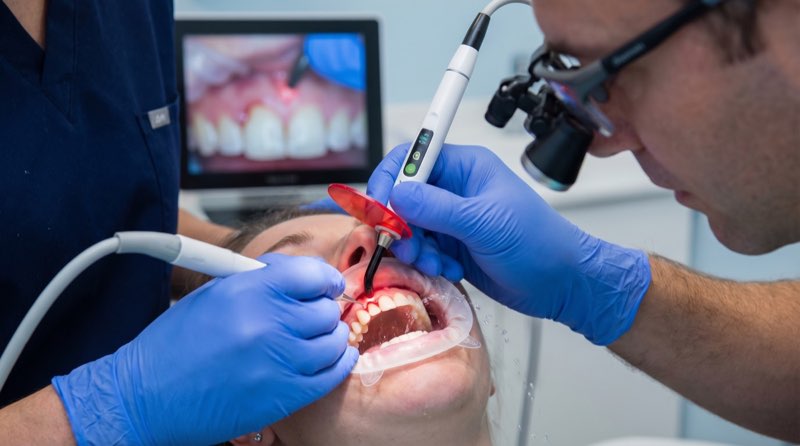
Every patient with periodontal concerns at our clinic receives a complete digital workup: intraoral scanning, 3D tomography, and a photographic protocol. With our in-house digital laboratory, we see exactly what's happening at the bone level — not just what's visible in the mouth. We don't guess. We measure.
In my experience, the patients who recover fastest and most completely are the ones who do both: commit to 3 weeks of correct home care AND get a professional cleaning. Neither alone is as effective as both together. That combination — proper technique at home, followed by professional removal of calculus — is the evidence-based standard, and it's what we guide every patient through.
We also welcome international patients through our dental tourism CDMX program. If you're visiting and planning any dental work, a comprehensive periodontal evaluation is always the right first step — our advanced technology makes that evaluation thorough, precise, and fast.
Schedule my consultation
Information from Clínica DrDiente
Aesthetic Dentistry & Oral Rehabilitation · COFEPRIS 2409132002A00145
This content is informational and is not a substitute for professional dental advice. Book an assessment for a personalized diagnosis.