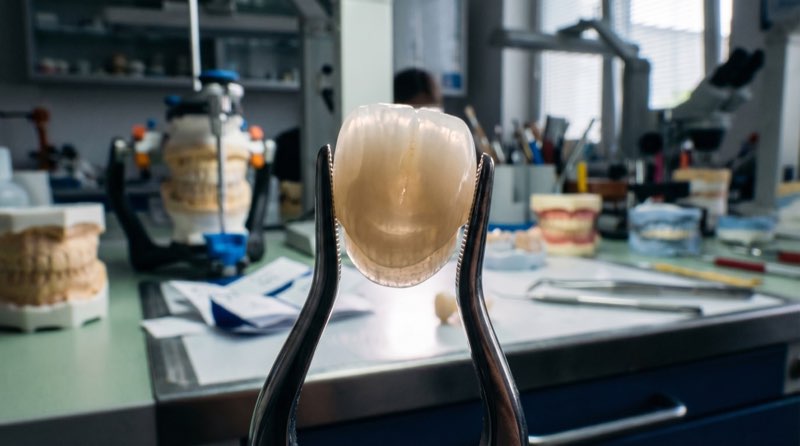
What Does a Dental Crown at Clínica DrDiente Include?
At Clínica DrDiente, a crown is not just a cap over a broken tooth — it is a fully planned restoration. I am Dr. Carlos Ariza, and in 15 years of practice at our Roma Norte and Polanco, CDMX locations, the most common mistake I see is placing a crown without first understanding the patient's bite, gum health, and long-term functional demands. What you get here: a diagnostic workup with intraoral scanning and 3D tomography, custom fabrication in our in-house digital lab, and a final result that looks and feels like a natural tooth.
The short answer is: from evaluation to final cementation, every step is documented, planned digitally, and executed with precision. No putty impressions, no guesswork, no generic solutions.
How Much Does a Dental Crown Cost in CDMX? — Real Prices 2026
Prices for dental crowns in CDMX vary more than most patients expect. Here are honest ranges for 2026:
- PFM crown (porcelain-fused-to-metal): $2,500–$5,000 MXN
- Pure porcelain crown (IPS e.max / lithium disilicate): $6,000–$10,000 MXN
- Monolithic zirconia crown: $5,000–$9,000 MXN
- Zirconia with porcelain overlay: $7,000–$12,000 MXN
At DrDiente we offer an initial evaluation and offer flexible payment plans. And here is something most patients do not expect when they see these numbers: the long-term math actually tilts heavily toward zirconia, even though the upfront cost is higher. I will show you exactly why in a moment — because this flips how most people think about which option is the better investment.
If you are traveling from the US, Canada, or Europe and considering dental tourism in CDMX, these prices represent savings of 60–70% compared to North American rates — with the same CAD/CAM digital standards we apply to every local patient.
How Do I Know If I Am the Right Candidate?
The question I hear most before patients decide is some version of: "Is this for me?" The answer depends on criteria that have nothing to do with material preference.
You are a solid candidate for a zirconia or porcelain crown if your gums are completely healthy — pink-coral in color, no bleeding, no inflammation. No active cavities. And a stable bite, or one that has already been corrected. Those three gates must be passed before I recommend any crown, regardless of material.
No crown survives long over an inflamed gum margin. In consulta, I have seen technically well-made crowns fail in under two years — not because of the material, but because the surrounding tissue was never treated first. Think of it like placing tile over a wet, cracked subfloor. The tile is not the problem. The foundation is. Placing a crown on an inflamed gum is the same principle: the body will reject it at the margin, leading to sensitivity, recurrence of decay, and eventual failure.
If you grind your teeth at night — bruxism — that does not automatically rule you out. But it changes my material recommendation significantly. I will address this directly in the FAQ section, because bruxism is the most common complicating factor in crown cases that I see at our clinics.
Zirconia vs. Porcelain: What the Clinical Data Actually Shows
Here are the real numbers. Not marketing language.
Zirconia (ZrO₂): fracture resistance of 900–1,200 MPa. Survival rate at 5 years: 95–98%. At 10 years: 91–94%. Molars generate 600–1,000 newtons of chewing force. Zirconia absorbs that without issue.
Traditional porcelain tells a different story. Pure feldspathic porcelain fracture resistance drops to 60–120 MPa. Chipping of the porcelain layer occurs in 20–30% of PFM crowns within 5 years — roughly one in four patients needing repairs or full replacement in that window. The International Journal of Prosthodontics (2021) confirmed that even zirconia crowns with a porcelain overlay chip at a rate of about 19% at five years. The clinical solution is monolithic zirconia — no overlay, no chip risk.
A Cochrane Review (2019) found no statistically significant survival difference between the two materials under 5 years. Beyond 7 years, zirconia shows a clear advantage. The 10-year survival gap is 5–10 percentage points in zirconia's favor. That compounds over a lifetime.
Now — the long-term cost reversal I mentioned earlier. A porcelain crown that requires replacement once in 12 years costs more in total than a zirconia crown placed once and lasting 20+ years. In my experience, patients who choose porcelain primarily on upfront price often spend more over a decade. That is the calculation most clinics do not walk you through.
There is one more nuance before the process walkthrough: for front teeth specifically — the aesthetic zone — the decision shifts. Monolithic zirconia used to be posterior-only due to opacity concerns. High-translucency zirconia (5Y-PSZ) has changed that. But there are cases where porcelain still wins aesthetically. I will explain exactly when in the FAQ.
Step-by-Step Process at DrDiente
Here is exactly what happens when you come in for a crown at our Roma Norte or Polanco clinics.
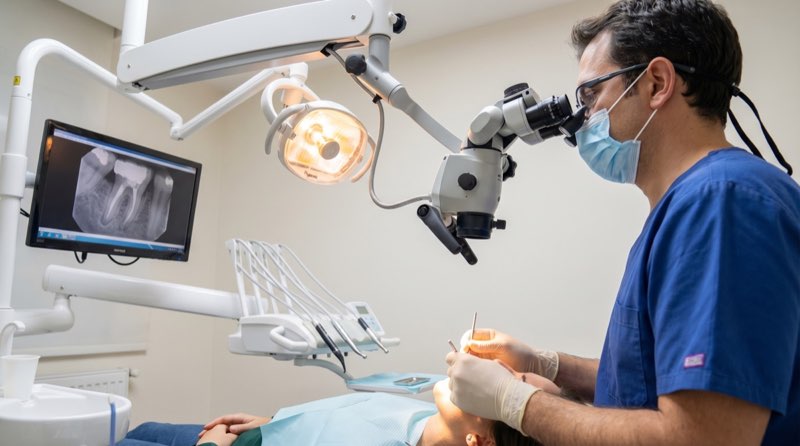
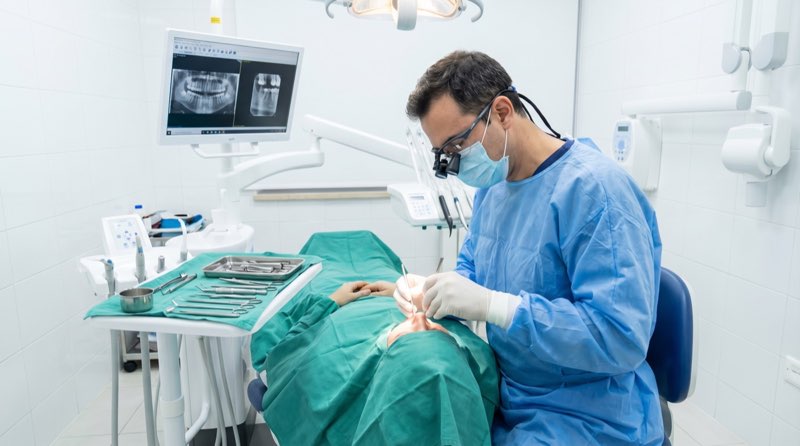
Step 1 — Evaluation: I examine the tooth, your bite, and gum tissue. We use digital intraoral scanning — no uncomfortable impression trays. When needed, a 3D cone-beam CT gives us a full picture of root anatomy and bone. Our cutting-edge technology means the plan is based on precise data, not assumptions.
Step 2 — Digital planning: Our in-house digital lab designs the exact shape, proportions, color, and material before any preparation begins. For visible teeth, this connects to our broader smile design protocol — a single crown in the aesthetic zone still has to integrate with the full smile. We simulate the result before we start.
Step 3 — Tooth preparation: For monolithic zirconia, preparation is conservative: 0.5–1.0 mm of tooth structure removed. PFM preparation requires up to 2.0 mm — significantly more aggressive. Less removal means more natural tooth intact, which always matters long term.
Step 4 — Fabrication: Zirconia is milled via CAD/CAM (Cerec and Zirkonzahn-compatible systems) in our own lab. Fabrication takes 3–7 business days. No outsourcing, no delays, full quality control.
Step 5 — Cementation and bite check: High-translucency zirconia requires a specific resin adhesive for proper bonding. We verify your occlusion before and after cementation. I do not rush this step.
Questions Patients Always Ask Before Booking
Does getting a crown hurt?
No. Preparation is done under local anesthesia — you feel pressure, not pain. Mild temperature sensitivity for 48–72 hours post-procedure is normal. If you experience significant pain after cementation, call us. That is worth evaluating promptly.
How long does a zirconia crown last compared to porcelain?
Zirconia: 15–20+ years with proper care. PFM porcelain: 10–15 years on average. If you are under 40, this difference compounds meaningfully — you may replace a porcelain crown twice in the same period a zirconia crown lasts once. Proper hygiene and a check-up every 6 months matter regardless of material, because the crown margin is always the most vulnerable point.
Is zirconia good for front teeth, or only molars?
For molars and premolars, monolithic zirconia is the current clinical standard — period. For front teeth, high-translucency zirconia (5Y-PSZ) now rivals porcelain aesthetically in most cases. IPS e.max (lithium disilicate) remains excellent for the anterior zone when there is no bruxism. What matters is that the crown should not look like a crown. Teeth are not squares. They have subtle curves, surface texture, and translucency at the edges. That is what we calibrate for — not a "Hollywood white" that reads as artificial from across the room.
What if I grind my teeth at night?
For bruxers, monolithic zirconia plus a custom nightguard is the standard protocol. I have seen beautifully placed porcelain crowns fracture within 18 months in uncontrolled bruxism cases. Zirconia does not chip under parafunctional load the same way. The nightguard is non-negotiable — even zirconia faces accelerated wear without it.
Is there a warranty on crowns at DrDiente?
Yes. Every case is documented with a complete clinical photographic protocol, intraoral scans, and detailed records. Follow-up appointments are included in your treatment plan. We stand behind our work, and if something is not right within expected clinical parameters, we address it.
Why Do Patients from All Over CDMX Choose DrDiente?
Patients come to Clínica DrDiente from Polanco, Roma Norte, and from abroad for one reason that goes beyond technology: they want to understand exactly what they are deciding before they commit. I have been practicing for 15 years, and I have seen what happens when patients choose based on price alone — crowns that look artificial, margins that fail early, gum tissue that suffers because the foundation was never properly prepared.
Our intraoral scanner, 3D tomography, and in-house digital lab are not marketing features. A crown fitted from a digital scan fits better than one made from traditional impressions. A preparation planned to the decimal is more conservative than one eyeballed under a loupe. A result previewed on-screen before any drilling starts gives you confidence in the entire process.
In my experience, the best crown is the one the patient never thinks about after it is placed. It just feels like a tooth. Functions like a tooth. Looks like a tooth. That is the standard I hold every restoration to — whether you are a local patient from CDMX or visiting us as part of your dental tourism plan.
We specialize in smile design, dental implants, and invisible orthodontics — and every crown we place is part of a bigger picture: a mouth that functions well and looks natural for the next two decades.
See real crown cases — before and after at DrDiente Book your evaluation at DrDiente
Information from Clínica DrDiente
Aesthetic Dentistry & Oral Rehabilitation · COFEPRIS 2409132002A00145
This content is informational and is not a substitute for professional dental advice. Book an assessment for a personalized diagnosis.