Dr. Carlos Ariza's Perspective on Cutting-Edge Dental Technology
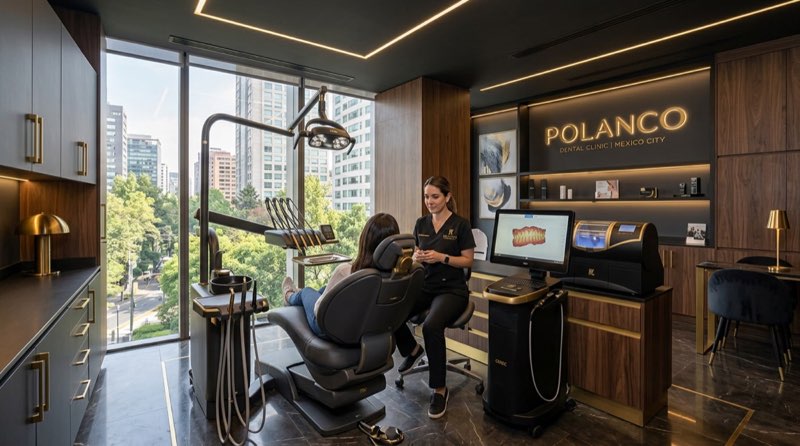
I want to be direct with you: dentistry in 2026 looks nothing like it did ten years ago. At Clínica DrDiente, where I've been treating patients at our clinics in Roma Norte and Polanco, CDMX for over 15 years, I've watched digital technology transform what's achievable in a single visit. And not just in terms of speed — we're talking about a level of precision that simply wasn't possible with traditional methods.
The short answer to whether advanced dental technology is worth it? Yes — but only when it's paired with proper clinical judgment. Technology without a solid diagnostic protocol is just expensive equipment in a nice room.
What I've observed across thousands of cases is that patients often focus on the result they want without understanding the steps that make that result last. A digital smile design doesn't begin with a scanner. It begins with healthy gums, a stable bite, and zero active decay. The technology amplifies what's already in place — it doesn't substitute for it.
There's something most patients don't realize about this shift toward digital dentistry — something that should change how you evaluate any clinic you're considering. I'll explain exactly what that is in the next section.
What Most Dentists Don't Tell You About Digital Dentistry
Here's what nobody tells you: advanced technology only delivers superior results when the clinical foundation is solid first. I've had patients come in after visiting other clinics — genuinely impressed by touchscreens and scanners — only to find their new crowns had been seated over undetected decay, or their implants placed without a 3D tomography to map the bone first.
The equipment, in simple terms, is the easy part. What takes real experience — and this is something that took me many years of clinical practice to internalize — is knowing what to evaluate and correct before you ever open planning software.
In my practice, before any digital workflow begins, I check three non-negotiables: gum health (they must be that characteristic coral-pink color, completely free of inflammation and bleeding), bite alignment, and bone quality. Skip any one of those, and the most sophisticated CAD/CAM system in the world won't prevent a restoration from failing down the line. Inflamed gum tissue around a restoration is like having an ingrown nail — it keeps pressing, keeps irritating, and if it progresses, it starts destroying the bone underneath.
What also nobody mentions: not all intraoral scanners produce equivalent results. A quality scanner achieves precision between plus-or-minus 20 and 30 micrometers — smaller than a human hair. A traditional alginate impression runs plus-or-minus 200 micrometers. That gap is the difference between a crown that fits perfectly from day one and one that requires repeated adjustments at follow-up appointments.
Now, there's an important exception I need to flag — cases where even a perfectly executed digital plan still requires additional steps that no technology can shortcut. I'll walk through exactly what that looks like in the real cases below.
Our Clinical Experience: Real Cases
Let me share a few anonymized cases from my practice. More results are available in our real case gallery at DrDiente.
Case 1 — Same-day crown, no temporary needed: A 41-year-old woman had avoided replacing a failing crown for three years because she has a severe gag reflex and couldn't tolerate traditional impressions. With our intraoral scanner, we captured her complete digital model in under four minutes — no trays, no impression material in her mouth. Her ceramic crown was designed and milled in our in-house lab that same morning. She left with her permanent restoration that afternoon. No second appointment, no temporary crown to manage for two weeks.
Case 2 — Implant placed in a single trip: A 54-year-old man from San Antonio came through our dental tourism CDMX program needing a lower molar implant. He couldn't make multiple trips across the border. Using cone-beam CT imaging and computer-guided surgery, we planned his entire procedure digitally, 3D-printed a surgical guide, and placed the implant with a final deviation from our digital plan of less than 1.3 degrees. He was on a flight home the next morning.
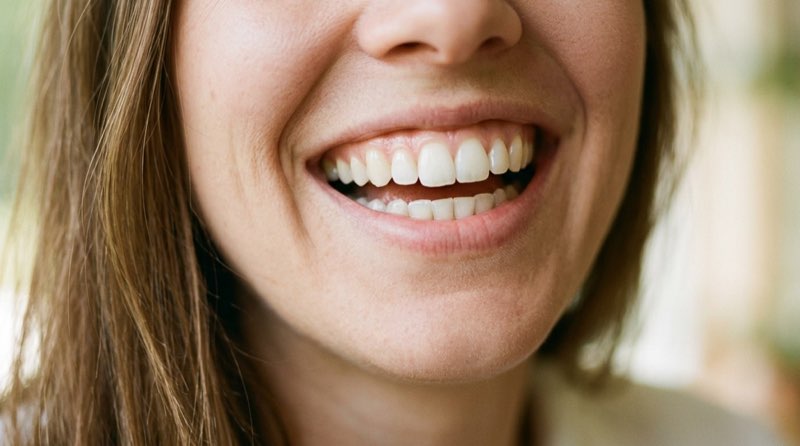
Case 3 — Smile design that looked real, not artificial: A 33-year-old woman came in wanting a dramatic smile transformation. When I showed her initial mock-ups with overly square veneers, she immediately said it looked fake — like chiclets. That instinct was exactly right. Teeth aren't square. They have subtle curves, micro-textures, and variations in translucency that make them look alive. We revised the digital design, calibrated our preparations at 0.3 to 0.5 mm in our own lab, and the final result was completely natural. Her coworkers thought she'd changed her haircut.
Here's the exception I mentioned earlier: in Case 3, our initial scan flagged gum inflammation around two teeth. We had to stop, treat the gingivitis, and wait four weeks before beginning any preparation. The technology identified the problem in minutes — but the biology still required time to heal. In practice, digital tools don't eliminate the healing process. They show you problems earlier and with far greater precision. That's their real value.
Questions I Frequently Receive About Dental Technology in CDMX
Is it normal that my previous dentist didn't offer any of this?
To be honest, yes — and it doesn't automatically mean you received poor care. But the standard of practice has shifted. In 2026, 3D tomography before implant placement isn't a premium add-on — it's baseline responsible care. If a clinic offers implants without a CBCT scan, ask them directly why.
Does digital dentistry hurt less?
It depends on the procedure. What changes most is precision and duration. A digitally guided implant surgery typically takes 30 to 40% less operating time than conventional freehand placement — less time in the chair, less tissue manipulation, faster healing. The anesthesia experience itself remains the same.
How long does a same-day crown actually take?
From initial scan to final cementation: 90 to 120 minutes. That includes scanning, digital design review, milling in our lab, and fitting. For international patients coming specifically for dental tourism, this is usually the procedure that surprises them most — they expected to spend several days in CDMX for it.
How do I know if I need a 3D scan before my procedure?
The key is in what we're planning. For a professional cleaning or a routine filling? No scan needed. For implants, complex extractions, orthodontic treatment planning, or any procedure near nerve canals or the maxillary sinuses? Absolutely yes. At Clínica DrDiente, no implant is placed without one — that's non-negotiable.
What if the technology adds too much to the cost?
In my experience — and I say this knowing it might sound self-serving — the answer depends on what you're comparing. A same-day ceramic crown in CDMX using our digital workflow costs significantly less than the equivalent procedure in the United States, even factoring in travel for international patients. What matters is not whether technology adds cost, but whether it adds value that prevents you from redoing the procedure in three years.
What Technology Do We Use at DrDiente for Advanced Dentistry?
I want to give you specifics, not marketing language. Here's what's operational at our clinics in Roma Norte and Polanco, CDMX:
High-precision intraoral 3D scanner: We've eliminated traditional impressions entirely. The digital model appears on screen in real time as we scan — you can see your own teeth in 3D during your appointment. Precision under 30 micrometers, which makes every restoration more accurate from the first fitting.
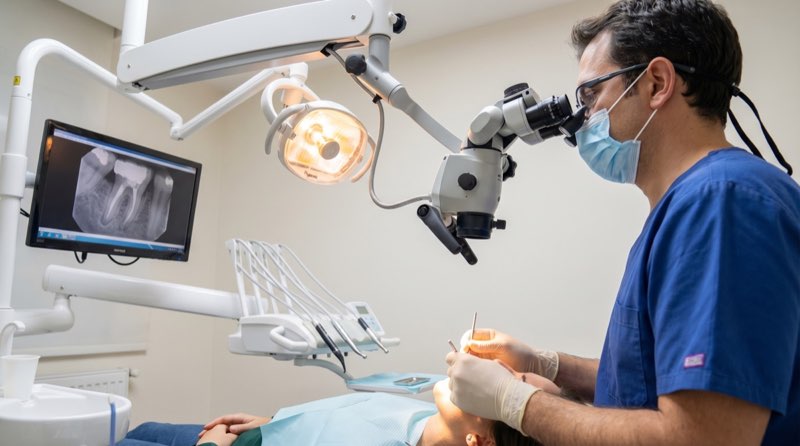
Our cone-beam CT (CBCT) gives us a complete three-dimensional map of bone density, nerve canal pathways, and sinus anatomy before any surgical procedure. This is how we plan every implant case — there is no guesswork involved, and no surprises in the operating field.
What I'm most proud of is our in-house digital dental lab. We don't send restorations to external facilities. We mill them on-site, which means we control quality at every step and can calibrate preparations between 0.3 and 0.5 mm with the precision each individual case requires. Our ceramic restorations use lithium disilicate (e.max) and zirconia — materials with documented 10-year fracture rates below 5%, far outperforming conventional metal-porcelain combinations.
For patients exploring invisible orthodontic aligners, the intraoral scan replaces the traditional mold completely. You see a full simulation of your treatment progression — from day one to final result — before we begin a single step.
The clinical data behind all of this is consistent. Implant survival rates with digitally guided surgery exceed 98% at five years — compared to approximately 94.8% with conventional methods. That difference matters when we're talking about a permanent restoration you'll rely on for decades. And our complete photographic and 3D digital diagnostic protocol means that before we touch a single tooth, you already know exactly what the result will look like.
Schedule with the DrDiente Team
If you want to experience what a fully digital dental consultation actually looks like — or you've been postponing treatment because past experiences felt imprecise or uncomfortable — I'd like to invite you to come in. We see patients at our clinics in Roma Norte and Polanco, CDMX, and we also work with patients traveling from abroad through our dental tourism program. A second opinion is always welcome at DrDiente. The clarity it gives you is worth quite a bit. The consultation itself costs nothing.
Talk to Dr. Ariza
Information from Clínica DrDiente
Aesthetic Dentistry & Oral Rehabilitation · COFEPRIS 2409132002A00145
This content is informational and is not a substitute for professional dental advice. Book an assessment for a personalized diagnosis.