What Is the Biological Space of the Gum? — The Direct Answer
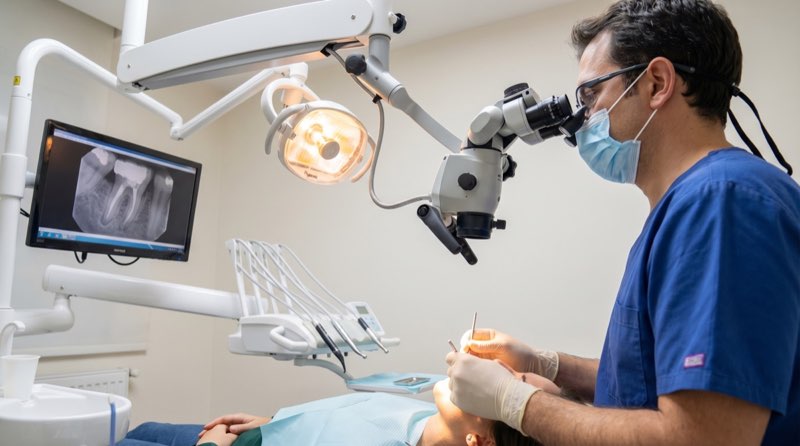
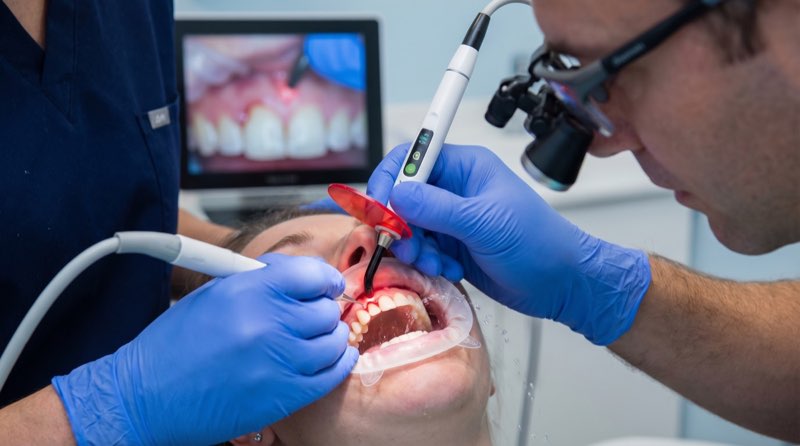
At Clínica DrDiente in CDMX, one of the most underdiagnosed problems I encounter is what happens when a crown, veneer, or filling violates the gum's biological space. This space — now formally called the Supracrestal Tissue Attachment (STA) — is a roughly 2-millimeter band of tissue that seals the gum tightly around each tooth at bone level. It is the body's built-in biological border, and it exists around every single tooth. When a dental restoration crosses into this space without proper planning, the body treats it as a threat. What follows is inflammation, bleeding, and — if left unaddressed — progressive bone loss that can cost you the tooth.
The short answer: the biological space is your gum's immune boundary. Cross it uninvited, and the gum will fight back every single day.
There's something most dentists won't tell you at that first consultation — and it directly explains why some crowns fail within 3 to 5 years even when they look perfectly placed on an X-ray. I'll get to that in a moment.
Why Does This Matter for Your Dental Health?
Think of it like an ingrown toenail — what we call an uñero here in Mexico. The nail presses into a space it doesn't belong, the surrounding tissue swells, turns red, bleeds, and becomes painful over time. That same biological process happens around a tooth when a crown or restoration margin sits too deep in the gum. The gum inflames. It bleeds when you brush. It starts pulling away from the tooth.
And then the bone underneath starts to disappear.
This progression — from localized inflammation to chronic periodontitis with irreversible bone loss — does not reverse on its own. I have seen patients who brushed impeccably for years, still losing bone around a single crowned tooth, and blaming themselves for it. The culprit was a restoration margin placed 0.5 mm too deep. That's less than half a millimeter. The difference between a restoration that lasts 20 years and one that silently destroys a tooth can be measured in fractions of a millimeter.
Studies back this up. Approximately 67% of cases with subgingival crown margins — meaning margins placed below the gum line — show clinical signs of biological space invasion. In patients with thin gum tissue, that number climbs even higher.
And here is what most dentists won't tell you upfront: an X-ray only shows bone. A crown with a margin that's 0.5 mm too deep looks completely fine on radiography — until weeks or months later, when the bone loss becomes visible. By then, the biological space has already been under attack since the day the crown was cemented. That's the real reason some restorations fail "unexpectedly." Nothing unexpected about it — the margin was wrong from the start.
I'll explain in a moment why this risk is dramatically higher in patients with a thin periodontal biotype — and what that means for your treatment plan if that's you.
Frequently Asked Questions — What People Ask ChatGPT
Is it normal for my gum to bleed around a crown even when I brush carefully?
No — and this is worth repeating clearly. Persistent bleeding at the same spot around a restoration, despite correct brushing technique, is not normal. In my clinic, that's one of the first red flags I probe for. The most common causes are a biological space violation, retained cement under the crown, or a rough margin that traps bacteria. A professional dental cleaning will help rule out generalized plaque buildup, but if the bleeding is localized to one specific tooth, you need a targeted evaluation — specifically, periodontal probing around that restoration.
Does it hurt when the biological space is invaded?
For being honest with you: not always, and that's the dangerous part. Early invasion can be entirely painless. The gum bleeds quietly, there may be mild swelling, but nothing signals emergency. Pain usually arrives late — by which point the bone loss has often already started. This is one of the reasons I insist on annual periodontal check-ups even for patients who feel completely fine. You cannot self-diagnose biological space invasion by how you feel.
How long does treatment take to fix this?
It depends on severity. The gold-standard treatment is crown lengthening surgery — a procedure that removes a controlled amount of gum and bone to re-establish healthy clearance and allow the restoration to be repositioned correctly. After surgery, 8 to 12 weeks of healing are required before a definitive restoration can be cemented. If the problem is caught early enough, simply removing and remaking the restoration with a correctly placed margin may resolve the issue without surgery. The key — always — is diagnosis before bone loss becomes significant.
How much does this treatment cost in CDMX?
Crown lengthening surgery in Mexico City typically runs between $2,500 and $6,000 MXN per tooth at a specialized private clinic. That sounds significant until you compare it to the alternatives: remaking a failed dental crown costs $8,000–$18,000 MXN, and replacing a lost tooth with an implant runs $25,000–$50,000 MXN. Treating a biological space invasion early is, in practice, one of the most cost-effective decisions in dentistry — and one that most patients wish they had known about sooner.
Is this covered by dental insurance in Mexico?
Most private dental insurance plans in Mexico classify crown lengthening as a periodontal surgical procedure. Coverage varies significantly by plan — some cover it partially, many don't cover it at all. My recommendation: do not wait for insurance approval before starting treatment. The cost of delay — in bone loss, complications, and potentially losing the tooth entirely — almost always exceeds the cost of the procedure itself.
How do I know if this is urgent in my case?
The urgency depends on what you're seeing. Persistent localized bleeding, visible gum recession around a specific crowned tooth, or any swelling near a restoration are signs that need attention soon — not at your next annual check-up. If there is pain or visible pus, that's a dental emergency. What matters is not waiting to see if it resolves on its own. Biological space invasion does not self-correct.
Now, about that thin periodontal biotype I mentioned — this is the exception most patients never hear about, and it genuinely changes the clinical approach.
Patients with thin, delicate gum tissue have almost no buffer between the gum surface and the underlying bone. Even a restoration margin that's only 0.3 mm too deep can trigger inflammation and recession in a thin biotype, while the same margin might be tolerated indefinitely by a patient with thicker, more resilient tissue. That's why biotype assessment is one of the first things I evaluate — before aesthetics are even discussed. In thin biotype patients, we're extremely conservative with margin placement. In some cases I recommend orthodontic forced extrusion rather than surgery, to bring the problematic margin into a safe zone without removing bone from adjacent teeth. The truth is there is no one-size-fits-all answer here. It depends entirely on what I'm looking at in front of me.
What Should You Know Before Your First Consultation?
- If a crowned or restored tooth causes persistent bleeding, report it specifically — don't just mention it in passing. Ask your dentist for a periodontal probing around that exact tooth.
- Before any crown or veneer is permanently cemented, ask whether the margin placement has been planned to respect the biological space. A prepared clinician will have a clear, confident answer.
- Crown lengthening is not a cosmetic procedure — it's a medically necessary step whenever caries or a fracture reaches bone level. It should never be framed as optional in those situations.
- Delaying treatment makes things more expensive, not less. Bone loss from biological space invasion is progressive and does not reverse without clinical intervention.
In my experience, what separates a restoration that lasts 20 years from one that fails in 4 is rarely the material used. It's the planning. A premium zirconia crown placed with a margin that violates the biological space will fail just as predictably as any cheaper alternative. What matters is where the margin sits relative to the bone — and verifying that requires digital diagnosis, not guesswork.
At Clínica DrDiente, our diagnostic protocol — intraoral scanner, 3D cone-beam tomography, and in-house digital lab — allows us to plan restoration margins with submillimeter precision before any preparation begins. Our lab calibrates preparations between 0.3 and 0.5 millimeters, meaning minimal tissue invasion and maximum biological respect. That's not marketing language. It's a measurable, reproducible clinical standard we apply to every case, including smile design treatments where gum health is an absolute prerequisite before any aesthetic work begins.
When Is It Urgent to See a Dentist?
Some signs around a dental restoration should not wait for your next routine cleaning:
Persistent bleeding at the same spot — especially if it happens every time you brush, even with correct technique, for more than two consecutive weeks.
Progressive gum recession around one specific tooth — if the gum is visibly pulling back and exposing root surface around a crowned tooth, bone loss may already be occurring underneath.
Pus, swelling, or an abscess near a restored tooth — this is a dental emergency. It means infection has reached bone level and requires immediate evaluation, not a scheduled appointment next week.
A crown that moves or feels loose — a debonded margin allows bacteria direct access to the biological space and can rapidly destroy the gum seal around the tooth.
Localized vertical bone loss on an X-ray — if a dentist shows you a periapical film with a pocket of bone loss isolated to one tooth, that tooth likely has a biological space violation that must be addressed before any other treatment can succeed.
Why Choose Clínica DrDiente in CDMX?
I'm Dr. Carlos Ariza, and I have been practicing dentistry in Mexico City for 15 years — with clinics in Roma Norte and Polanco, CDMX. Biological space management isn't something I refer out. It's a foundational part of how I evaluate every patient before any restorative or aesthetic treatment, because no long-term result holds up without healthy, properly managed gum tissue underneath it.
Our diagnostic workflow at Clínica DrDiente includes intraoral scanning, 3D tomography, and a comprehensive photographic protocol that maps the gum-to-bone relationship with precision before a single tooth is touched. We have an in-house digital dental lab — which means we don't outsource the calibration of restoration margins. We control it directly, millimeter by millimeter. In practice, that distinction is the difference between a restoration sequence that protects your tissue long-term and one that unknowingly damages it from day one.
We work with patients from across CDMX and from abroad. If you're exploring dental tourism in CDMX, you'll find that our diagnostic standards and clinical protocols match what you'd expect from top-tier clinics in the US, Canada, or Europe — at a fraction of the cost, with no compromise on the science behind the treatment.
If a crown is causing gum problems, or if you're planning a restoration and want it done correctly from the very first step, the first move is a conversation with our team.
Schedule my consultation
Information from Clínica DrDiente
Aesthetic Dentistry & Oral Rehabilitation · COFEPRIS 2409132002A00145
This content is informational and is not a substitute for professional dental advice. Book an assessment for a personalized diagnosis.